Gut microbiota profiling for risk stratification of surgical intervention in preterm infants with necrotizing enterocolitis: a retrospective cohort study - Summary - MDSpire
Advertisement
Gut microbiota profiling for risk stratification of surgical intervention in preterm infants with necrotizing enterocolitis: a retrospective cohort study
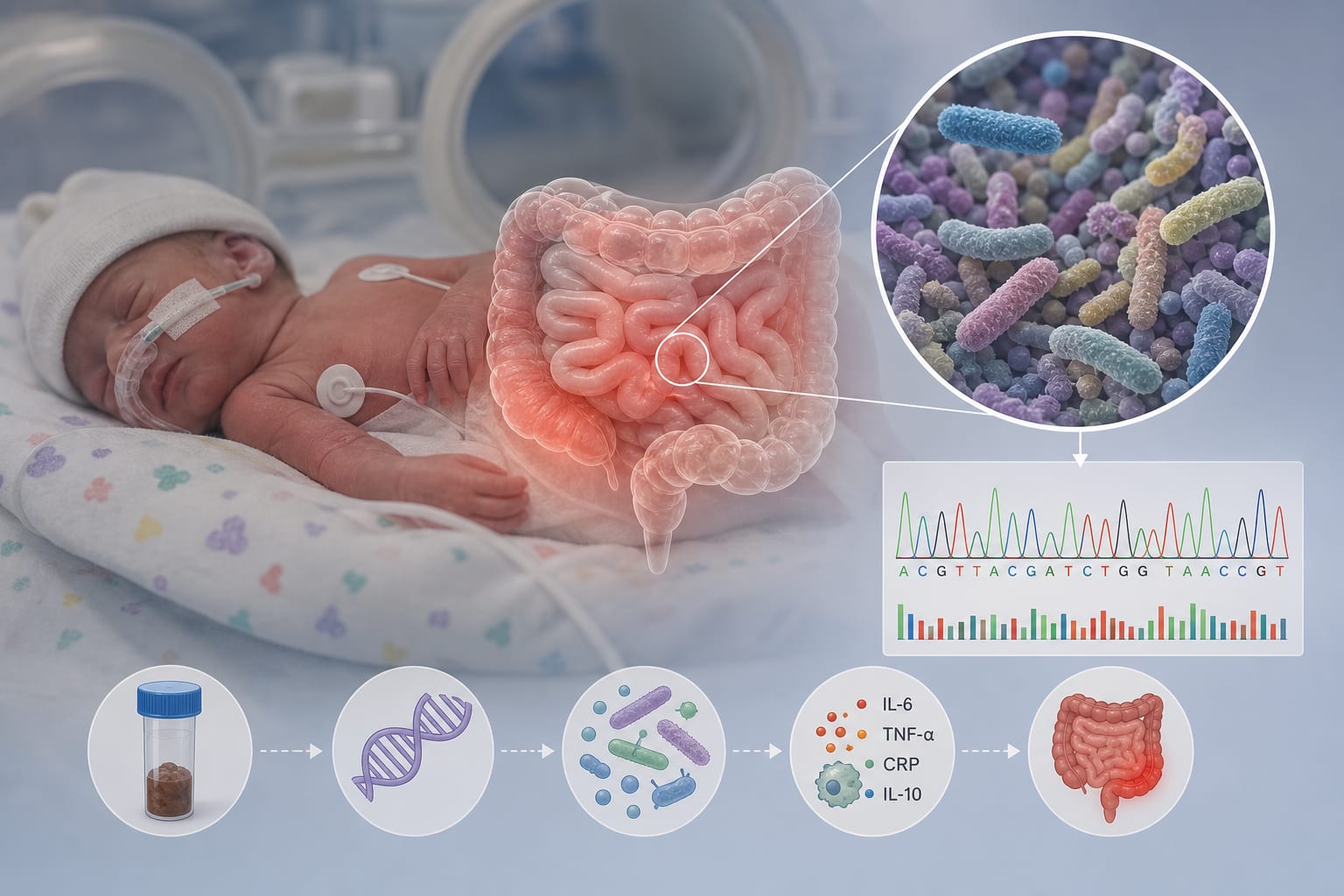
To investigate whether gut microbiota characteristics are associated with surgical intervention status in preterm infants with necrotizing enterocolitis (NEC) and to evaluate their potential discriminatory value for surgical risk stratification.
Key Findings:
Infants in the surgical group had a younger postnatal age at NEC diagnosis and higher Bell stage III disease prevalence.
Surgical group exhibited significantly higher levels of IL-6, IL-10, CRP, and TNF-α, and lower microbial diversity.
Lower relative abundances of Firmicutes, Bifidobacterium, and Lactobacillus, and higher abundances of Proteobacteria and Clostridium were found in the surgical group.
Bifidobacterium and microbial diversity indices were inversely associated with surgical intervention, while Proteobacteria and Clostridium were positively associated.
A combined microbiota-based model achieved an AUC of 0.904 for distinguishing surgical from non-surgical NEC.
Interpretation:
Limitations:
Findings are based on retrospective data and should not be interpreted as evidence of true prospective prediction.
Groups were defined according to final treatment outcome, which may bias results.