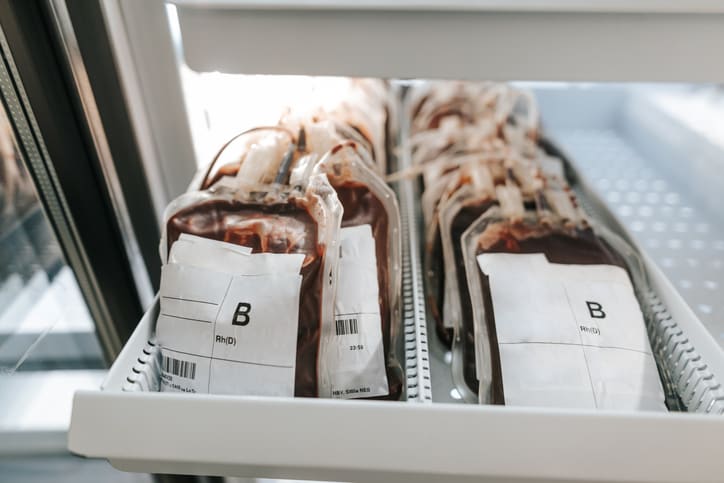
To investigate the risk of allergic transfusion reactions (ATRs) in patients with blood type O receiving B or AB plasma or platelets compared to those receiving O products, particularly in regions with high alpha-gal syndrome (AGS) prevalence.
Approach:
Study Design: International, multicenter, retrospective cohort study of platelet and plasma transfusions from 2020 to 2024 across 40 sites in the US, Australia, Japan, Germany, and France.
Data Collection: Analysis of 558,823 transfusions with a focus on ATR rates among blood type O patients receiving different ABO products.
Risk Assessment: Comparison of ATR rates in high vs low AGS prevalence clusters, examining reaction severity and ABO group of transfused products.
Key Findings:
Patients with blood type O receiving B or AB products had 3.93 times the risk of ATRs compared to those receiving O products in high AGS prevalence areas.
In low AGS prevalence areas, no excess ATRs were detected for B or AB products.
B products were associated with 4.48 times the risk of ATRs and AB products with 2.53 times the risk in high AGS prevalence clusters.
Moderate to severe ATRs were significantly higher in high AGS prevalence areas, with a risk of 9.14 times for B products.
Interpretation:
The study provides epidemiologic evidence suggesting that B antigen-containing products may pose a transfusion risk in regions with high AGS prevalence.
Limitations:
Retrospective design limited the ability to confirm AGS as the cause of observed reactions.
Potential underreporting of ATRs due to reliance on passive clinician reporting.
Geographic misclassification and other unrelated factors could have influenced findings.
Conclusion:
The findings indicate a need for hospitals in high AGS prevalence regions to evaluate local reaction patterns regarding B antigen-containing products.
Neighborhood vulnerability was associated with poorer survival among women with epithelial ovarian cancer, with a stronger association among Black women.