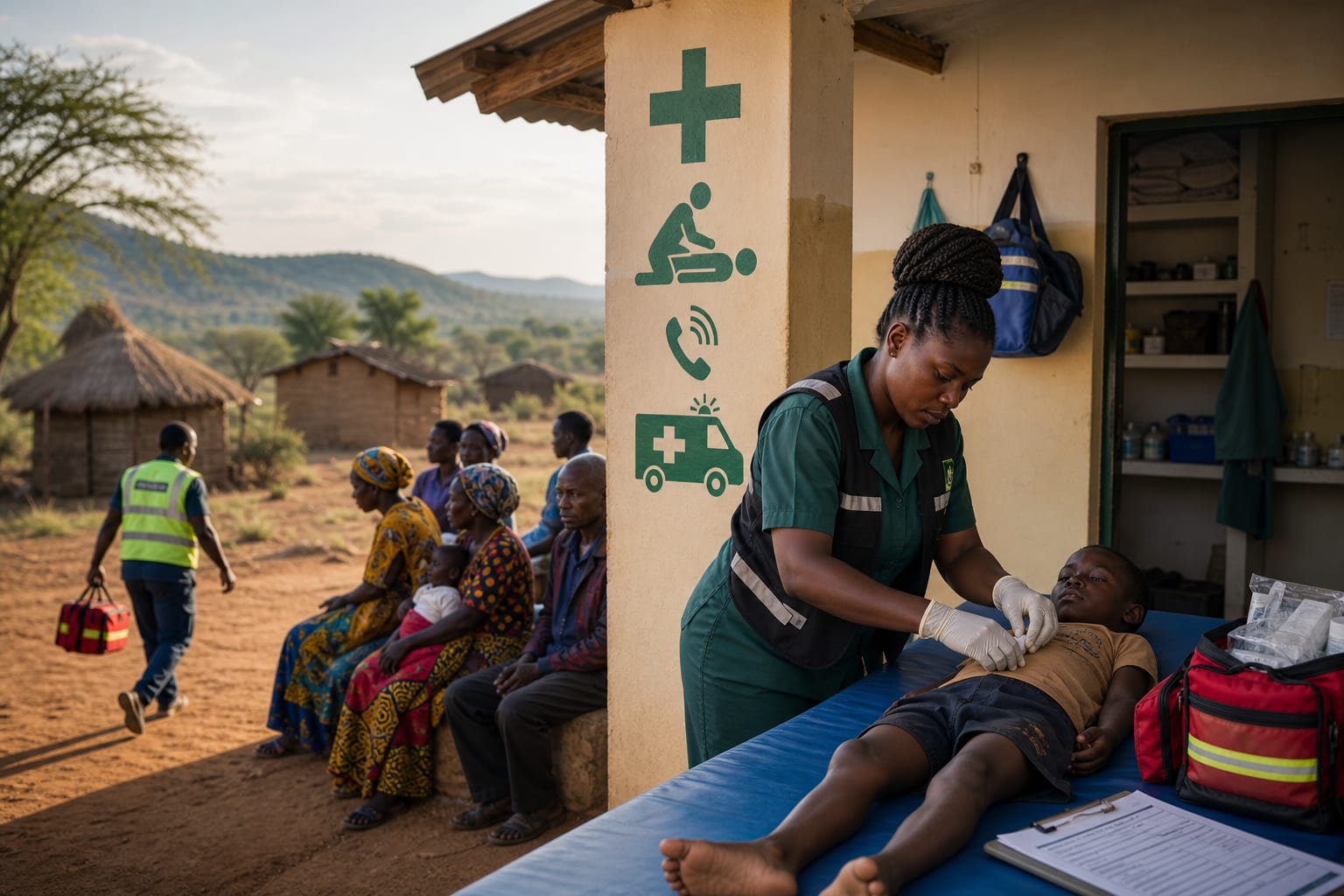
To evaluate the effectiveness of a village emergency care (VEC) model implemented in a rural Tanzanian village, focusing on changes in access, awareness, satisfaction, and perceived barriers to emergency care.
Approach:
Implementation: The VEC model was implemented in Bantu village, comprising seven components: facility readiness, human resources, emergency preparedness, staff training, community engagement, referral linkage, and service coverage.
Key Findings:
Enhanced emergency service availability in the village.
Sixfold increase in patient satisfaction.
Improved awareness of emergency conditions among the community.
Interpretation:
The findings provide a practical framework for integrating emergency care into rural primary healthcare systems and inform policies for decentralizing and financing such services in low- and middle-income countries.
Limitations:
Limited generalizability due to the pilot nature of the study.
Potential biases in self-reported satisfaction and awareness measures.
Conclusion:
The study demonstrates the potential of a community-based emergency care model to improve emergency services in rural settings.
Seven companies will participate in a two-phase program that provides early FDA technical guidance during development of new US pharmaceutical manufacturing facilities.