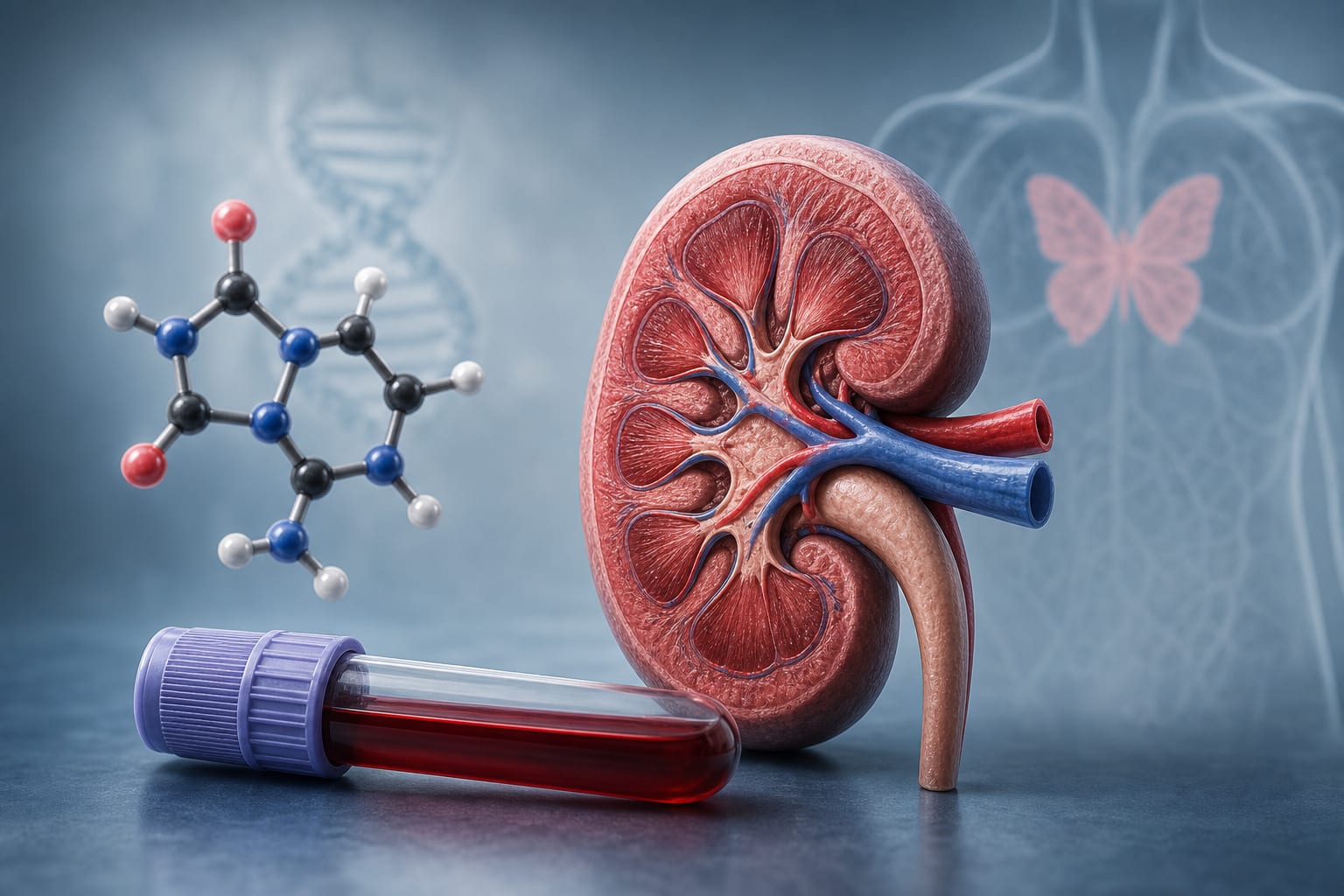
To assess the relationship between serum uric acid (SUA) levels and confirmed lupus nephritis (LN), and to investigate its potential correlation with the onset of LN in systemic lupus erythematosus (SLE) patients with preserved renal function, including its predictive value.
Key Findings:
SUA levels were significantly higher in LN patients compared to NLN patients (489.2 ± 80.8 vs. 339.8 ± 104.2 µmol/L, p < 0.001).
Elevated SUA was associated with baseline LN (adjusted OR 4.20, 95% CI 2.00–8.83, p < 0.001) and remained significant after treatment adjustments (adjusted OR 6.32, 95% CI 1.21–32.96, p = 0.029).
In the NLN group, 28.2% developed incident LN, with higher SUA linked to increased risk (adjusted HR 1.83, 95% CI 1.09–3.07, p = 0.022).
Interpretation:
SUA may serve as a biomarker for LN risk stratification in SLE patients with preserved renal function, potentially reflecting broader disease activity and systemic inflammation.
Limitations:
The study's observational design limits causal inferences.
The cohort size may restrict the generalizability of findings.
Potential confounding factors not controlled for in the study.
Conclusion:
SUA is associated with LN risk in SLE patients with preserved renal function, indicating its potential role as a noninvasive biomarker for early renal risk assessment.