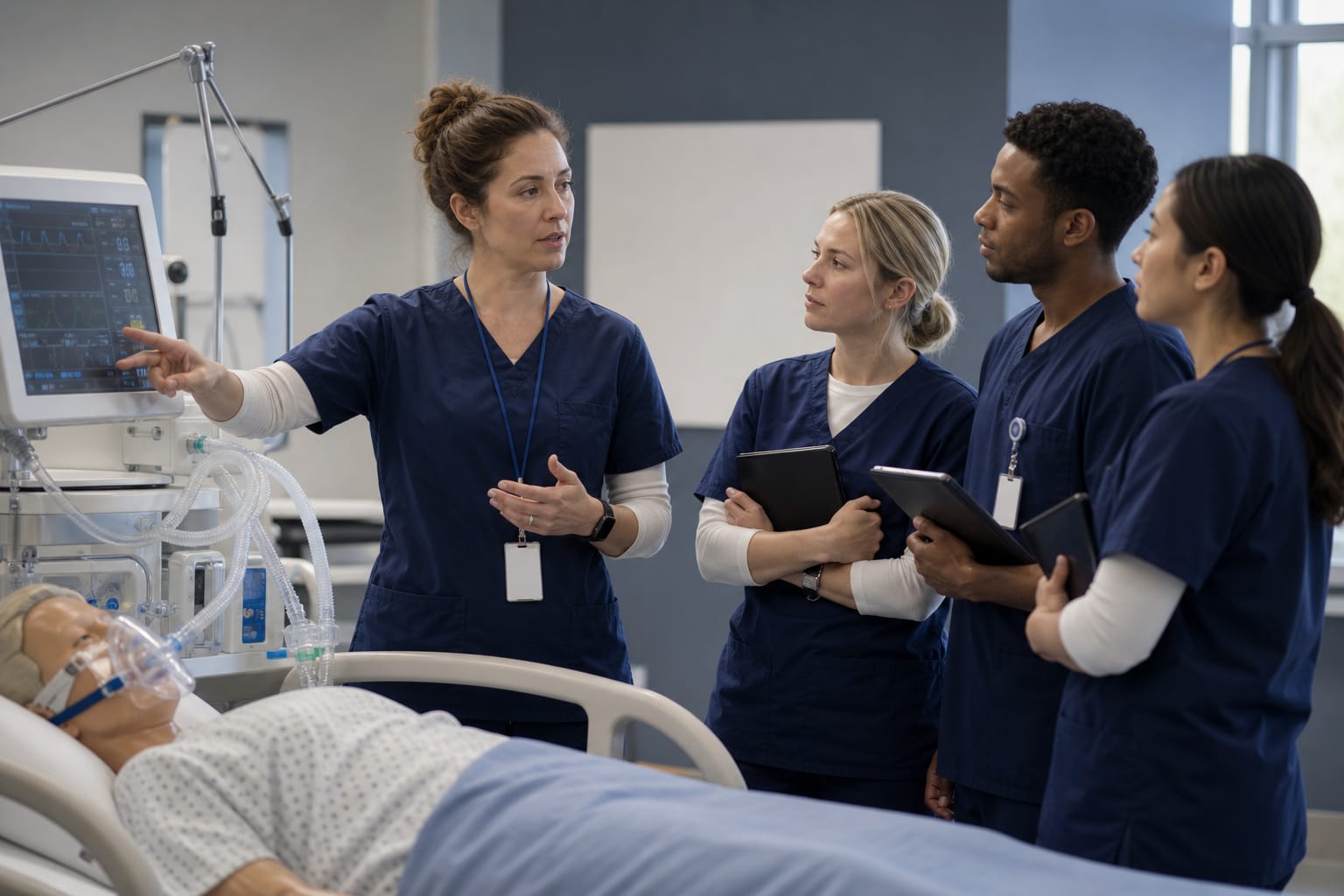
Present respiratory therapist and educator Rachel Jenkins’s perspectives on respiratory care education, professional involvement, career options, and the profession’s recognition.
Approach:
Background: Jenkins describes moving from criminology and psychology into respiratory therapy. She is a clinical instructor at Ozarks Technical Community College and formerly served as Vice President of the Missouri Society for Respiratory Care.
Education and practice: She discusses respiratory therapists’ training in patient assessment, bedside care, oxygenation, respiratory devices, and mechanical ventilation, as well as the challenge of translating online learning into practical skills.
Professional engagement: Jenkins describes professional conferences as opportunities to exchange ideas, discuss protocols and guidelines, and reconnect with the profession.
Key Findings:
Jenkins says educating inquisitive students is rewarding because their questions prompt her to explain underlying processes and continue learning.
She identifies hands-on skill development and applying knowledge in patient care as challenges for newer respiratory therapists.
She describes career options beyond critical care, including sleep laboratories, pulmonary function testing, and education.
She says Respiratory Care Week raises awareness of respiratory therapists’ roles and recognizes the profession’s progress.
Interpretation:
In the interview, Jenkins emphasizes respiratory therapy’s range of career paths and the importance of practical competence, professional engagement, and sharing the profession’s story.
Limitations:
The source is an interview and presents Jenkins’s perspectives; it does not report a research study or independently assess the claims.