Orosomucoid 2 (ORM2) in type 2 diabetes and coronary artery disease: a potential link between insulin resistance and vascular inflammation - Summary - MDSpire
Advertisement
Orosomucoid 2 (ORM2) in type 2 diabetes and coronary artery disease: a potential link between insulin resistance and vascular inflammation
To synthesize current knowledge of ORM2 molecular biology and functional repertoire, critically appraise evidence linking ORM2 dysregulation to T2DM and CAD, evaluate ORM2 as a clinical biomarker and therapeutic target, and propose future research directions.
Approach:
Link to T2DM and CAD: Reduced ORM2 expression is observed in obesity and insulin resistance, with associations to diabetic nephropathy and increased risk of myocardial infarction.
Key Findings:
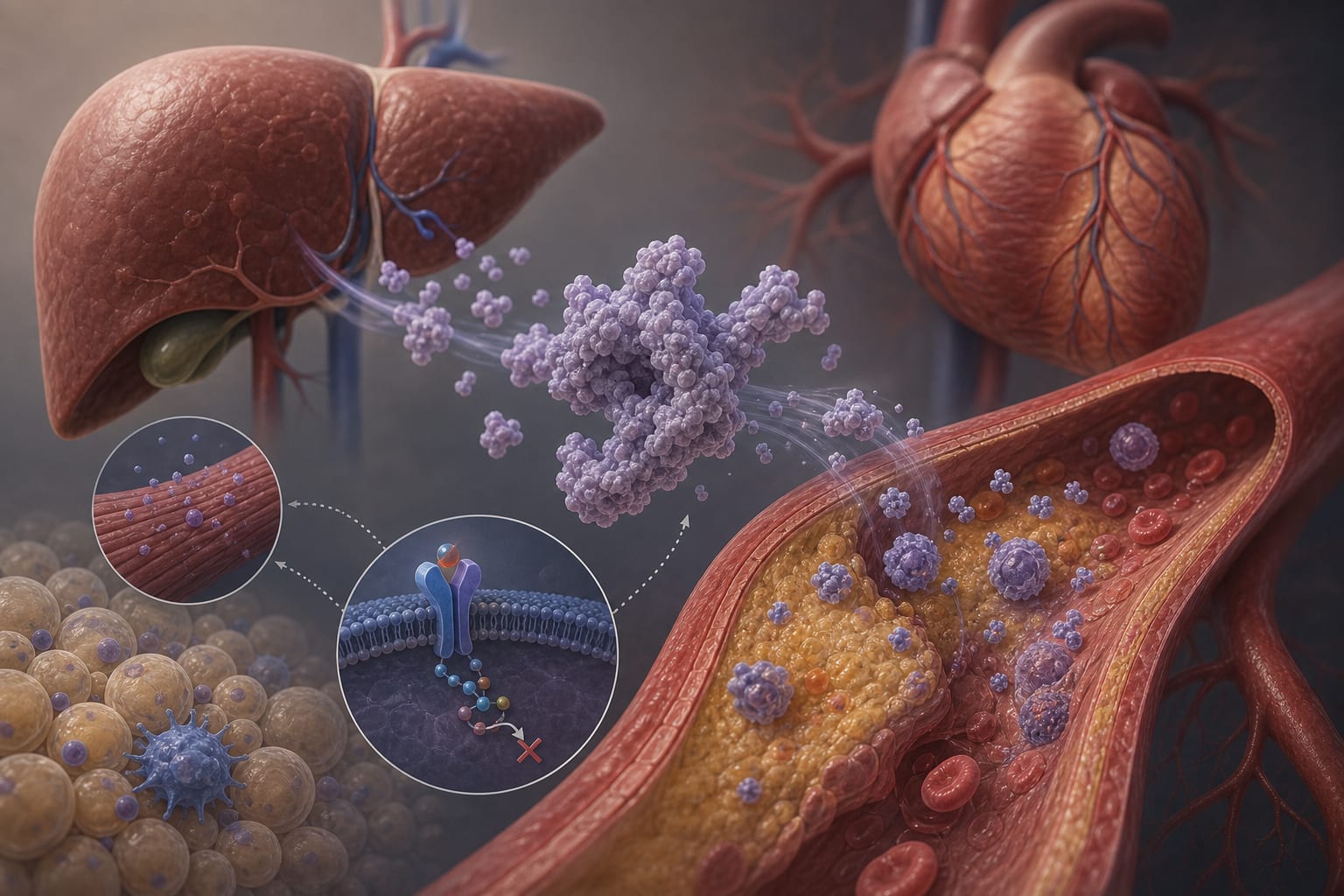
ORM2 suppresses hepatic de novo lipogenesis through AMPK signaling.
ORM2 improves glucose homeostasis by modulating IFN-γ/STAT1 signaling in adipose tissue.
Circulating ORM2 levels are linked to diabetic nephropathy and increased risk of myocardial infarction.
Recombinant ORM2 has been shown to attenuate atherosclerosis and hepatic steatosis in preclinical models.
Interpretation:
ORM2 may mediate the relationship between metabolic dysfunction and vascular inflammation in T2DM and CAD.
Limitations:
Insufficient characterization of ORM2 as a mechanistic bridge between metabolic dysfunction and coronary vascular inflammation.
Need for more prospective clinical studies and Mendelian randomization analyses to clarify ORM2's role.
Conclusion:
ORM2 is a potential biomarker and therapeutic target within the adipose–liver–vascular axis, necessitating further investigation.