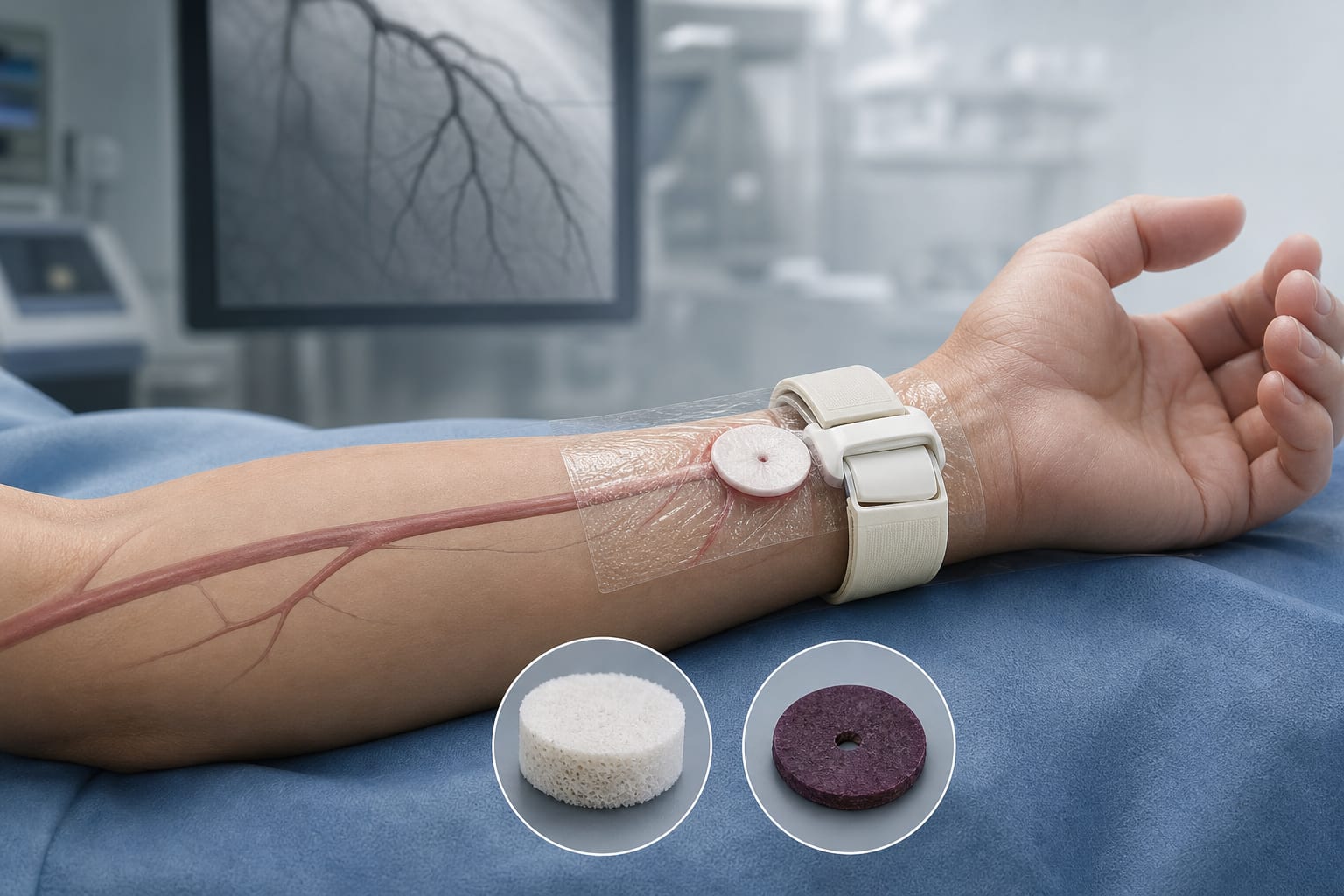
To evaluate the safety and efficacy of two novel, non-compression based, biologically and chemically active radial artery haemostasis devices compared with a widely used pneumatic balloon inflatable mechanical compression device, emphasizing the significance of this comparison.
Key Findings:
The study aims to determine if the novel devices can achieve clinically non-inferior outcomes compared to the control MCD, with preliminary data suggesting [insert specific results].
The hypothesis includes that the novel devices would require shorter compression times and easier management, potentially leading to improved patient outcomes.
Interpretation:
If comparable outcomes can be achieved using a simplified haemostasis protocol, the simpler method warrants consideration, particularly in high-volume settings where resource allocation is critical.
Limitations:
The standalone use of novel dressings has not been investigated in adequately powered large-scale randomized clinical trials, and potential biases or confounding factors may affect the results.
Conclusion:
The RAPHE trial seeks to validate the efficacy and safety of new haemostasis devices in a clinical setting, with implications for future practices in TRA procedures.
by Péter Márton Kulyassa, Balázs Tamás Németh, Zoltán Ruzsa, Tibor Szűk, Réka Ehrenberger, Brúnó Balázs, Kornél Manó Kákonyi, Dávid Becker, Béla Péter Merkely, István Ferenc Édes
A consensus statement called for immediate adoption of enhanced radiation protection devices, although evidence of long-term health benefits and effectiveness across procedural settings remains limited.