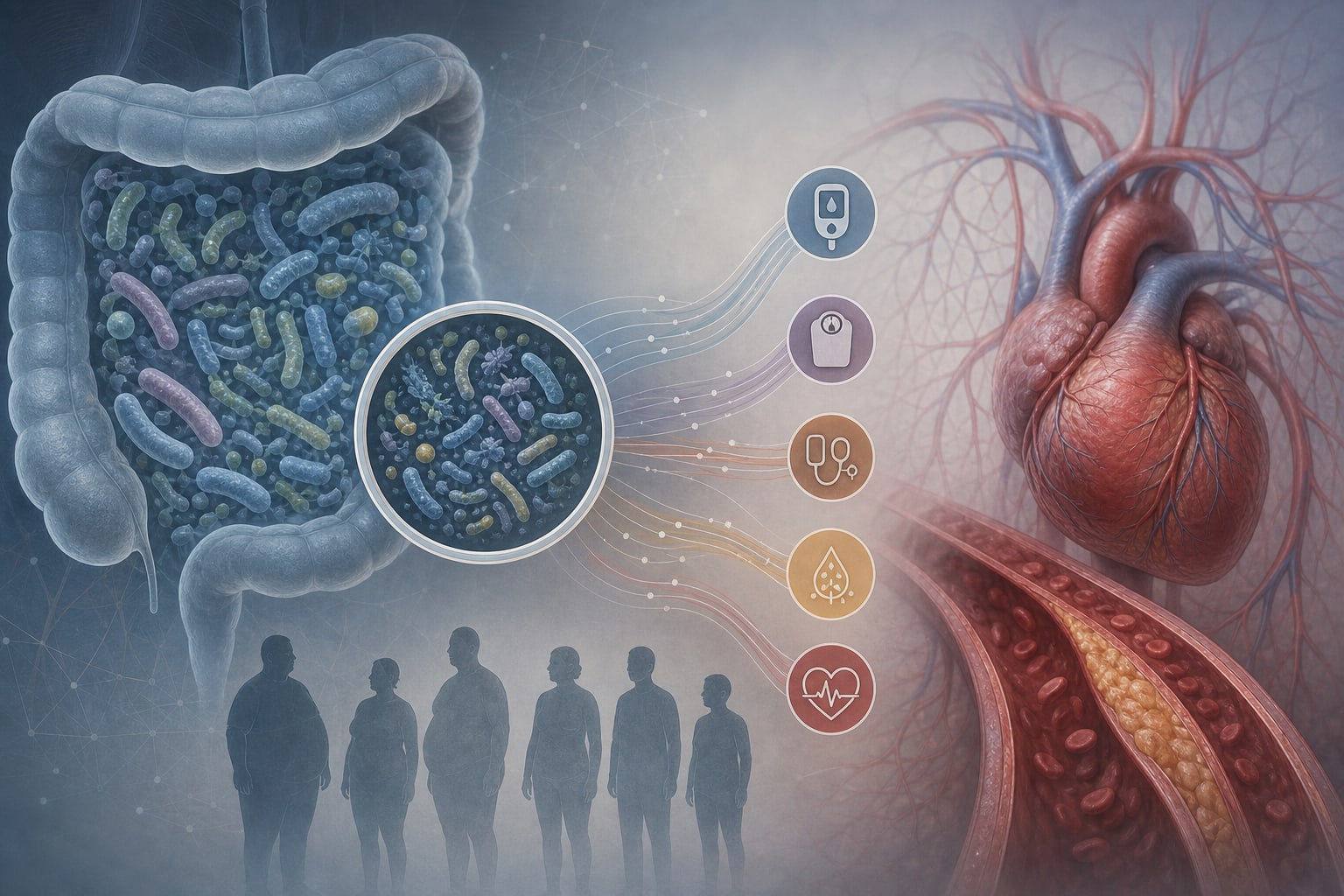
To explore differential pathological associations with established versus advanced CKM status (Cardiovascular-Kidney-Metabolic status) and assess consistency across Chinese and U.S. adults.
Key Findings:
IRD-PS showed the strongest association with established CKM status (Shaanxi: OR = 2.49, 95% CI 2.18, 2.86; NHANES: OR = 2.52, 95% CI 2.24, 2.82).
SLI-PS was significantly correlated with advanced CKM status (Shaanxi: OR = 1.11, 95% CI 1.03, 1.19; NHANES: OR = 1.07, 95% CI 1.01, 1.14).
IRD-PS accounted for 67.1% of the effect of VA on established CKM status in Shaanxi and 64.5% in NHANES.
Significant racial/ethnic heterogeneity in the IRD-PS–established CKM status association was observed in NHANES.
Interpretation:
Metabolic dysregulation is primarily linked to established CKM status, while systemic inflammation (characterized by elevated inflammatory markers) is more prominent in advanced CKM status.
Limitations:
Cross-sectional design limits causal inferences, as it captures data at a single point in time.
Findings may not generalize beyond the analyzed subsamples, as the study populations may not represent broader demographics.
Conclusion:
The study supports a stage-specific pathological model of CKM syndrome, warranting further validation in longitudinal cohorts. These findings have implications for targeted interventions in clinical practice.