Trust in Cancer Information Sources and Awareness of Human Papillomavirus as a Cause of Cervical Cancer Among
-
By
-
Olajumoke Ope Oladoyin
-
Paula Cuccaro
-
Lara S. Savas
-
Robert Yu
-
Joel Fokom Domgue
-
Sheryl McCurdy
-
Sanjay Shete
-
June 24, 2026
-
Objective:
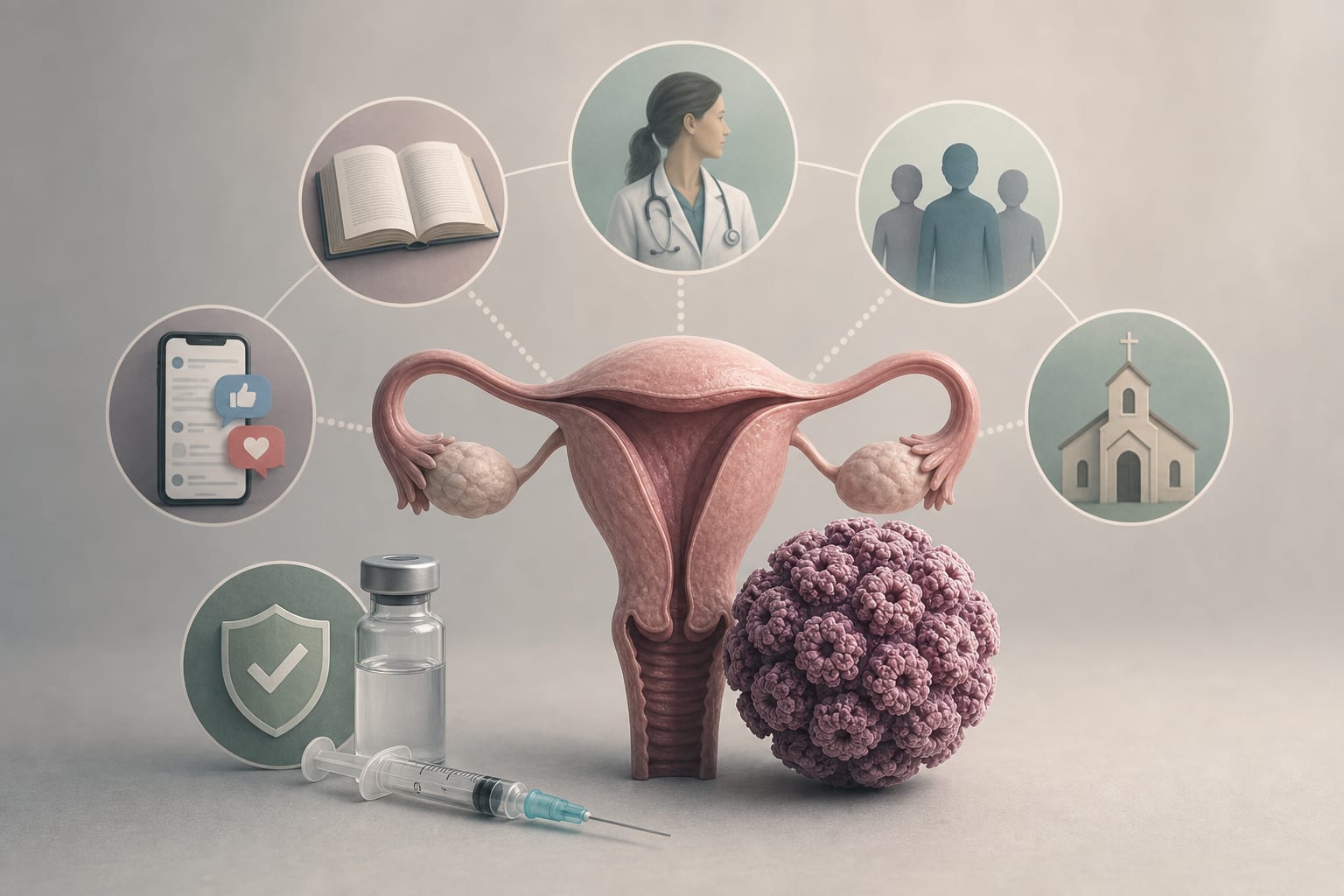
To evaluate how trust in information sources influences individuals’ awareness of HPV as a cause of cervical cancer.
Approach:
- Study Design: Cross-sectional study using data from the Health Information National Trends Survey (HINTS) collected from March 7 to November 8, 2022.
- Participants: Noninstitutionalized US adults aged 18 years or older, with a total of 29,600 addresses included and a response rate of 28.1%.
- Outcome Measurement: Awareness of HPV as a cause of cervical cancer was assessed through a specific survey question.
- Trust Variables: Trust in government health agencies, physicians, and religious organizations regarding cancer information was measured.
Key Findings:
- Approximately 90% of cervical cancers are attributed to HPV infection.
- HPV vaccination completion rate in the US was 61.4% in 2023, below the Healthy People 2030 target of 80.0%.
- Public awareness of HPV decreased from 70.1% in 2019 to 68.3% in 2022.
- Trust in government health agencies for cancer information decreased to 16.0% in 2023, the lowest since 2011.
- Individuals belonging to organized religious bodies showed lower awareness of HPV and vaccine uptake.
Interpretation:
Limitations:
- The study's cross-sectional design limits causal inferences.
- The response rate of 28.1% may affect the generalizability of the findings.
Conclusion:
Sources: