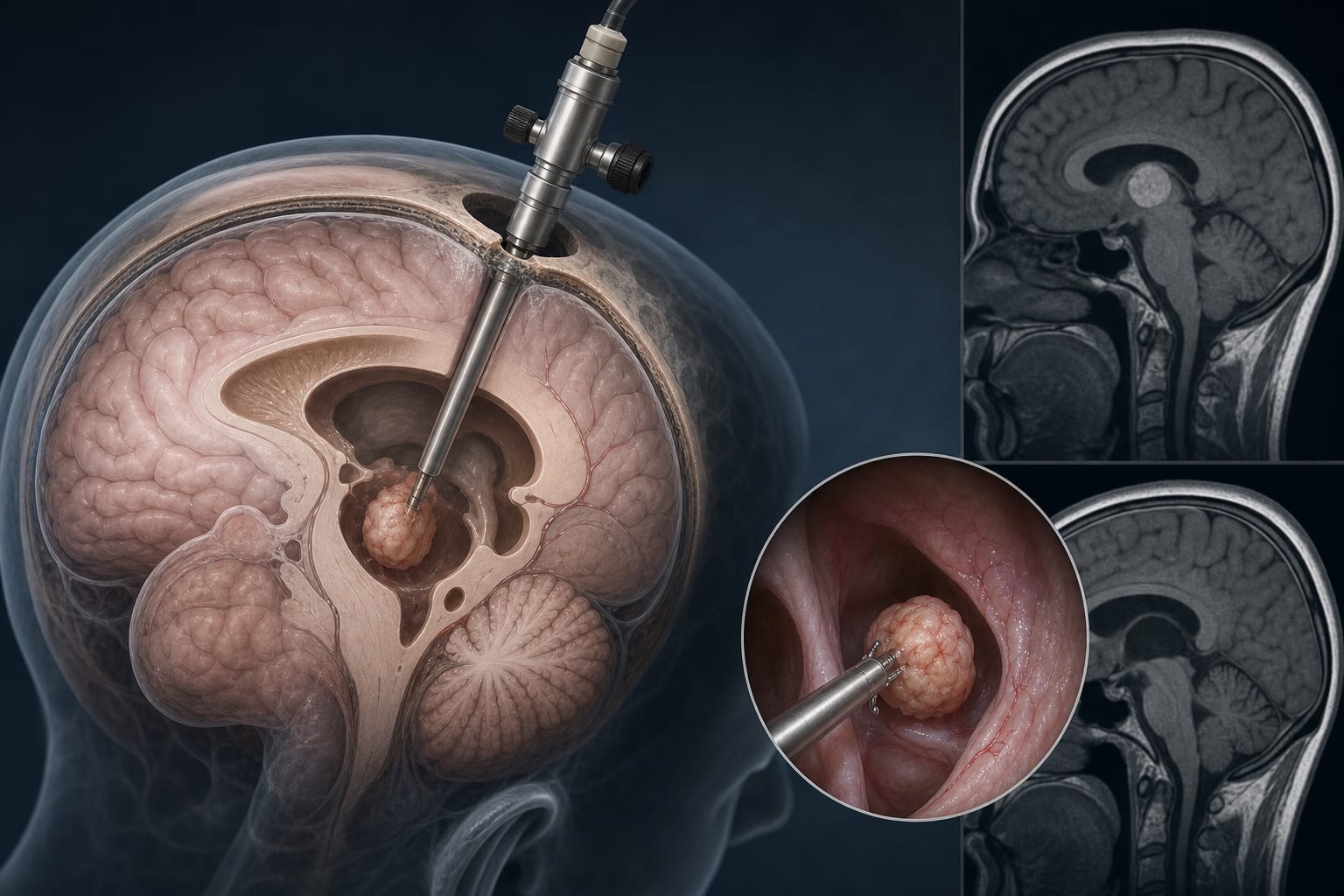
To evaluate the feasibility, technical workflow, and clinical outcomes of single burr-hole pure ventriculoscopic resection for small solid intraventricular lesions.
Key Findings:
Gross-total resection achieved in 92.1% (35/38) of cases.
No seizures, cerebrospinal fluid leakage, permanent neurological deficits, or mortality occurred.
Complications included transient diplopia in 5.3% and one intracranial infection in 2.6% of patients.
No definite lesion recurrence observed during a mean follow-up of 60 months.
Pathological diagnoses included cavernous malformations, subependymomas, meningiomas, low-grade gliomas, and others.
Interpretation:
Single burr-hole pure ventriculoscopy is a safe and feasible minimally invasive approach for selected small intraventricular lesions, enabling high rates of complete resection with low morbidity, which is significant for patient outcomes.
Limitations:
Retrospective study design may introduce bias.
Limited sample size may affect generalizability of results.
Potential for selection bias in patient inclusion.
Conclusion:
Single burr-hole pure ventriculoscopy offers a minimally invasive option for resecting solid intraventricular lesions with favorable outcomes.
Qualitative interviews identified four themes involving emergency challenges and response, teamwork, psychological stress and coping, and professional growth needs in trauma surgery.