Editorial: Challenges and strategies in the management of ER/PgR Low-expression breast cancer: exploring fundamentals, clinical insights, and treatment approaches - Summary - MDSpire
Advertisement
Editorial: Challenges and strategies in the management of ER/PgR Low-expression breast cancer: exploring fundamentals, clinical insights, and treatment approaches
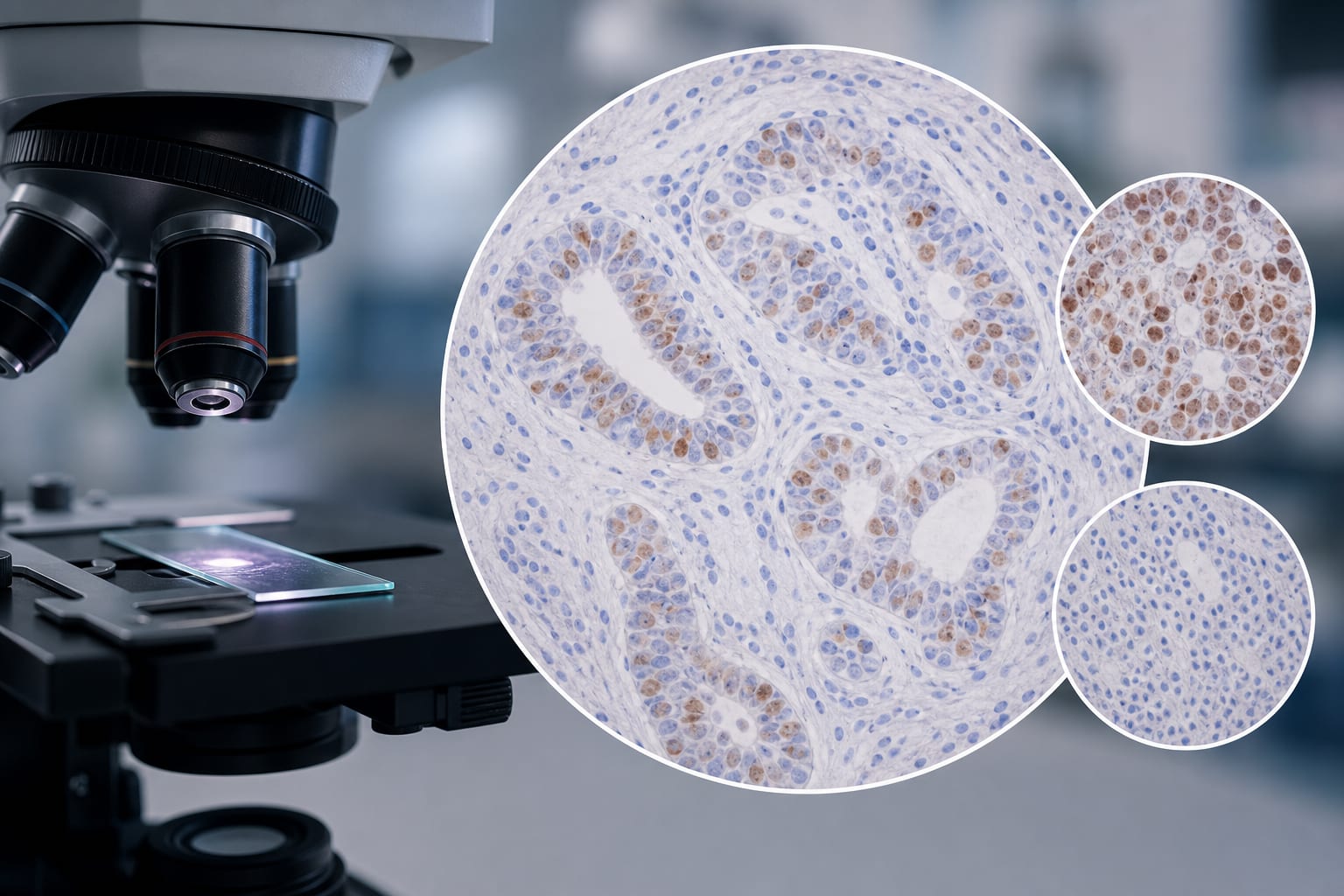
To explore the challenges and strategies in managing ER/PgR low-expression breast cancer through a comprehensive multidisciplinary approach, emphasizing collaboration across specialties.
Key Findings:
Current ASCO/CAP 1% positivity threshold does not capture the heterogeneity of ER/PgR low-expression breast cancer, leading to potential mismanagement.
Approximately 75-80% of ER-low tumors are non-luminal and basal-like, with outcomes resembling TNBC, indicating a need for tailored treatment strategies.
Low PgR combined with high Ki67 is significantly associated with HER2 overexpression, suggesting a potential target for therapy.
Eribulin chemotherapy and PD-1/PD-L1 inhibitors show promise in treating advanced breast cancer, including ER-low cases, warranting further investigation.
Novel drug delivery strategies, such as myricetin nanoemulsion, demonstrate enhanced anti-tumor activity, highlighting innovative therapeutic avenues.
Interpretation:
ER/PgR low-expression breast cancer requires a biologically informed approach that integrates molecular subtyping and immune profiling for effective management.
Limitations:
The current classification systems inadequately address the complexities of ER/PgR low-expression breast cancer, potentially leading to suboptimal treatment.
There is a need for standardized biomarker assessment and prospective trials specifically targeting ER-low patients to validate findings and improve clinical outcomes.
Conclusion:
A biologically grounded approach is essential for improving outcomes in ER/PgR low-expression breast cancer, with dedicated prospective trials as a priority, reinforcing the importance of a multidisciplinary strategy.
Each year, the American Society of Clinical Oncology Annual Meeting brings together cancer specialists from around the world to share the research most likely to shape the next chapter of cancer care. This year’s major updates point to several important themes: more precise treatment, smarter use of surgery and chemotherapy, new approaches for difficult-to-treat cancers and a growing recognition that supportive care, including exercise, can be part of cancer treatment planning.