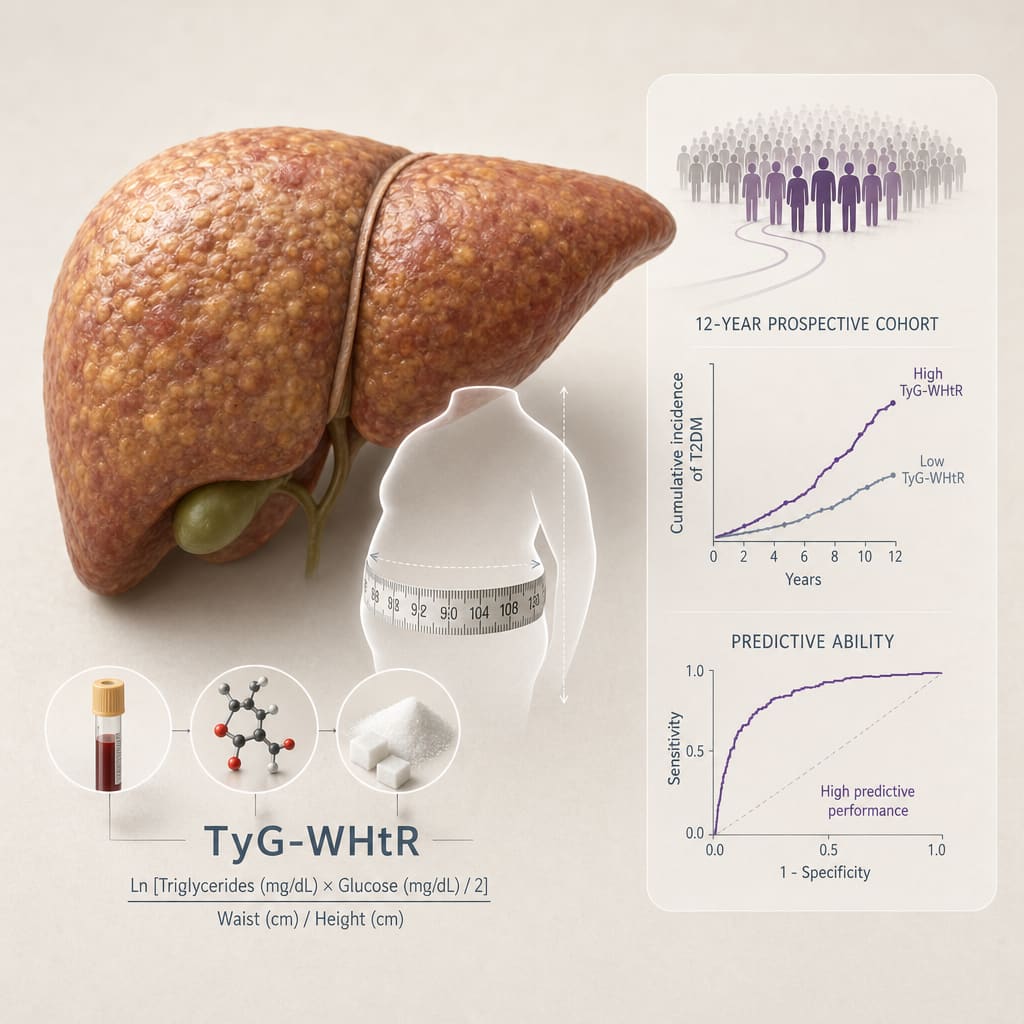
To evaluate the predictive capacity of twelve metabolic composite indices for the development of type 2 diabetes mellitus (T2DM) specifically in patients with nonalcoholic fatty liver disease (NAFLD), a condition characterized by significant insulin resistance.
Key Findings:
All twelve metabolic indices were significantly correlated with new-onset T2DM, with TyG-WC index showing the highest hazard ratio (HR: 1.80, 95% CI: 1.56–2.07), followed by TyG-WHtR (HR: 1.77, 95% CI: 1.54–2.04) and TyG-BMI (HR: 1.70, 95% CI: 1.47–1.96).
TyG-WHtR showed the highest predictive accuracy (AUC = 0.680) but was not statistically superior to TyG-WC (P = 0.492).
Associations were linear, with no significant interactions in subgroup analyses (P for interactions >0.05).
Interpretation:
The TyG-WHtR index is a reliable tool for T2DM risk categorization in NAFLD patients, demonstrating consistent predictive capacity over time, which could inform clinical decision-making.
Limitations:
The study is based on a specific cohort, which may limit generalizability to other populations.
Potential confounding factors not accounted for in the analysis, such as lifestyle or genetic factors, may influence results.
Conclusion:
Metabolic composite indices, particularly TyG-WHtR, are effective in predicting T2DM in NAFLD patients, underscoring the importance of early risk identification to mitigate long-term health consequences.