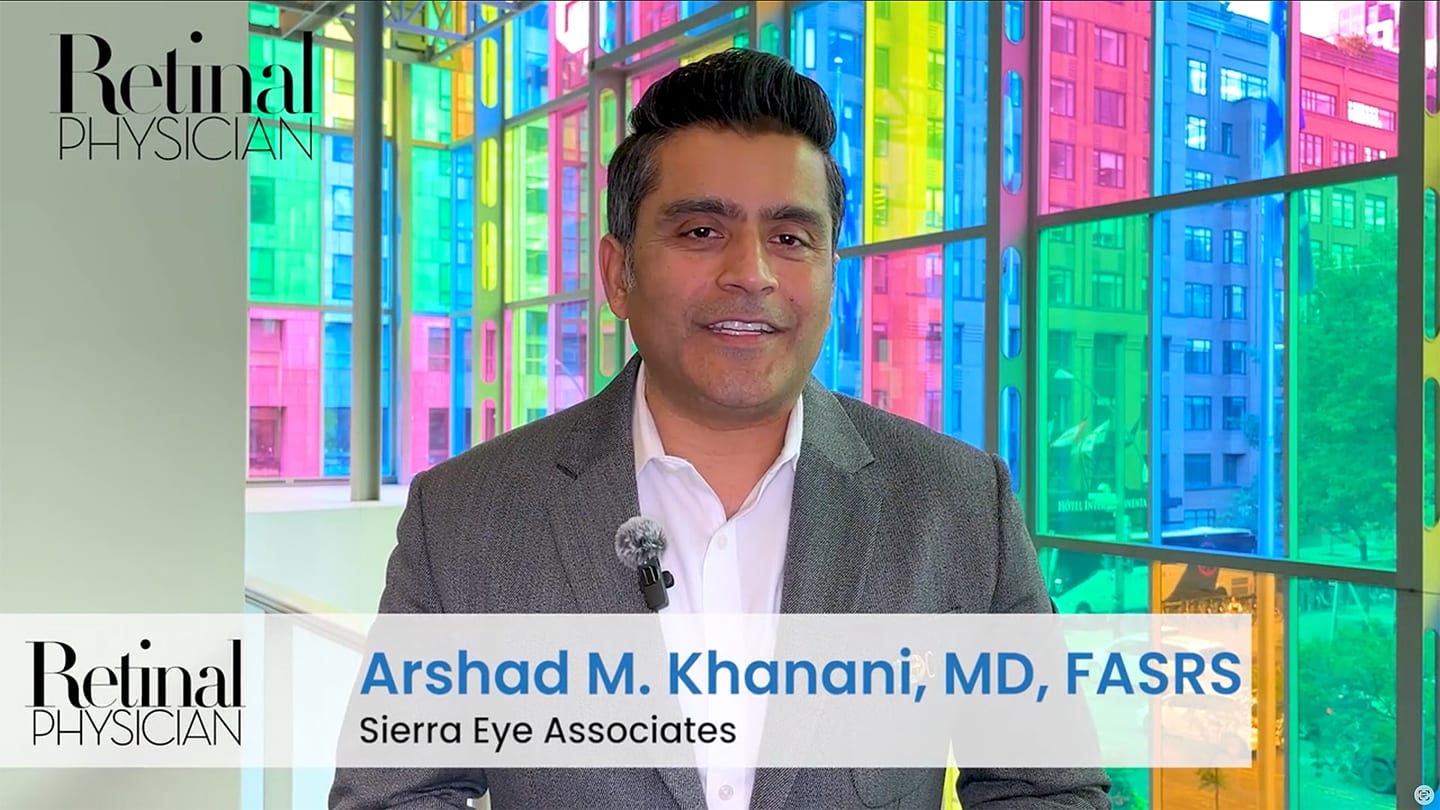
With phase 3 topline data for sura-vec expected later this year, Arshad M. Khanani, MD, FASRS, reflects on how gene therapy could transform long-term treatment for nAMD.
To explore the potential of gene therapy, specifically RGX-314 (sura-vec), in transforming long-term treatment for wet age-related macular degeneration (nAMD).
Approach:
Gene Therapy Overview: Discussion on the advancements in gene therapy delivered subretinally as a drug delivery platform.
Upcoming Data: Anticipation of phase 3 topline data for sura-vec from the ATMOSPHERE and ASCENT trials.
Key Findings:
RGX-314 has the potential to reduce treatment burden for patients with nAMD.
Gene therapy may allow a subset of patients to avoid further injections after a single treatment.
Real-world treatment outcomes for nAMD are often inferior to those seen in clinical trials.
Interpretation:
Gene therapy could represent a paradigm shift in the management of nAMD, improving long-term outcomes.
Limitations:
Current findings are based on preliminary data; phase 3 results are pending.
Conclusion:
The implementation of gene therapy in clinical practice could optimize treatment for patients with wet AMD in the coming years.