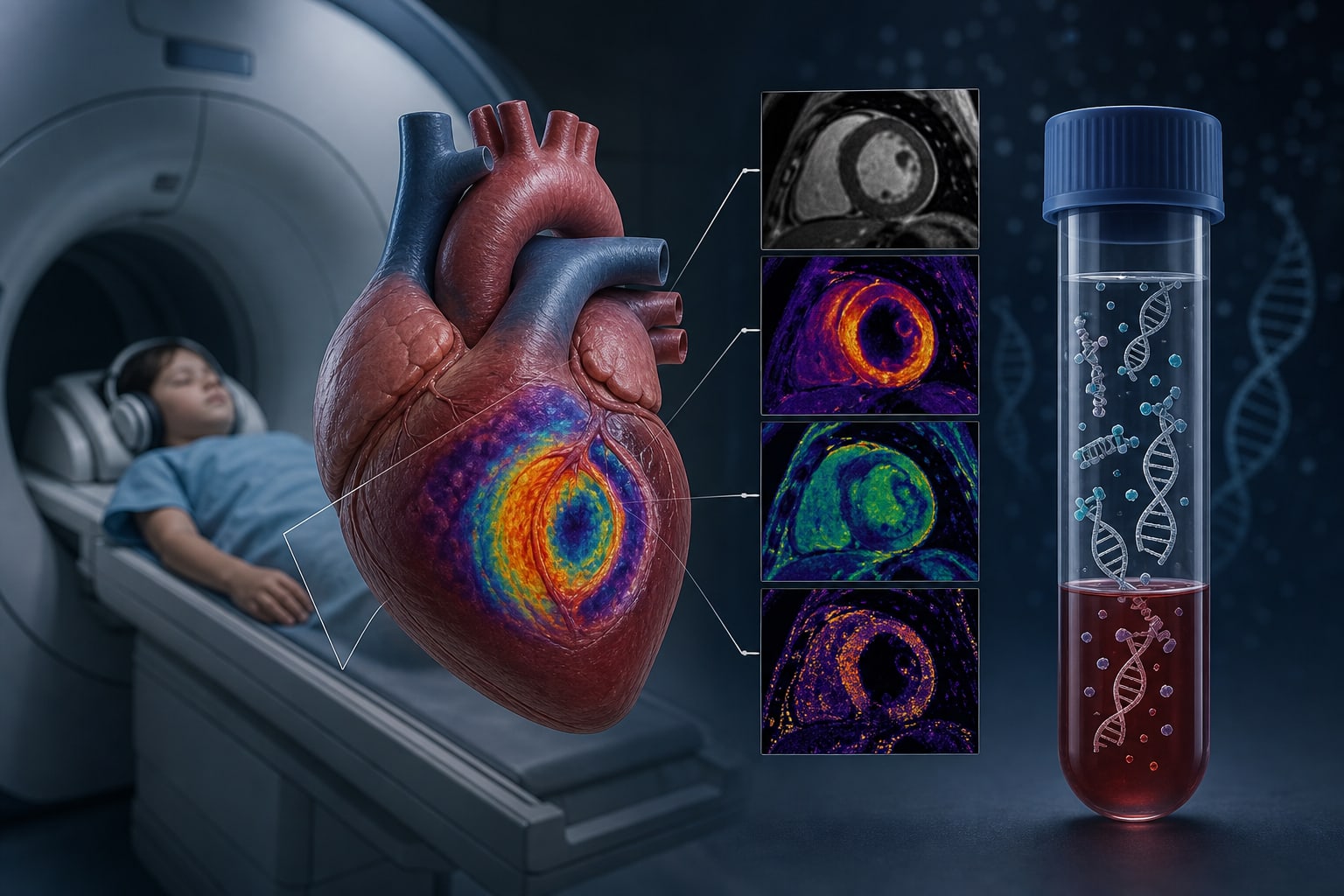
To describe the relationship between multiparametric cardiac magnetic resonance imaging (CMR) and donor-derived cell-free DNA (ddcfDNA) levels in pediatric heart transplant (PHT) recipients.
Approach:
Study Design: Single center retrospective study of PHT patients who underwent CMR and ddcfDNA testing.
CMR Protocol: CMR performed using a 1.5T Siemens scanner, including multiparametric structure and function assessment.
Data Analysis: Retrospective chart review for demographics and graft characteristics; statistical analysis using Wilcoxon rank sum test and multivariable regression models.
Key Findings:
68 PHT patients included: 54 in low ddcfDNA group and 14 in high group.
Median age at CMR was significantly different: 9.9 years (low) vs. 15.9 years (high) (p = 0.04).
Higher median ddcfDNA in the high group: 0.5% [0.21–2.5].
History of cardiac allograft vasculopathy (CAV) was more common in the high group (15.38% vs. 1.85%, p = 0.03).
History of moderate/severe rejection was also more common in the high group (35.7% vs. 13.0%, p = 0.047).
Interpretation:
The study describes a relationship between elevated ddcfDNA levels and altered CMR metrics in pediatric heart transplant recipients.
Limitations:
Single center study may limit generalizability.
Retrospective design may introduce selection bias.
Conclusion:
The findings indicate that higher levels of ddcfDNA correlate with altered CMR metrics in pediatric heart transplant recipients.
Advanced heart failure does not always present as a single defining event. Referring physicians may instead notice a pattern of worsening symptoms, recurrent hospitalizations or increasing difficulty maintaining a patient’s clinical stability.