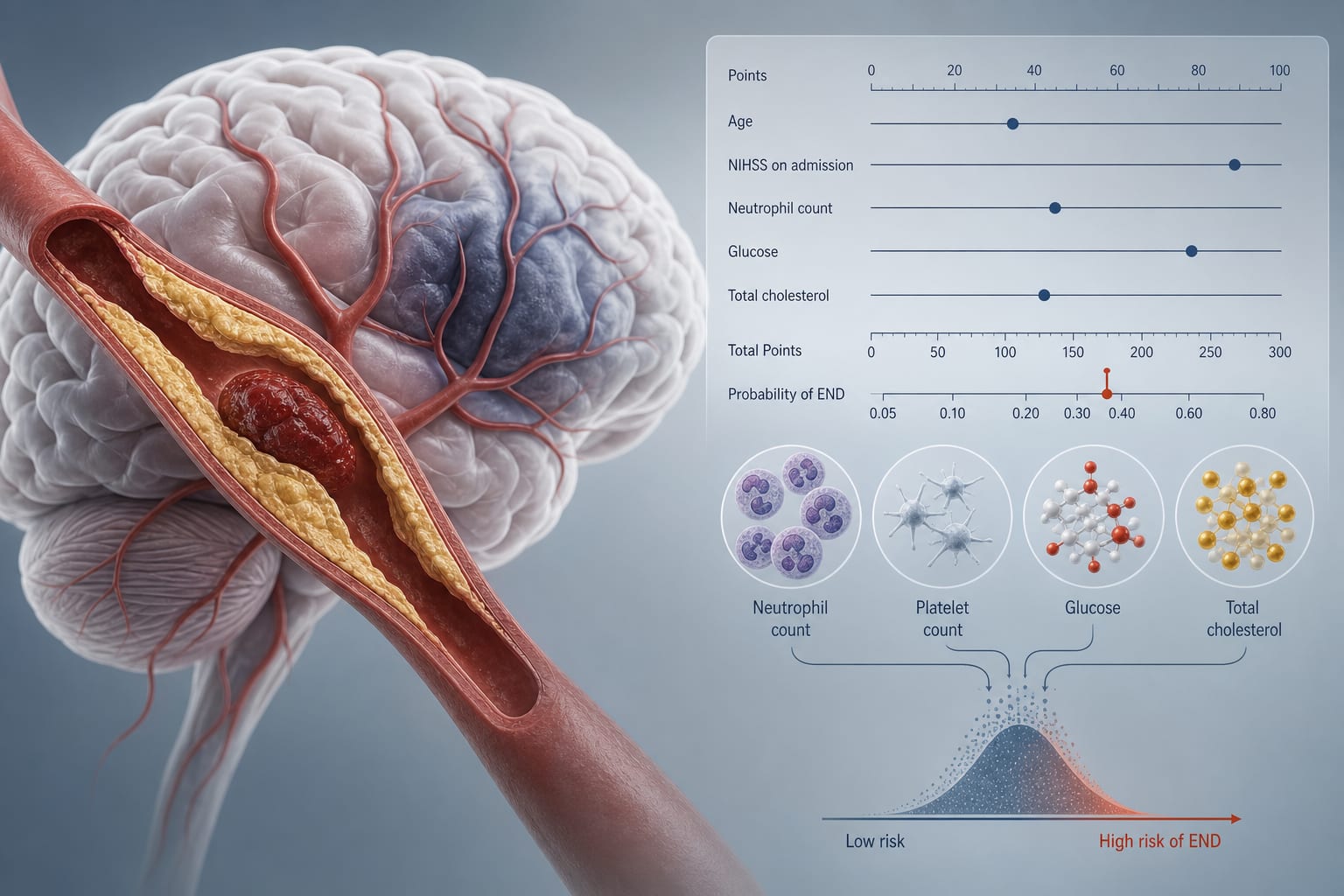
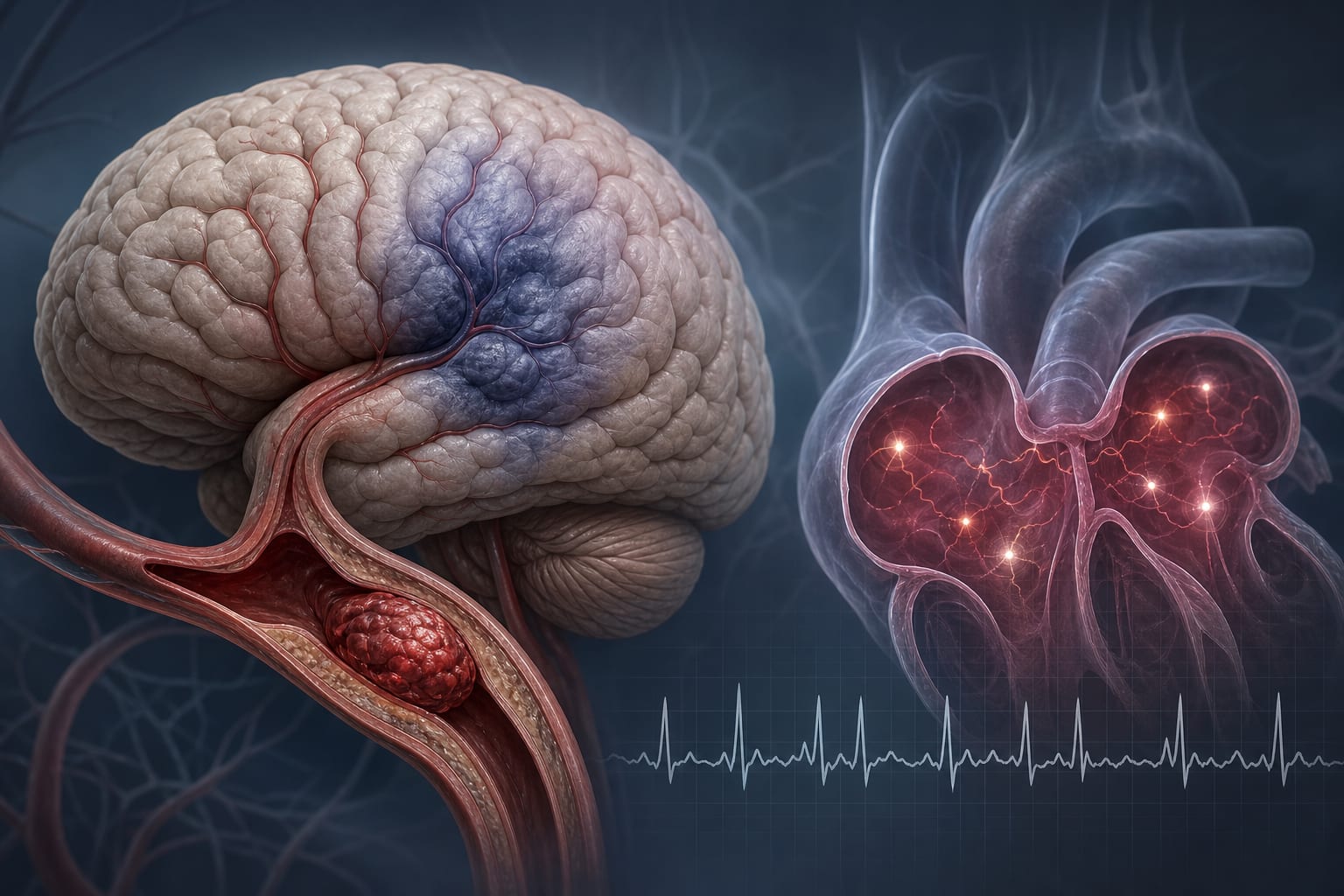
To develop and validate a predictive model for early neurological deterioration (END) in acute ischemic stroke due to large artery atherosclerosis.
Approach:
Study Population: Included 433 patients with acute ischemic stroke due to large artery atherosclerosis, divided into training (325) and internal validation (108) cohorts.
Model Development: Used univariate analysis and LASSO regression for variable selection; multivariate logistic regression was employed to create the predictive model visualized as a nomogram.
Model Assessment: Model performance evaluated using ROC curves, calibration curves, and decision curve analysis (DCA).
Key Findings:
END occurred in 27.1% of the training cohort and 26.9% of the internal validation cohort.
Seven variables were identified: neutrophil count, platelet count, lymphocyte count, fasting plasma glucose, total cholesterol, homocysteine, and D-dimer.
Six variables were independent predictors of END (p < 0.05); fasting plasma glucose was retained based on LASSO selection despite p = 0.084.
Training cohort AUC was 0.791 with 72.7% sensitivity and 78.5% specificity; internal validation cohort AUC was 0.778 with 75.9% sensitivity and 70.9% specificity.
Interpretation:
Six of the identified variables were independent predictors of early neurological deterioration in patients with acute ischemic stroke due to large artery atherosclerosis.
Limitations:
Study limited to a single center, which may affect generalizability.
The model requires further external validation in diverse populations.
Conclusion:
The model developed incorporates key laboratory and clinical variables, facilitating early identification of high-risk patients.