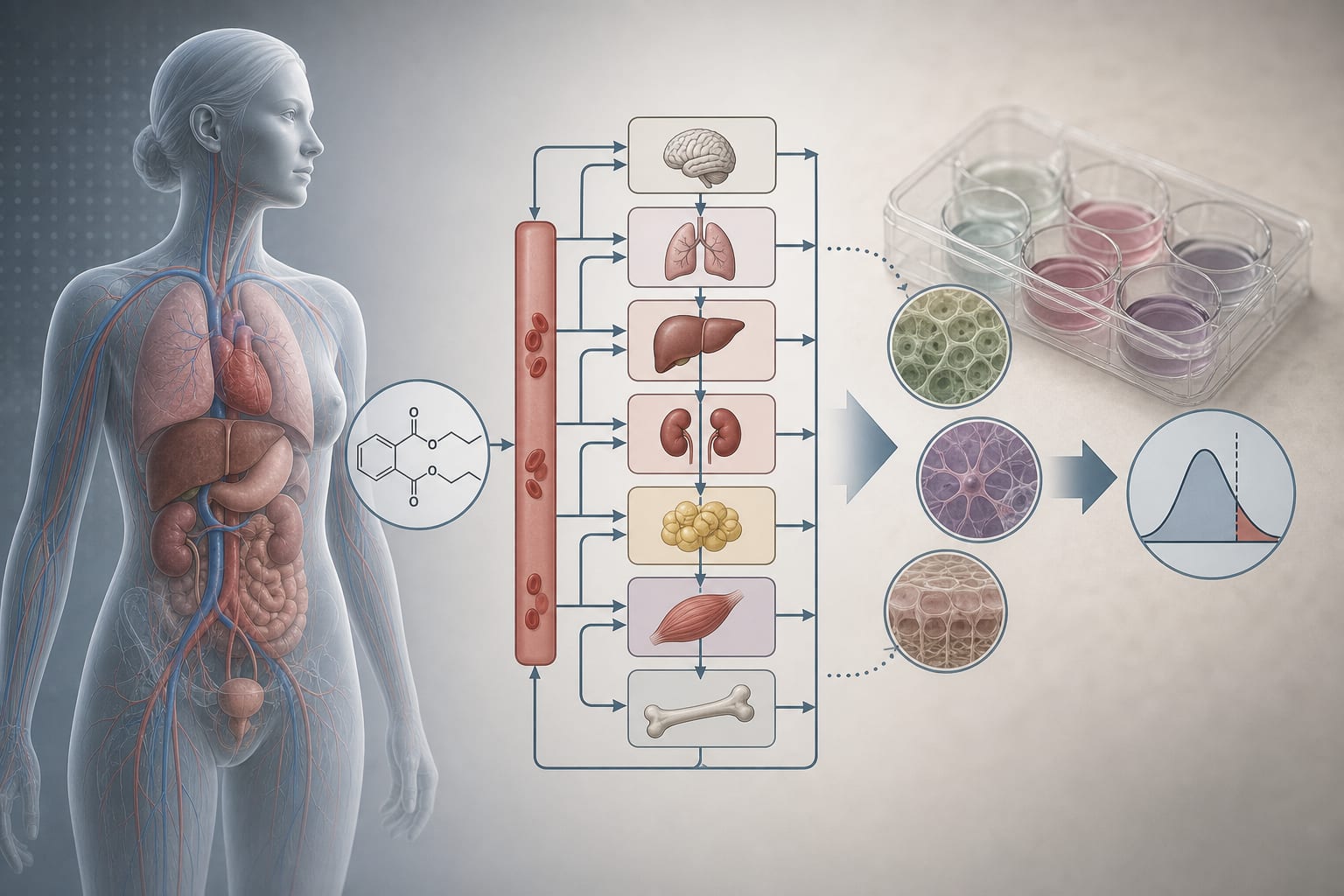
To investigate the application of PBK modeling to support next generation risk assessment (NGRA) for phthalate esters, focusing on their metabolites.
Approach:
Model Development: Developed PBK models for DBP and DEHP along with their metabolites MBP and MEHP using in silico and in vitro parameters, integrating absorption, distribution, metabolism, and excretion processes.
Exposure Simulation: Simulated plasma Cmax of DBP, DEHP, and their metabolites under various estimated daily intake levels, providing a basis for risk assessment.
Risk Assessment: Compared simulated plasma concentrations with points of departure (PoDs) derived from ToxCast data to facilitate a comprehensive risk assessment.
Key Findings:
Phthalate esters DBP and DEHP are rapidly metabolized to bioactive monoesters MBP and MEHP, which can reach internal concentrations associated with biological effects.
PBK modeling can effectively simulate plasma concentrations of both parent compounds and their metabolites, supporting risk assessment frameworks.
Interpretation:
The study provides a proof-of-principle for extending NGRA frameworks to include chemicals with bioactive metabolites.
Limitations:
Models were developed without fitting to human in vivo data, which may limit their applicability.
Focus primarily on specific phthalate esters may limit generalizability to other compounds.
Conclusion:
The integration of PBK modeling into NGRA frameworks can enhance risk assessments for phthalate esters by considering their metabolites.