Long-Term Anatomical Durability and Clinical Outcomes of Concomitant Laparoscopic Sleeve Gastrectomy and Hiatal Hernia Repair: Up to 10-Year Multicenter Analysis - Summary - MDSpire
Conexiant’s news site is now MDSpire News. Learn more
Advertisement
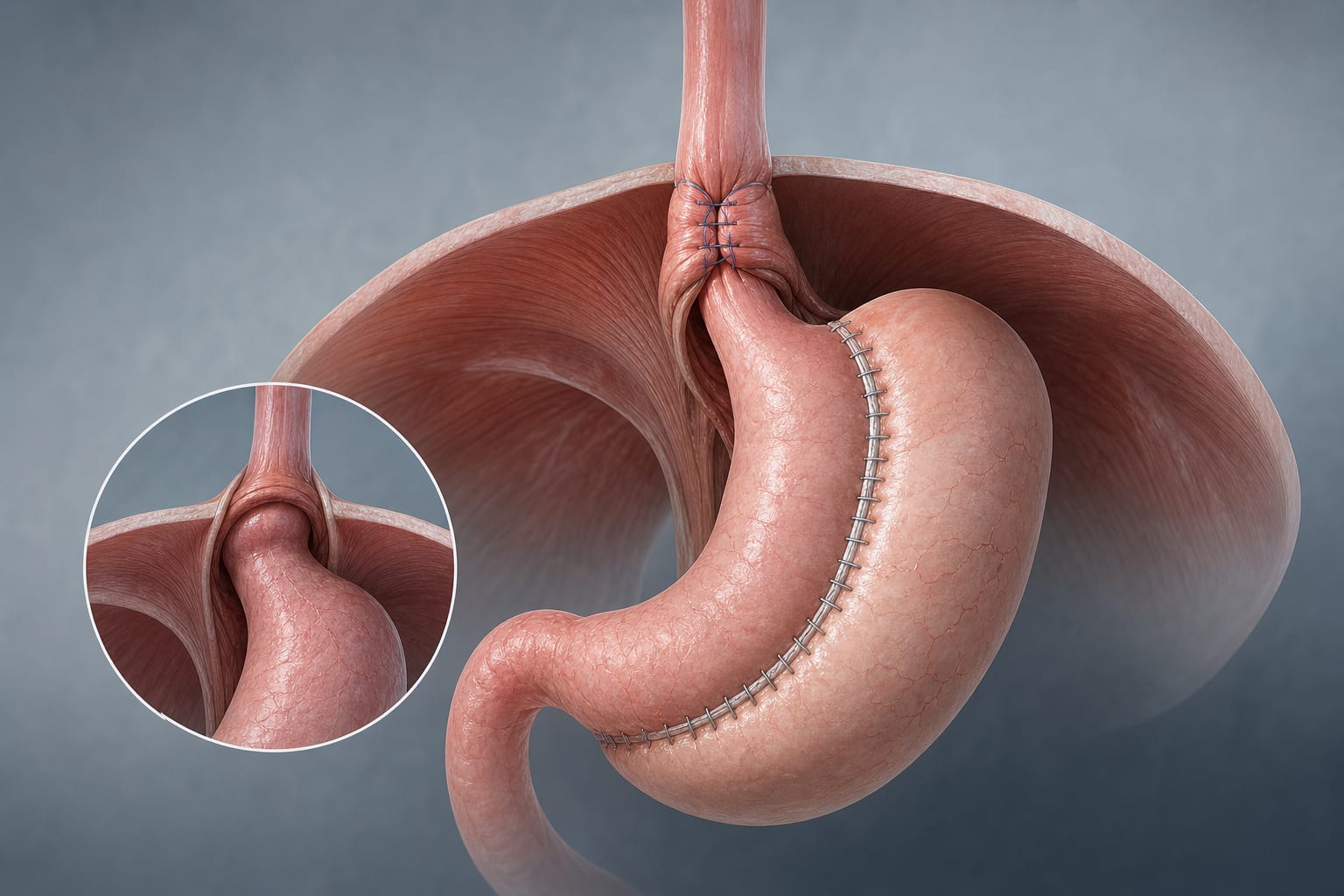
Ten-Year Multicenter Study on the Long-Term Anatomical Integrity and Clinical Results of Combined Laparoscopic Sleeve Gastrectomy and Hiatal Hernia Repair
To evaluate the long-term anatomical integrity and clinical outcomes of laparoscopic sleeve gastrectomy (LSG) with concomitant hiatal hernia repair (HHR).
Approach:
Key Findings:
Hiatal hernia prevalence in obese patients undergoing bariatric surgery is approximately 37%-39.8%.
Reported GERD rates after sleeve gastrectomy vary from 24% to 59%.
Long-term data on the efficacy of concomitant HHR during LSG is limited, particularly beyond 5 years.
Interpretation:
The study highlights the need for more comprehensive long-term data on the impact of HHR during LSG on GERD outcomes and anatomical integrity.
Limitations:
Lack of standardized GERD diagnostic criteria and objective assessments.
Retrospective design may introduce bias in data collection and interpretation.
Limited follow-up duration for some patients.
Conclusion:
The study underscores the importance of further research to clarify the relationship between postoperative GERD and anatomical recurrence following LSG with HHR.
by Francesco Maria Carrano, Beatrice De Luca, Francesco Angrisani, Giulia Griguolo, Fabio Cesare Campanile, Nicola Perrotta, Cristian Eugeniu Boru, Luigi Angrisani, Gianfranco Silecchia
Breast cancer management is becoming increasingly biology-driven, with treatment decisions extending well beyond anatomic stage and conventional receptor classification.