Conexiant’s news site is now MDSpire News. Learn more
Advertisement
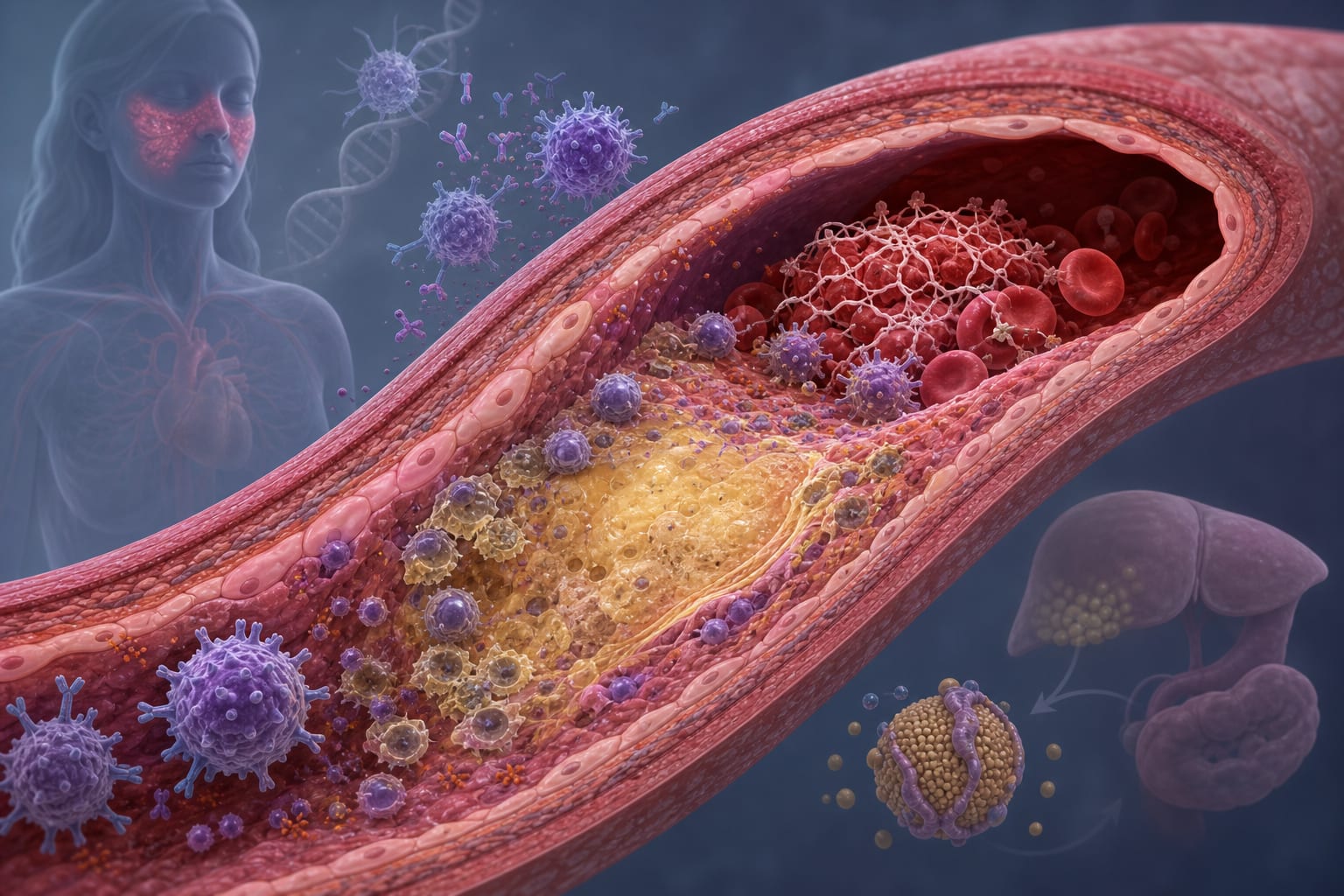
Accelerated Atherosclerosis Induced by Systemic Lupus Erythematosus: Insights into the Immune-Metabolic-Vascular Interplay and Treatment Considerations
To synthesize current evidence on the immune-metabolic-vascular interplay in systemic lupus erythematosus (SLE) and its critical role in accelerated atherosclerosis.
Approach:
Key Findings:
SLE patients have a significantly higher risk of premature atherosclerosis and ASCVD not fully explained by traditional risk factors, necessitating further investigation.
Type I interferon (IFN-I) is associated with endothelial injury and impaired vascular repair, indicating a target for therapeutic intervention.
Neutrophil extracellular traps (NETs) and oxidative modification contribute to dysfunctional high-density lipoprotein (HDL), suggesting a pathway for treatment.
Monocyte/macrophage reprogramming promotes foam-cell formation and inflammation, highlighting the role of immune cells in atherosclerosis.
T- and B-cell metabolic dysregulation sustains vascular inflammation and autoantibody-driven injury, pointing to the need for immune-targeted therapies.
Interpretation:
The interplay between immune activation and metabolic dysregulation in SLE is crucial for understanding accelerated atherosclerosis, with significant implications for treatment strategies.
Limitations:
Most evidence is based on mechanistic studies and biomarker readouts rather than dedicated clinical trials, underscoring the need for more robust research.
Current studies often focus on surrogate endpoints rather than direct cardiovascular outcomes, indicating a gap in the literature that needs addressing.
Conclusion:
Future strategies for treating SLE-related atherosclerosis should integrate metabolic and immune-targeted approaches, emphasizing the urgency of this integration in clinical practice.
Federal prosecutors allege that a Florida physician and research staff fabricated clinical trial records that were submitted into database systems used to evaluate investigational drugs.
Creatine's ATP-buffering trick isn't just for biceps. In mice, it juices up dendritic cells' energy supply, sharpening T-cell priming and shrinking tumors on daily injections. Human DCs got the memo too, at least in a dish. Early days, but a fun plot twist for gym-bag chemistry.
The procedure was performed under a HOPE Act research protocol at an NYU Langone Health center the institution said is among the limited number of US transplant centers equipped and approved to perform HOPE lung transplants.