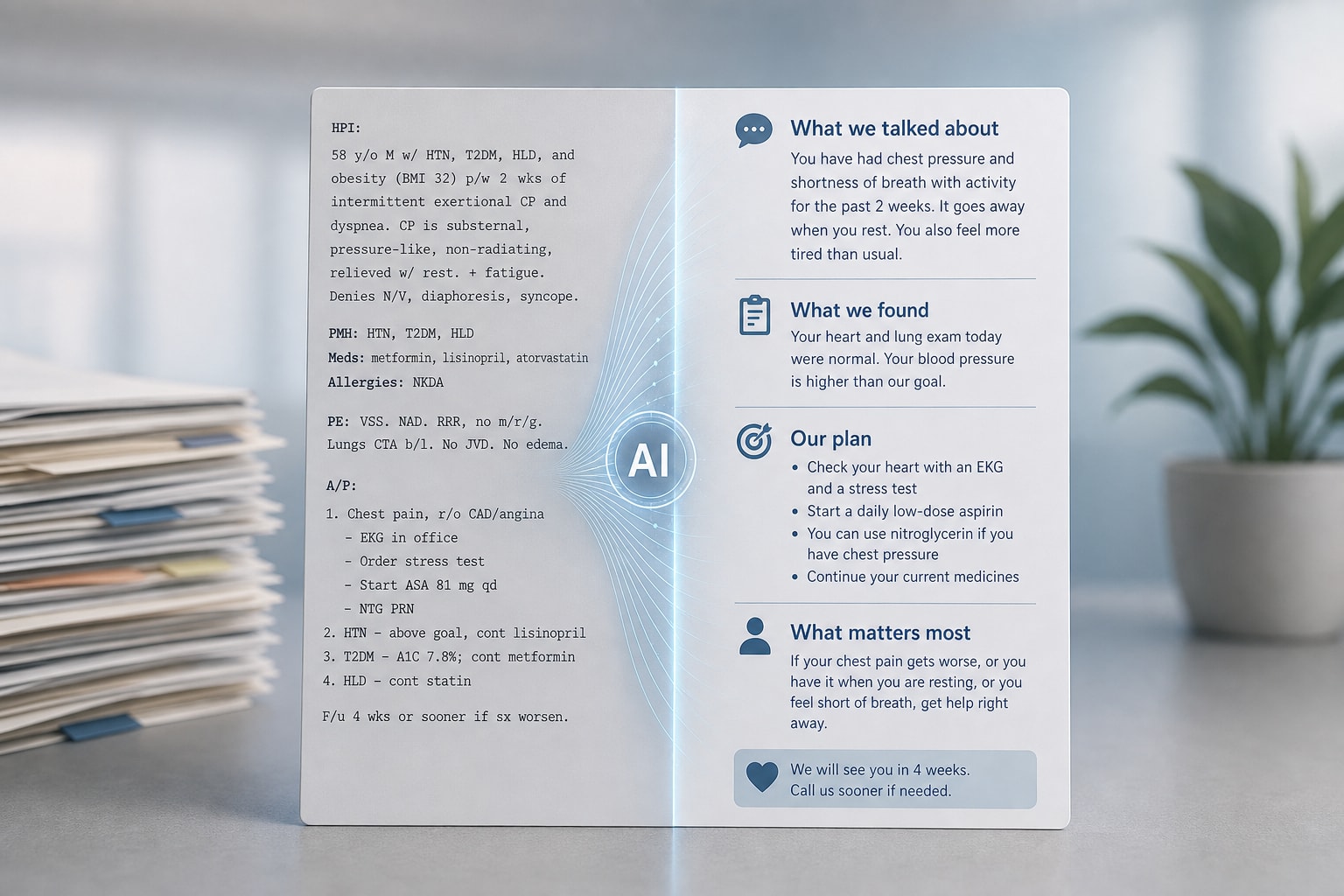
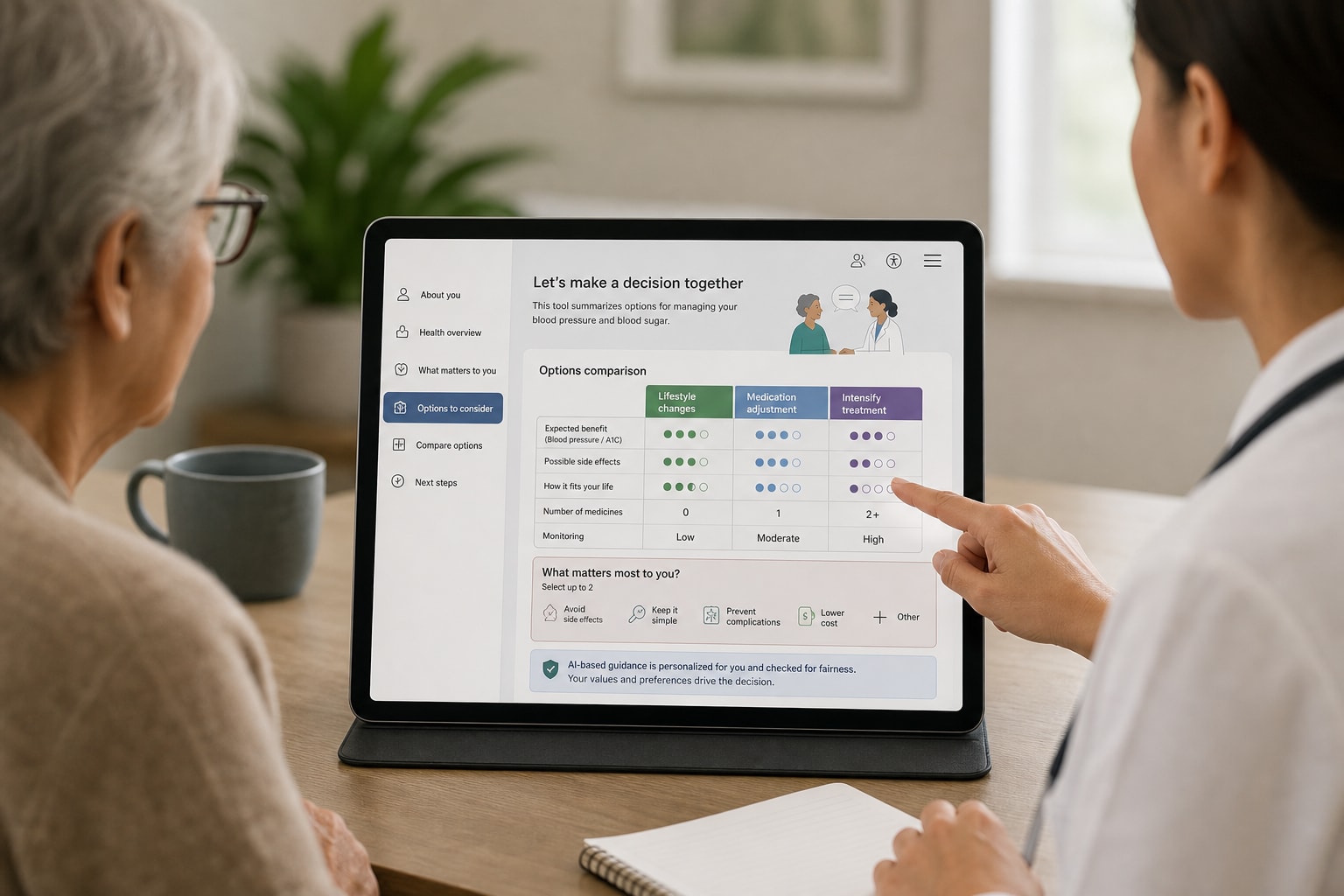
To explore how language used in medical documentation affects patient understanding and communication preferences.
Approach:
Study Overview: Allen et al. surveyed 271 adults at the 2023 Minnesota State Fair to assess preferences for documentation phrasing in clinical scenarios.
Language Preferences: Participants preferred clear, respectful language over traditional medical jargon, which was often perceived negatively.
Key Findings:
Traditional medical jargon was poorly received, with over 70% of participants feeling blamed or labeled by phrases like 'Patient has failed outpatient treatment.'
Patients favored language that is clear and clinically precise.
The study's sample may not represent the general population due to selection bias, as participants were more educated and had higher English proficiency.
Interpretation:
The study highlights the need for improved communication in clinical documentation to avoid alienating patients.
Limitations:
The sample was more educated and had higher English proficiency than the general population.
Findings may understate the issue of language comprehension in less-resourced populations.
Conclusion:
Efforts to adapt clinical documentation for patient comprehension should consider the balance between clinical accuracy and patient understanding.
Phase 3 results showed longer progression-free survival with pembrolizumab plus sacituzumab govitecan-hziy than with pembrolizumab plus chemotherapy in previously untreated PD-L1-positive advanced triple-negative breast cancer.