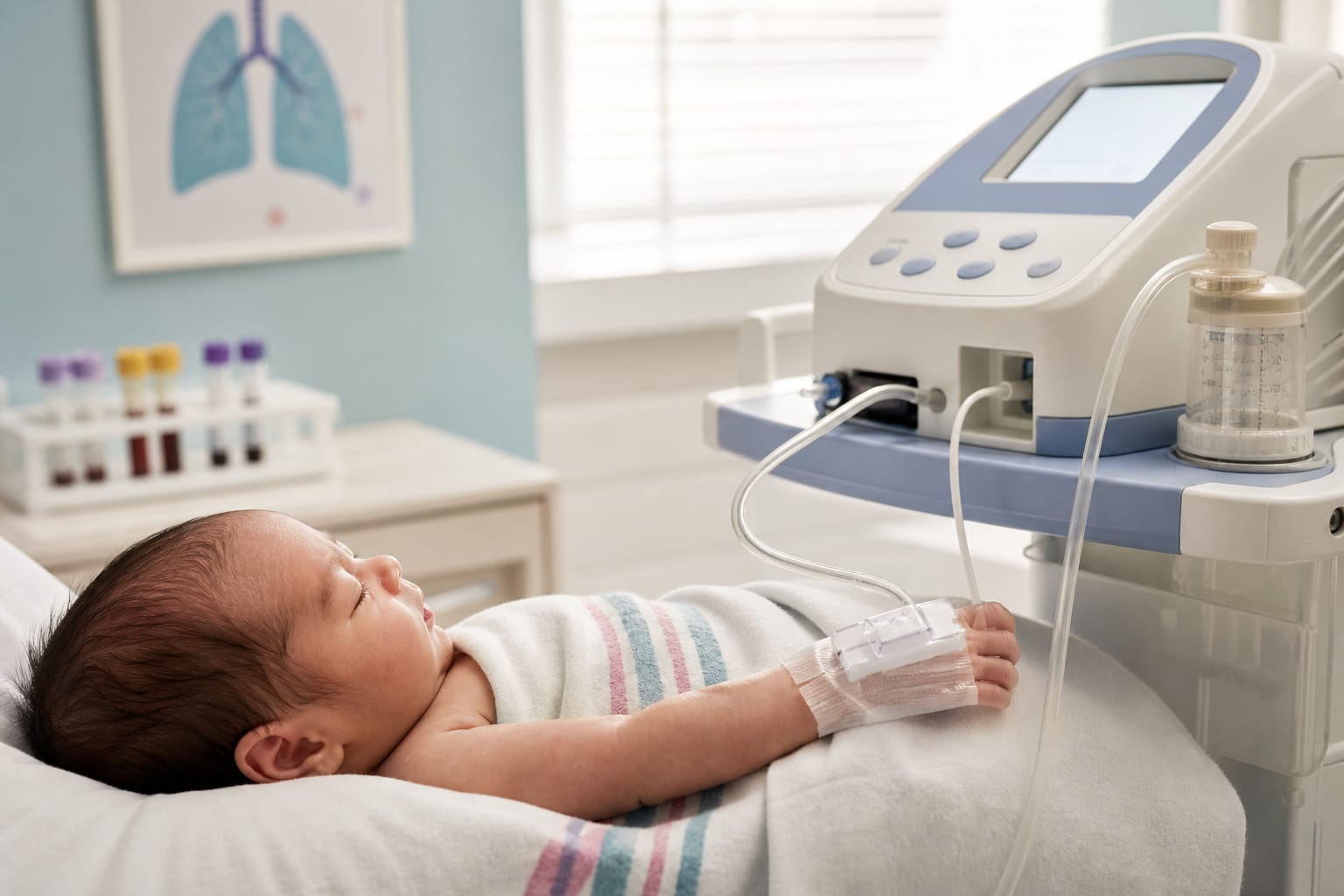
To provide parents with essential information about newborn screening for cystic fibrosis (CF) and the subsequent testing process.
Approach:
Overview of Cystic Fibrosis: Cystic fibrosis is a genetic condition that can lead to respiratory issues, lung infections, weight gain difficulties, and diarrhea.
Newborn Screening Process: CF testing is included in every state's newborn screening, allowing for early treatment if CF is detected.
Follow-Up Testing: A positive screening does not confirm CF; further blood tests for genetic variants and possibly a sweat test are required.
Genetic Testing Results: Genetic testing can yield three results: no variants, one CF variant, or two CF variants, with two variants necessary for a CF diagnosis.
Sweat Testing: Sweat tests measure salt content in sweat; higher salt levels indicate CF.
Treatment and Management: CF is a lifelong condition, but new modulator medications improve health outcomes and longevity.
Key Findings:
Newborn screening for CF is crucial for early treatment.
A positive screening result requires further genetic testing.
Two CF variants are necessary for a CF diagnosis.
Sweat testing is used to confirm CF diagnosis.
New medications are improving the quality of life for individuals with CF.
Interpretation:
Families should understand the screening process and the implications of test results for CF.
Limitations:
Testing protocols may vary by state.
Not all individuals with CF can use modulator medications.
Conclusion:
Ongoing research aims to find a cure for CF, while current treatments are improving patient outcomes.