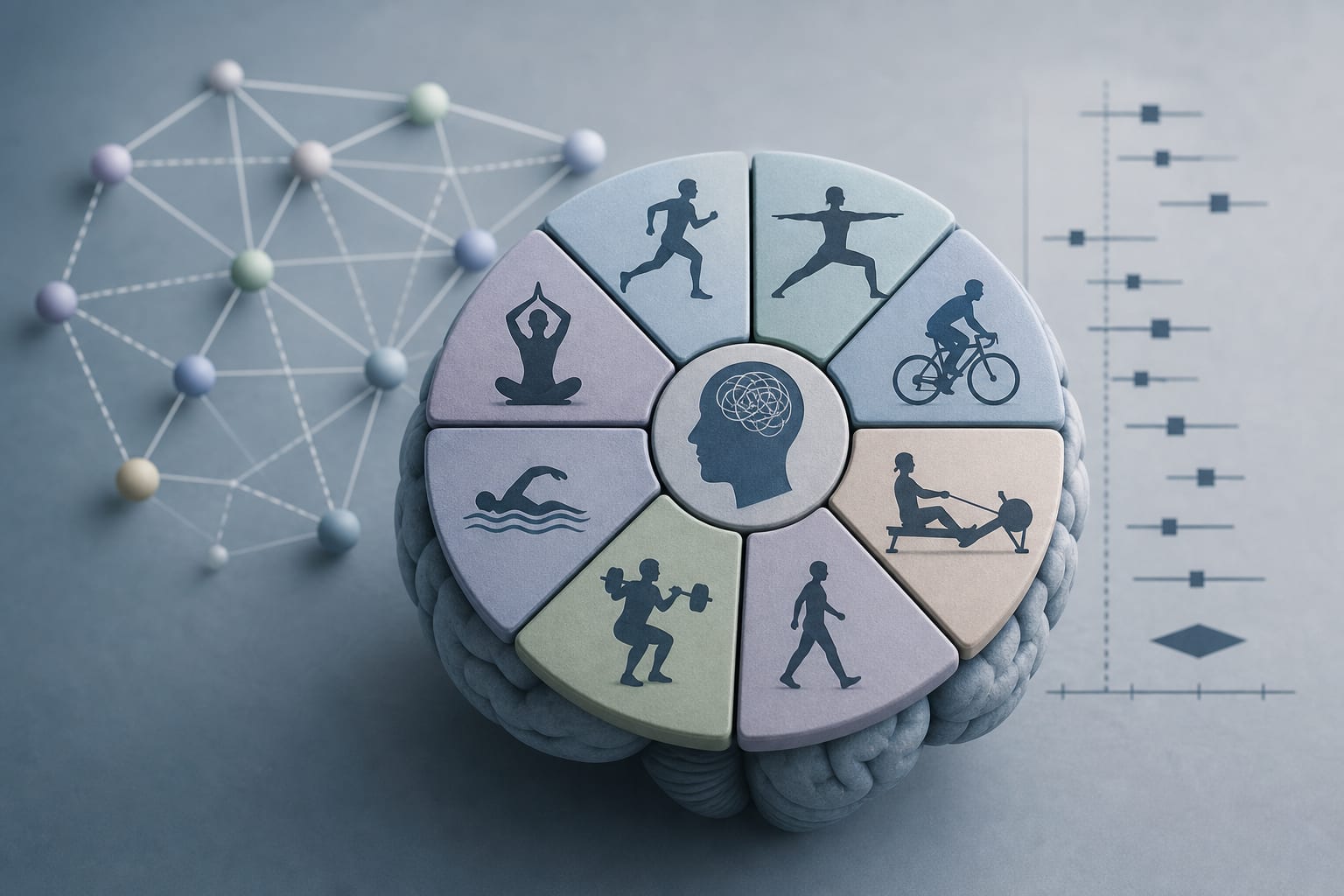
To systematically compare the intervention effects of eight common structured exercise modalities on depressive and anxiety symptoms in adults using a network meta-analysis approach, providing evidence-based insights for developing precision exercise prescriptions in mental health.
Key Findings:
22 studies involving 23 randomized controlled trials with 1,830 participants were included.
Exercise intervention groups showed significant improvements in depressive symptoms (SMD = -0.67) and anxiety symptoms (SMD = -0.77) compared to control groups.
Yoga ranked first in both depression (SUCRA = 68.8%) and anxiety (SUCRA = 72.2%) improvement.
No statistically significant differences in effect sizes were found among yoga, moderate-intensity continuous training (MICT), and high-intensity interval training (HIIT), indicating no clear superiority among these interventions.
Subgroup analyses indicated larger effect sizes in the elderly group (≥60 years).
Interpretation:
Different exercise modalities exhibit beneficial effects on both depression and anxiety symptoms, with yoga, MICT, and HIIT showing significant potential, though no significant differences among them were found.
Limitations:
Only one study included Pilates, limiting its independent effect validation.
Potential publication bias was suggested by Egger’s test, which may affect the robustness of the findings.
Conclusion:
Yoga, MICT, and HIIT are viable prioritized exercise modalities in clinical practice for alleviating depression and anxiety symptoms, with individualized regimens based on patient characteristics being essential.