A meta-analysis of neuroimaging evidence for acupuncture-mediated modulation of altered central pain processing in patients with chronic pain - Summary - MDSpire
Advertisement
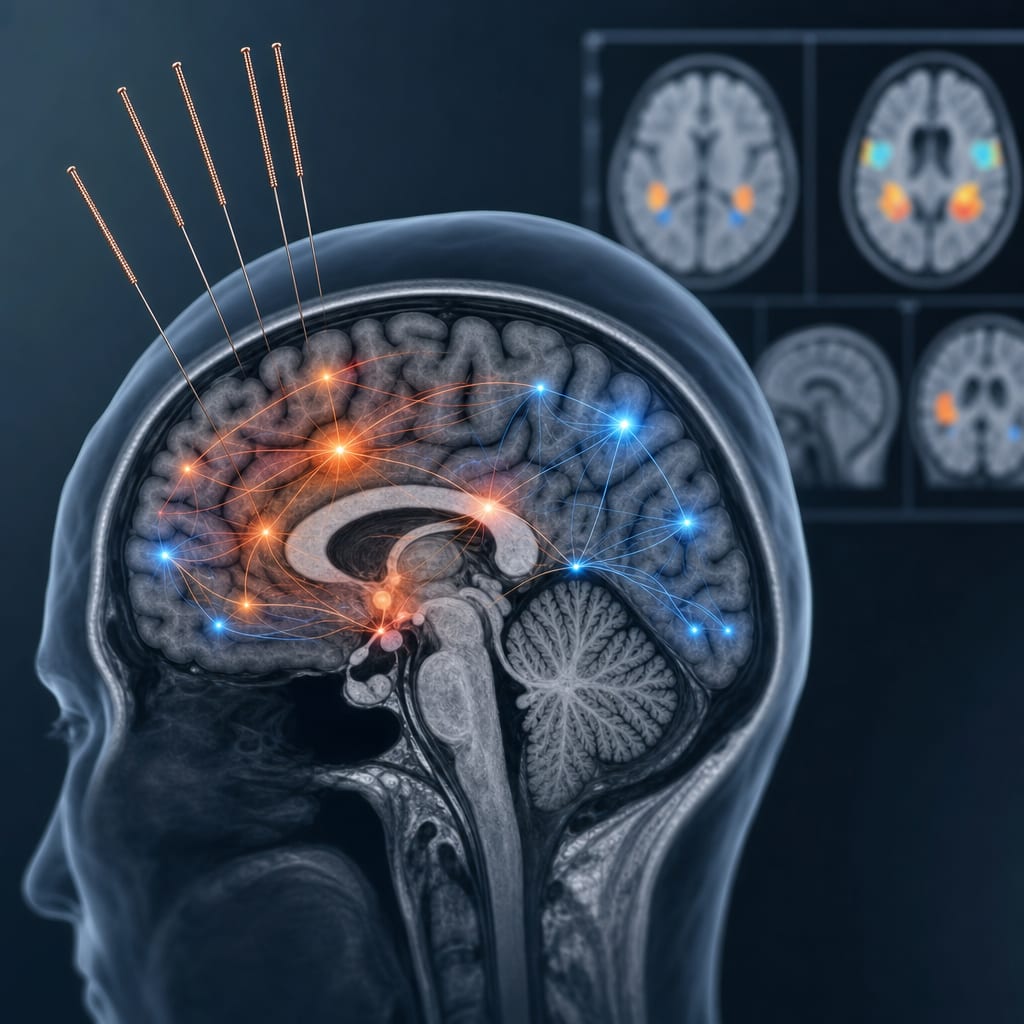
A meta-analysis of neuroimaging evidence for acupuncture-mediated modulation of altered central pain processing in patients with chronic pain
To quantify acupuncture’s modulatory effects on brain networks associated with altered central pain processing, validate its clinical efficacy/safety, and explore specific associations between brain network modulation and clinical outcomes.
Key Findings:
Seventeen high-quality RCTs comprising 750 patients were included.
Acupuncture significantly improved neuroimaging indicators in the ACC (MD = 0.27, p < 0.00001), insula (MD = 0.27, p < 0.00001), S1 (MD = 0.30, p < 0.00001), thalamus (MD = 0.30, p < 0.00001), and DMN (MD = 0.29, p < 0.00001).
Clinically, acupuncture reduced VAS scores (MD = -2.31, p < 0.00001) and increased pain relief rate (OR = 4.30, p < 0.00001), with only mild adverse events reported.
Osteoarticular pain showed more pronounced efficacy.
Interpretation:
Acupuncture alleviates clinical pain and modulates brain networks involved in central pain processing, proving to be a safe non-pharmacological intervention.
Limitations:
Limited number of studies, which may affect the generalizability of the findings.
Heterogeneity in pain subtypes and neuroimaging modalities complicates the interpretation of results.
Short follow-up durations limit the understanding of long-term effects.
Conclusion:
Acupuncture is a valuable intervention for chronic pain management, with recommendations for standardized protocols and subtype-specific applications. Larger RCTs and multimodal neuroimaging studies are needed for further validation.
In a target-trial emulation of more than 600,000 veterans, GLP-1 RA initiators saw fewer new substance use disorders—and patients with existing SUDs had fewer overdoses, hospitalizations, and deaths.