NAFLD-associated immune remodeling in colorectal cancer liver metastasis: mechanisms and implications for immunotherapy
-
By
-
Hui Wang
-
Guoqing Gu
-
June 29, 2026
-
Objective:
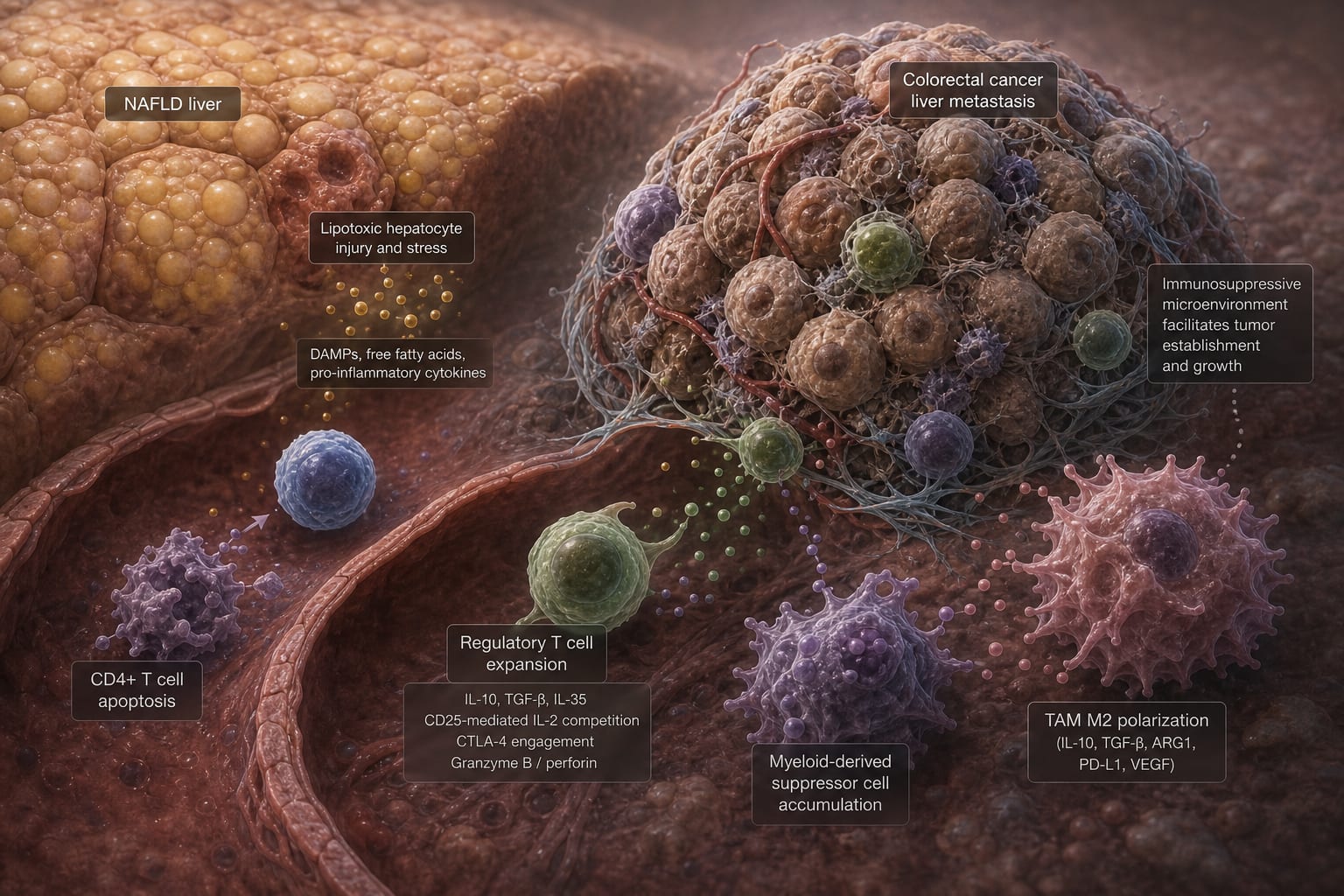
To synthesize how NAFLD-induced lipotoxicity alters the hepatic immune microenvironment and facilitates colorectal cancer liver metastasis.
Approach:
- Immunosuppressive Network: Describes a hierarchical network involving CD4+ T cell apoptosis, Treg expansion, M2 macrophage polarization, and MDSC recruitment.
- Immune Dysregulation: Discusses the link between NAFLD-driven immune dysregulation and reduced responsiveness to immune checkpoint inhibitors.
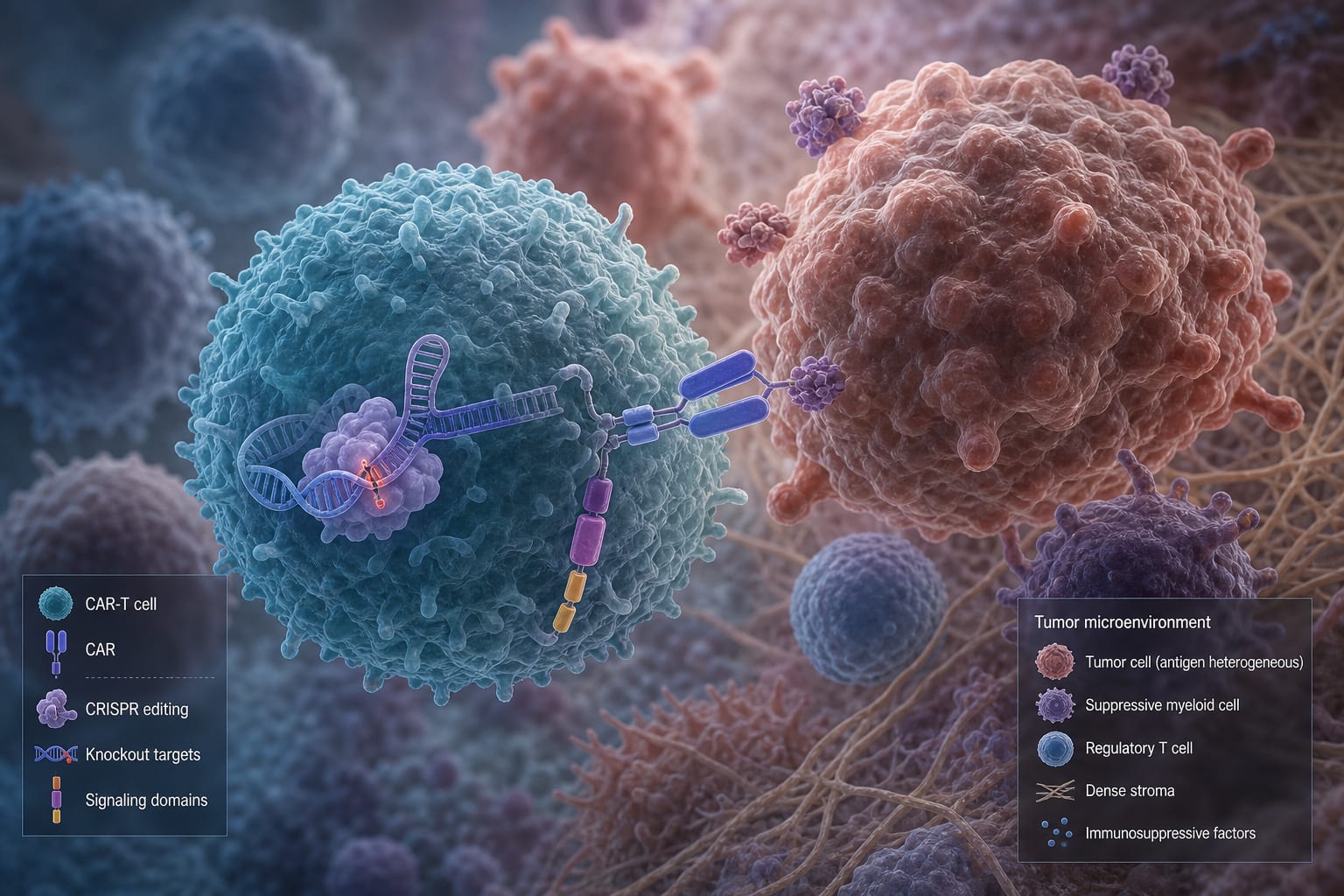
- Therapeutic Perspectives: Integrates mechanistic insights with potential therapeutic targets for risk stratification and combination immunotherapy.
Key Findings:
- NAFLD is linked to increased frequency and aggressiveness of CRC liver metastases.
- Lipotoxicity from NAFLD reshapes the hepatic immune microenvironment, promoting immunosuppression.
- Expansion of Tregs and CD8+ T cell exhaustion are critical in facilitating CRC metastasis.
Interpretation:
The review discusses the interplay between NAFLD and immune alterations that support colorectal cancer liver metastasis.
Limitations:
- Current evidence linking NAFLD and immune dysregulation to clinical outcomes is limited.
- Need for further validation of findings in clinical settings.
Conclusion:
The findings indicate potential targets for immunotherapy in colorectal cancer patients with NAFLD.