Efficacy of Right Ventricle-to-Pulmonary Artery Conduit as a Pulmonary Blood Source at Unifocalization of Major Aortopulmonary Collateral Arteries - Summary - MDSpire
Advertisement
Efficacy of Right Ventricle-to-Pulmonary Artery Conduit as a Pulmonary Blood Source at Unifocalization of Major Aortopulmonary Collateral Arteries
To evaluate the clinical outcomes of patients diagnosed with PA/VSD or hemi-truncus who underwent unifocalization at our institution for validation of current treatment strategies.
Approach:
Key Findings:
All patients underwent complete VSD closure between 19 and 24 months of age.
39 catheterizations were performed, including two stent implantations, indicating the need for ongoing intervention.
Complete unifocalization was achieved in cases with absent cPA by one year of age.
Interpretation:
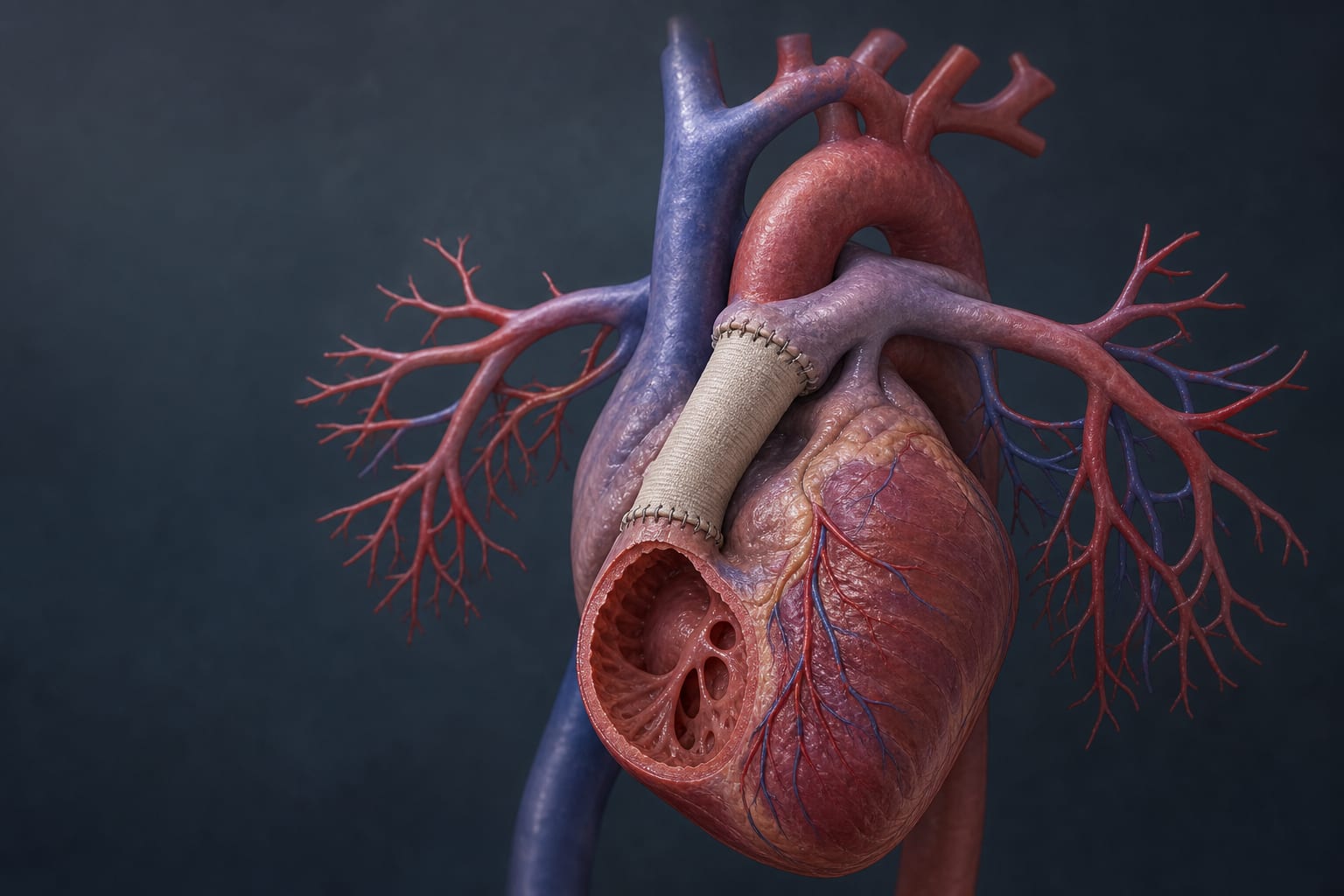
The study provides insights into the role of RV-PA conduits in the context of VSD closure and pulmonary blood flow during unifocalization.
Limitations:
The small sample size of 12 patients may limit the generalizability of the findings.
The retrospective design may introduce bias, affecting the reliability of the outcomes.
Conclusion:
The study highlights the role of RV-PA conduits in the treatment of PA/VSD or hemi-truncus through unifocalization.