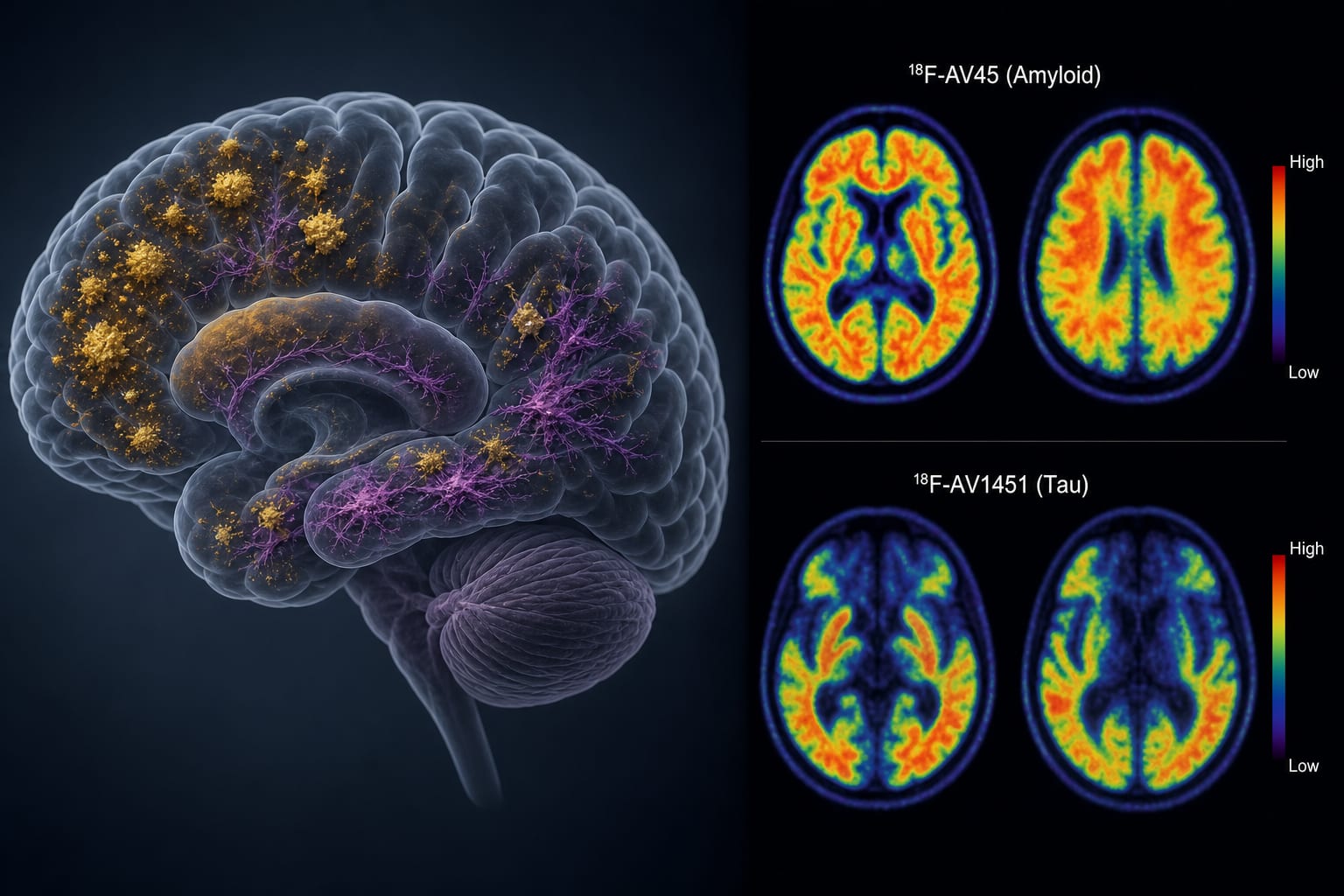
Sequential ¹⁸F‑AV45/¹⁸F‑AV1451 dual‑tracer brain PET imaging in Alzheimer's disease: amyloid‑tau deposition, diagnostic performance, cognitive associations, and modulation by APOE ε4 - Summary - MDSpire
Advertisement
Sequential ¹⁸F‑AV45/¹⁸F‑AV1451 dual‑tracer brain PET imaging in Alzheimer's disease: amyloid‑tau deposition, diagnostic performance, cognitive associations, and modulation by APOE ε4
To characterize Aβ–tau deposition, evaluate the pathological discriminatory performance of dual-tracer PET for typical amnestic AD, investigate cognitive correlations, and examine the modulatory role of APOE ε4.
Approach:
Key Findings:
Whole-brain and regional SUVRs for both tracers were significantly higher in AD than in MCI and HC (P<0.001).
Dual-tracer strategy yielded superior pathological discriminatory efficacy for typical amnestic AD (AUC of 0.97 for AD vs HC, 0.93 for AD vs MCI).
Tau deposition showed stronger cognitive correlations than Aβ.
Tau burden and APOE ε4 were independent predictors of cognitive impairment.
Aβ and tau SUVRs were strongly correlated (r=0.65–0.81), particularly in the precuneus and inferior temporal gyrus.
APOE ε4 carriers exhibited significantly higher Aβ and tau deposition.
Interpretation:
Sequential ¹⁸F‑AV45/¹⁸F‑AV1451 dual-tracer PET enables accurate in vivo characterization of AD-related Aβ–tau pathology, with standardized combined analysis improving diagnostic capability.
Conclusion:
Dual-tracer PET is a robust tool for clinical AD evaluation, pathological staging, and therapeutic monitoring of typical amnestic AD.