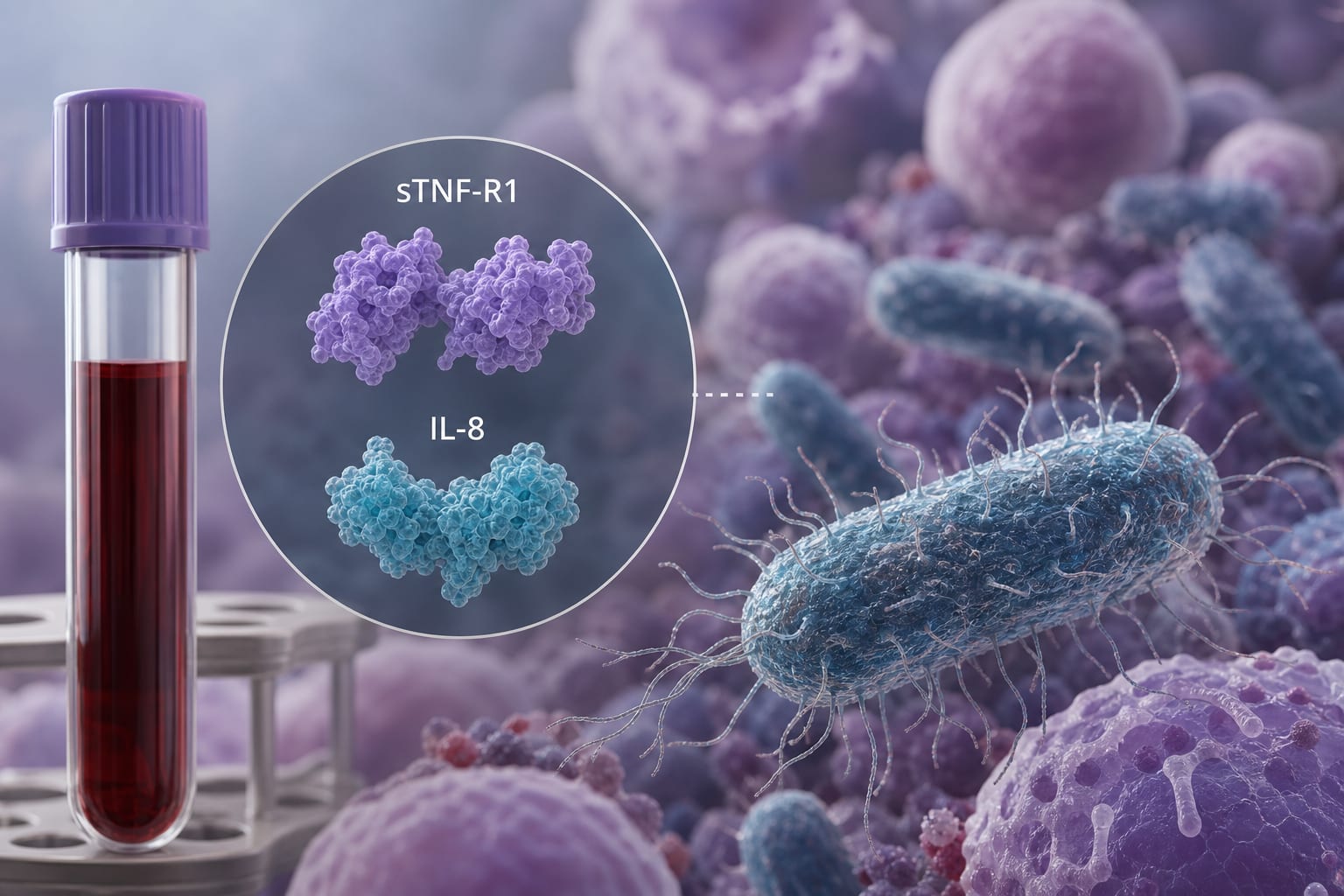
To analyze the etiological characteristics, antimicrobial resistance patterns of infections during the neutropenic phase in acute leukemia (AL) patients, and to evaluate the diagnostic value of soluble tumor necrosis factor receptor 1 (sTNF-R1) and interleukin-8 (IL-8).
Approach:
Study Design: Retrospective analysis of clinical data from 142 AL patients in the neutropenic phase.
Patient Groups: Patients were divided into an infected group (n=63) and a non-infected group (n=79).
Data Collection: Pathogen distribution and antimicrobial resistance were assessed in the infected group.
Biomarker Measurement: Peripheral blood sTNF-R1 and IL-8 levels were measured within 24 hours after confirmed neutropenia.
Diagnostic Evaluation: Diagnostic performance of biomarkers was evaluated using receiver operating characteristic (ROC) curve analysis.
Key Findings:
Hospital-acquired infections occurred in 63 patients (44.37%), with bloodstream infections (39.68%) and respiratory tract infections being the most frequent.
A total of 71 non-duplicate bacterial strains were isolated, of which 45 (63.38%) were Gram-negative, predominantly Escherichia coli (14 strains, 19.72%), and 26 (36.62%) were Gram-positive, predominantly Staphylococcus aureus (10 strains, 14.08%).
High resistance rates were observed to multiple antimicrobials, particularly ampicillin among Gram-negative bacteria and penicillin among Gram-positive bacteria.
Compared with the non-infected group, the infected group had higher white blood cell counts, lower albumin levels, and a greater proportion of unfavorable cytogenetic prognosis (all P < 0.05).
The areas under the ROC curve (AUC) were 0.903 for sTNF-R1 and 0.910 for IL-8 individually, increasing to 0.932 when combined (P < 0.001).
Interpretation:
Elevated sTNF-R1 and IL-8 levels are associated with infection in neutropenic AL patients, indicating their potential as diagnostic biomarkers.
Limitations:
Retrospective design may introduce bias.
Limited generalizability due to single-center study.
Conclusion:
Infections during the neutropenic phase in AL patients are predominantly caused by Gram-negative bacteria and exhibit substantial antimicrobial resistance.
Dana-Farber Cancer Institute's Dr. Jennifer Ligibel shared updated results from the BWEL study showing a weight loss intervention led to significantly better physical function, global physical and mental health, and symptom in patients with early breast cancer.