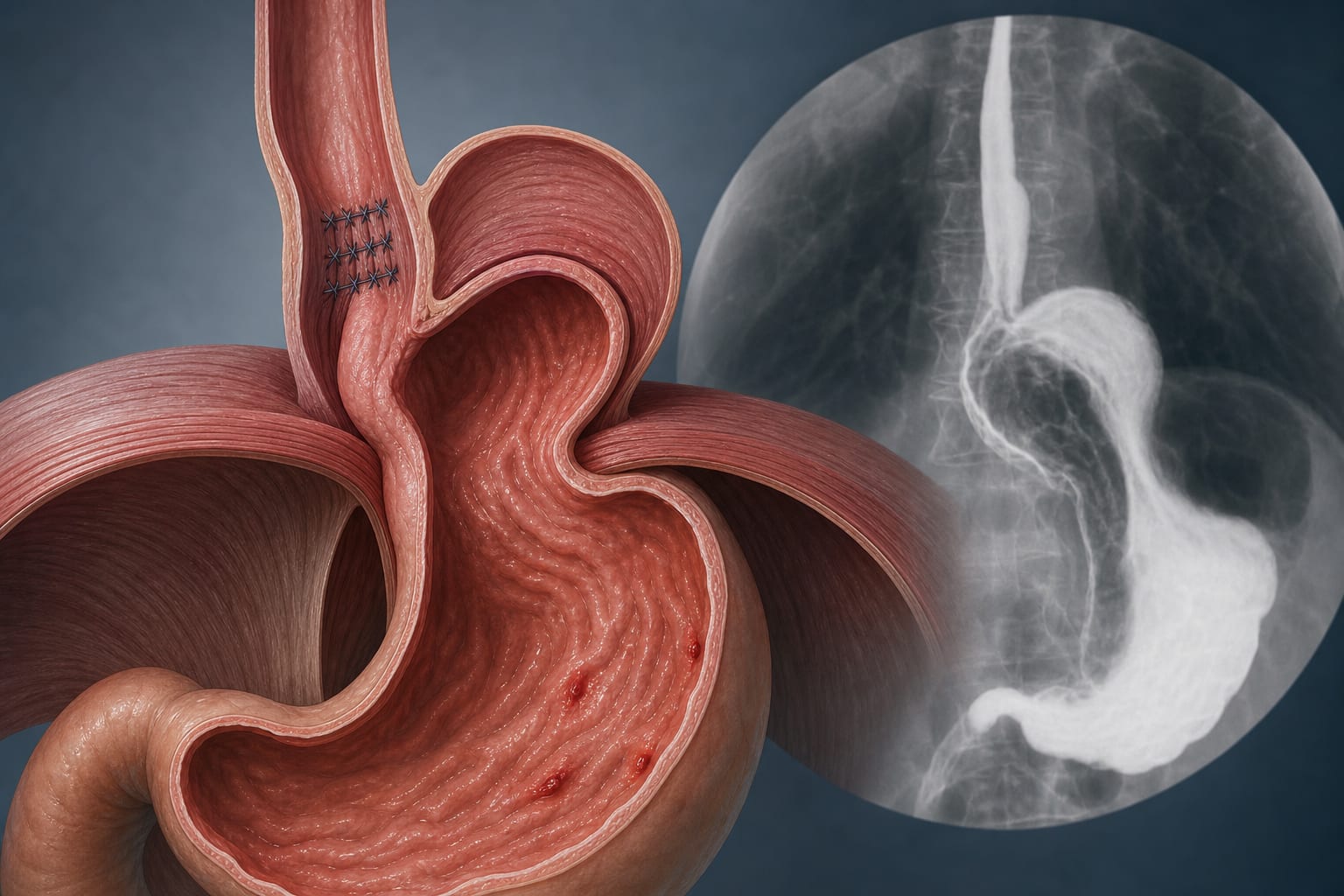
Surgical repair of paraesophageal hernia resolves unexplained iron deficiency anemia in the vast majority of patients: a propensity-matched multicenter study - Summary - MDSpire

Surgical repair of paraesophageal hernia resolves unexplained iron deficiency anemia in the vast majority of patients: a propensity-matched multicenter study

  • By

  • Fahim Kanani

  • Maria Shaiban

  • Chaya Shwaartz

  • Majd Khalil

  • Katia Dayan

  • Rula Francis

  • Daniel Solomon

  • Yonatan Lessing

  • Narmin Zoabi

  • Eviatar Kuhnreich

  • Eviatar Nesher

  • Amir Szold

  • Boaz Sagi

  • Nir Messer

  • May 21, 2026

  • 0 min

Share

Objective:

To evaluate the impact of paraesophageal hernia repair on anemia resolution in patients with unexplained iron deficiency anemia (IDA) and identify preoperative factors associated with hematologic response following surgical intervention, emphasizing the clinical significance of these factors.

Key Findings:
  • 30-50% of patients with PEH present with iron deficiency anemia.
  • The association between PEH and IDA is well established but often underappreciated in surgical practice.
  • Surgical repair of PEH may resolve IDA, but previous studies on this topic are limited and methodologically heterogeneous.
Interpretation:

The study highlights the need for awareness of the potential for PEH to cause IDA and the possible benefits of surgical intervention.

Limitations:
  • The study is retrospective and may be subject to selection bias.
  • Methodological heterogeneity in previous studies limits generalizability.
  • Inconsistent definitions of hematologic response and variable follow-up durations in existing literature.
Conclusion:

Surgical correction of paraesophageal hernia may effectively treat unexplained iron deficiency anemia in most patients.

Original Source(s)

Related Content