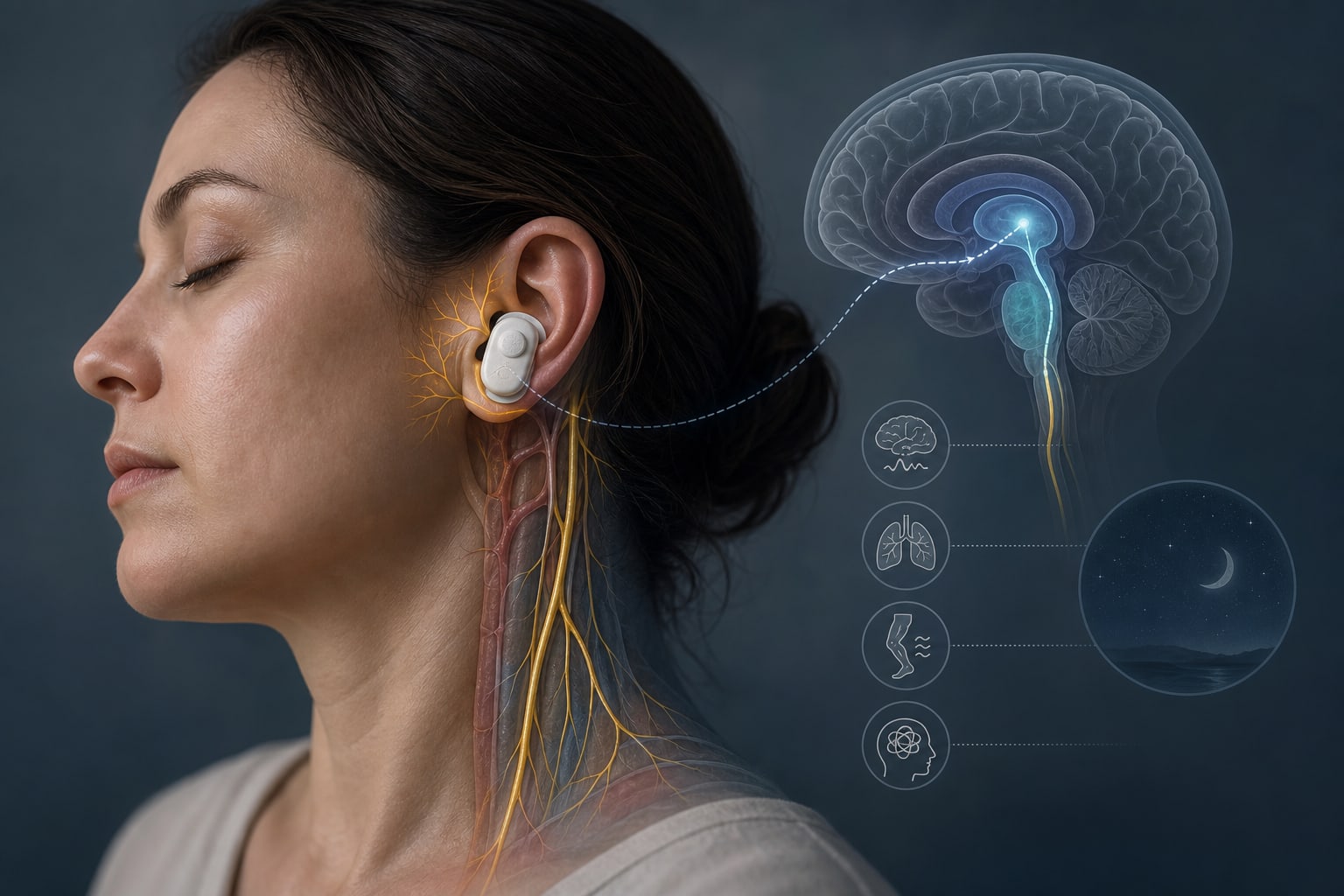
To provide a structured synthesis of available evidence regarding tVNS across different sleep pathologies, discuss methodological limitations, and identify priority areas for future research.
Approach:
Literature Search: A selective narrative literature search of PubMed/MEDLINE and Cochrane Library databases was conducted, focusing on studies related to tVNS and various sleep disorders.
Key Findings:
tVNS has shown promise in treating chronic insomnia, with three randomized controlled trials indicating significant reductions in Pittsburgh Sleep Quality Index (PSQI) scores.
Preliminary evidence suggests potential benefits of tVNS for PTSD-related sleep disturbances, based on a small pilot study with limited sample size.
No controlled trials have examined tVNS effects on obstructive sleep apnea, and existing data are limited to animal models.
Interpretation:
The article highlights the theoretical potential of tVNS in sleep disorders and emphasizes the need for more rigorous clinical studies to establish efficacy.
Limitations:
The article is based on a selective narrative review rather than a systematic review.
Many studies included have methodological limitations, and no formal risk-of-bias assessment was performed.
The small sample sizes and uncontrolled designs of some studies limit the generalizability of findings.
Conclusion:
Further research is needed to clarify the role of tVNS in sleep disorders and to address the methodological shortcomings of existing studies.