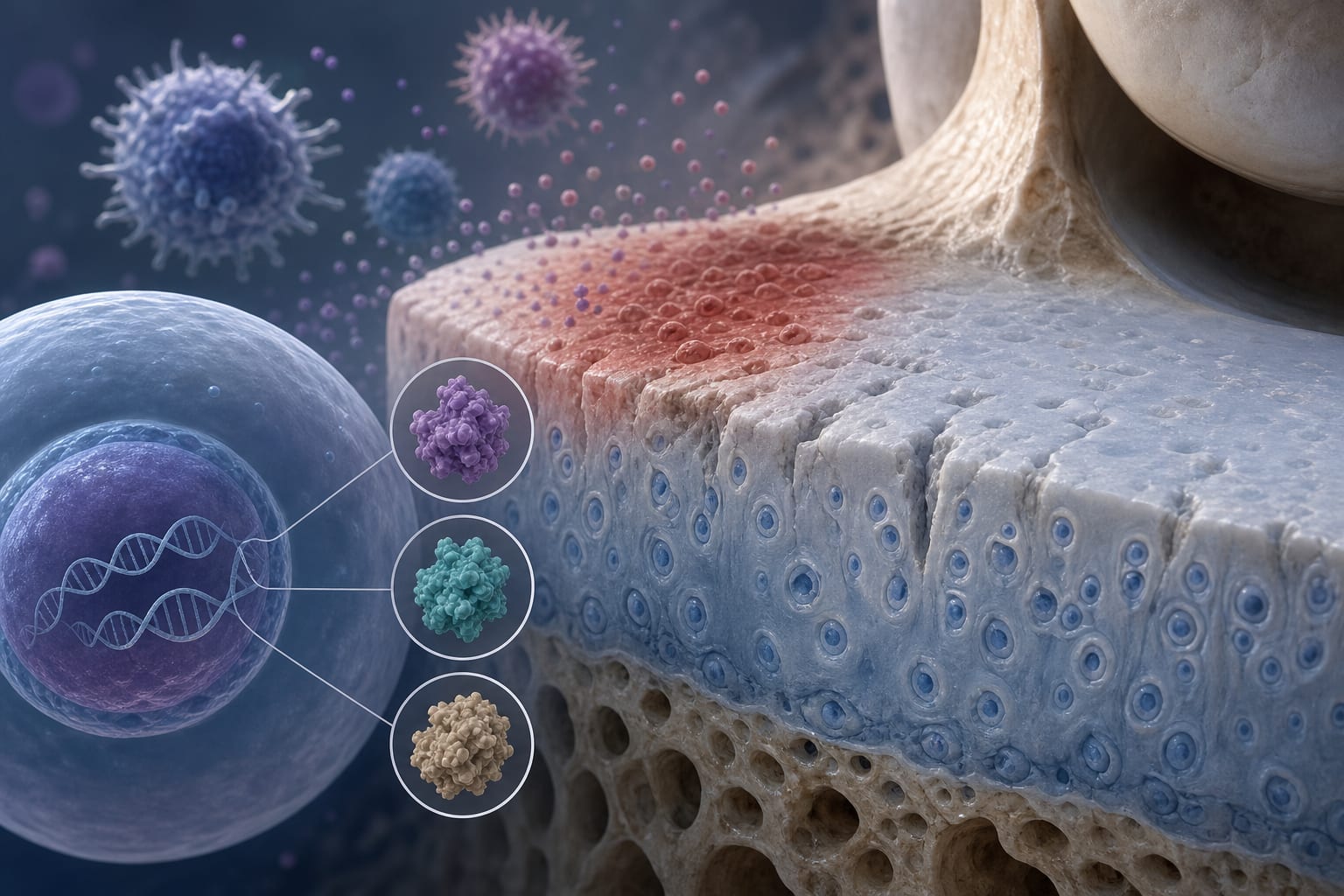
To propose a systems model of osteoarthritis (OA) that emphasizes the failure of synovial regulatory networks, challenging the traditional view of OA as solely a degenerative cartilage disease.
Key Findings:
OA is characterized by a failure of interdependent synovial regulatory networks rather than just cartilage degeneration, indicating a need for new treatment approaches.
Aging and metabolic dysfunction contribute to persistent inflammation and impaired resolution in OA, highlighting the importance of addressing these factors in therapy.
Current therapies primarily suppress inflammation without restoring regulatory control, leading to continued disease progression and underscoring the need for a paradigm shift in treatment.
Interpretation:
The proposed model integrates multiple interconnected systems that contribute to OA, emphasizing the need for a broader understanding of the disease that includes metabolic and inflammatory factors.
Limitations:
The model is a hypothesis and does not claim that all proposed mechanisms have been causally validated in OA, which may limit its immediate applicability.
The evidence is drawn from both OA-specific studies and indirect support from related biological fields, which may affect the robustness of the conclusions.
Conclusion:
The article advocates for a reconceptualization of OA that incorporates metabolic and inflammatory factors, suggesting that a systems approach may lead to more effective therapeutic strategies.
High-revision-rate surgeons saw a late revision signal after adopting robotic-assisted total knee arthroplasty, despite no overall reduction in revision rates or failure modes.
Systematic review found robotic-assisted total hip arthroplasty improved implant positioning precision without demonstrating better patient-reported outcomes or lower complication rates than conventional surgery.