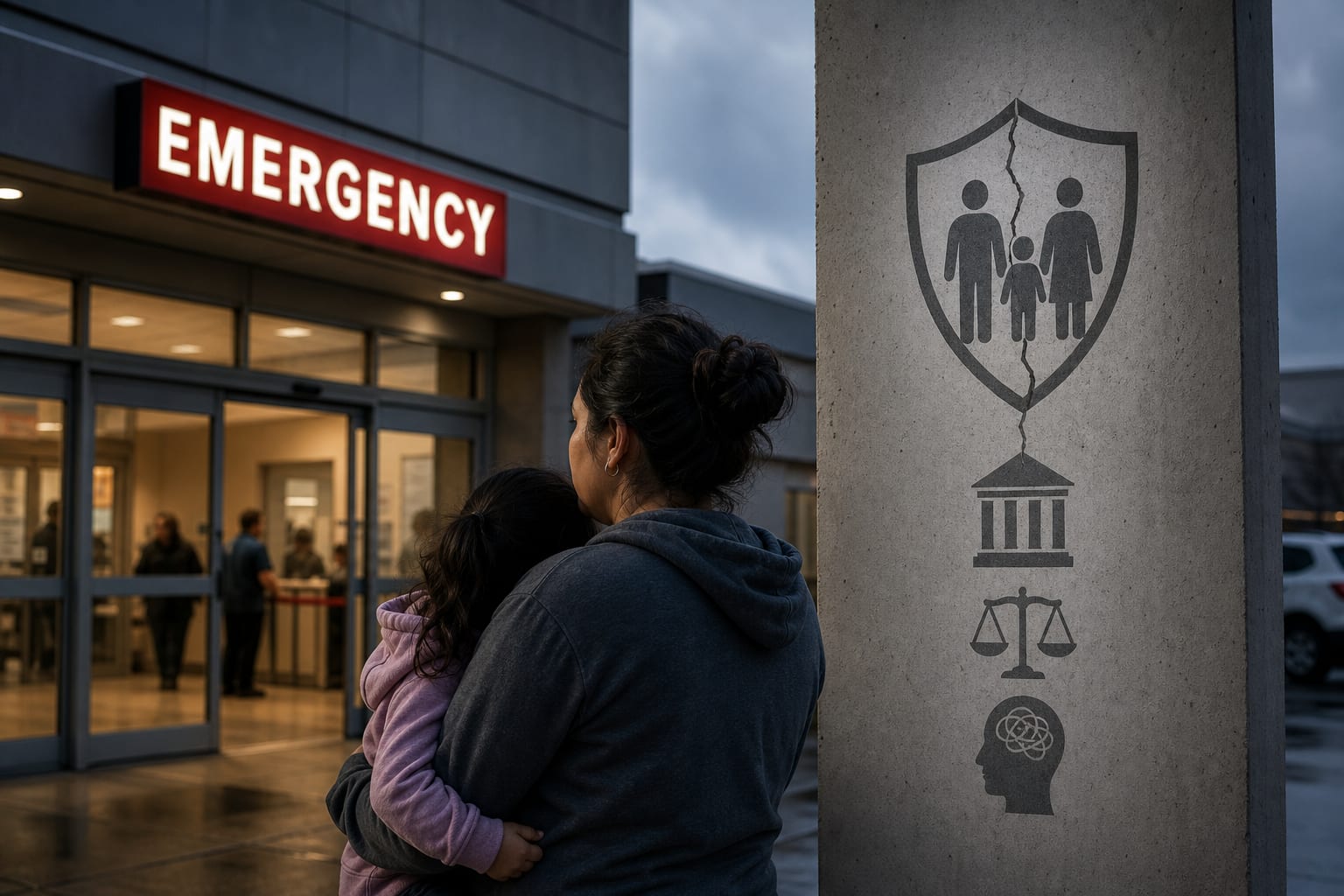
To quantify the potential deterrent effect of immigration enforcement on immigrants accessing emergency care following the rescission of the Protected Areas Policy, specifically focusing on how this may impact health outcomes.
Key Findings:
11.2% decrease in adult ED visits and 13.4% decrease in pediatric ED visits among MHL enrollees post-policy change, indicating a significant drop in emergency care utilization.
Increase in ED visits for those with Medicaid, Medicare, and commercial insurance during the same period, suggesting a shift in care-seeking behavior.
Decrease in the proportion of patients preferring Spanish, Portuguese, and Haitian Creole, while English-preferring patients increased, though the change was not statistically significant.
Interpretation:
The study suggests a potential trend of decreased ED utilization among immigrants following the rescission of the Protected Areas Policy, highlighting concerns about health equity and access, although causality cannot be established.
Limitations:
Difficulty in establishing direct associations or causal relationships due to the dynamic immigration policy landscape, which complicates the interpretation of results.
Use of proxies for immigration status may not fully capture the impact on health care access, potentially overlooking nuances in immigrant experiences.
Conclusion:
The rescission of the Protected Areas Policy may deter immigrants from accessing emergency care, reflecting broader implications for health equity and the need for policy reform to protect vulnerable populations.