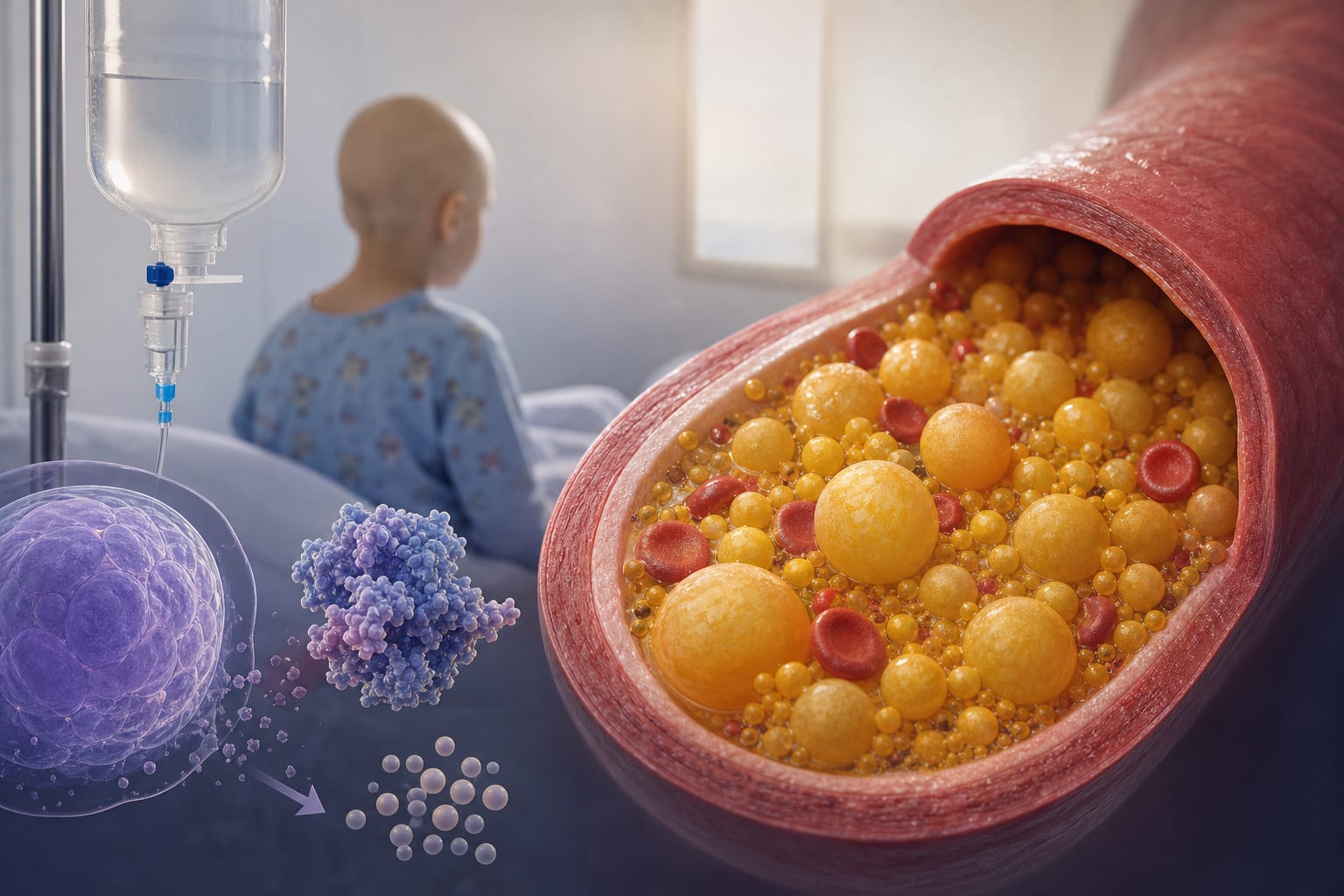
To examine the prevalence, clinical manifestation, and management strategies of asparaginase-induced hypertriglyceridemia (AIHTG) in pediatric patients with acute lymphoblastic leukemia (ALL).
Approach:
Key Findings:
Severe AAHTG occurred in 2% of pediatric ALL patients treated at KHCC.
83% of cases were asymptomatic, detected incidentally through routine lab assessments.
The median peak triglyceride concentration was 2,645 mg/dL.
Management included intravenous fluids, omega-3 fatty acids, fibrates, and insulin infusion.
Plasmapheresis was performed in three patients, all achieving triglyceride levels below 1,000 mg/dL after treatment.
Interpretation:
Severe AAHTG is commonly asymptomatic and poses a risk of significant complications. Timely detection and intervention were linked to positive outcomes.
Limitations:
The study is limited to a single-center experience.
Routine triglyceride monitoring was not part of the treatment protocol, potentially leading to underreporting of cases.
Conclusion:
Continuation of asparaginase after an AAHTG incident seems feasible if triglyceride levels are confirmed to be below 1,000 mg/dL prior to subsequent doses.