Long-term immune response to mRNA anti-SARS-CoV-2 vaccination in patients with cancer - Summary - MDSpire

Long-term immune response to mRNA anti-SARS-CoV-2 vaccination in patients with cancer

  • By

  • Soraia Lobo-Martins

  • Diogo Martins-Branco

  • Francine Padonou

  • Hafid Dahma

  • Sigi van den Wijngaert

  • Mounia Jaouart

  • Chiara Dauccia

  • Chiara Molinelli

  • Elisa Agostinetto

  • Angela Loizidou

  • Donatienne Taylor

  • Anais Boisson

  • Soizic Garaud

  • Chloé Spilleboudt

  • Jose Vicente Cardona

  • Peter Ramge

  • Bogdana Ioana Balas

  • Mohammed Bajji

  • Fanny George

  • Tabatha Delsaute

  • Marianne Paesmans

  • Lieveke Ameye

  • Martine Piccart

  • Evandro de Azambuja

  • Karen Willard-Gallo

  • May 20, 2026

  • 0 min

Share

Objective:

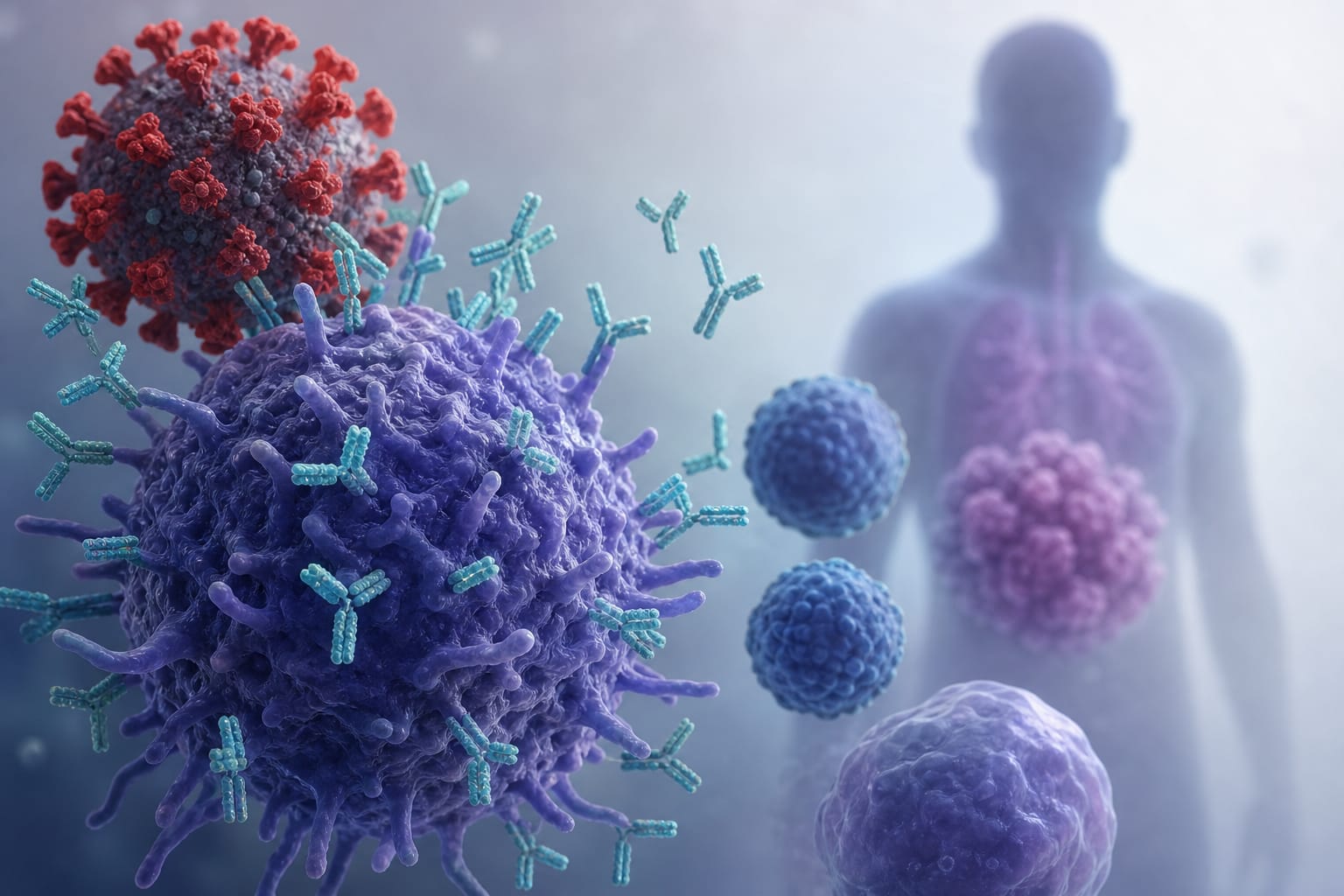
To evaluate humoral and cellular immune responses to mRNA SARS-CoV-2 vaccination in cancer patients, emphasizing the importance of understanding immune durability and vaccine efficacy across treatment settings.

Key Findings:
  • All patients developed detectable anti-Spike antibodies, with variability based on cancer type and treatment, highlighting the need for personalized approaches.
  • Patients with hematologic malignancies and/or receiving chemotherapy had the lowest antibody levels, indicating a potential risk factor for reduced vaccine efficacy.
  • Booster doses significantly increased antibody titers, especially in patients in remission or on non-cytotoxic therapies, suggesting the importance of booster strategies.
  • Prior SARS-CoV-2 infection and the number of vaccine doses correlated with better immune responses, underscoring the role of previous exposure.
  • SARS-CoV-2 infection occurred in 16% of the cohort, with infrequent severe cases, indicating the overall effectiveness of vaccination.
Interpretation:

mRNA SARS-CoV-2 vaccines elicit robust immune responses in cancer patients, suggesting the need for tailored vaccination strategies and booster doses to enhance protection in this vulnerable population.

Limitations:
  • Limited data on long-term immunological memory beyond six months, which may affect the understanding of vaccine durability.
  • The study primarily focused on patients with specific cancer types and treatment regimens, which may limit generalizability.
Conclusion:

The findings support the use of booster strategies and tailored vaccination approaches for immunocompromised populations, enhancing protection against COVID-19 and informing public health policy.

Original Source(s)

Related Content