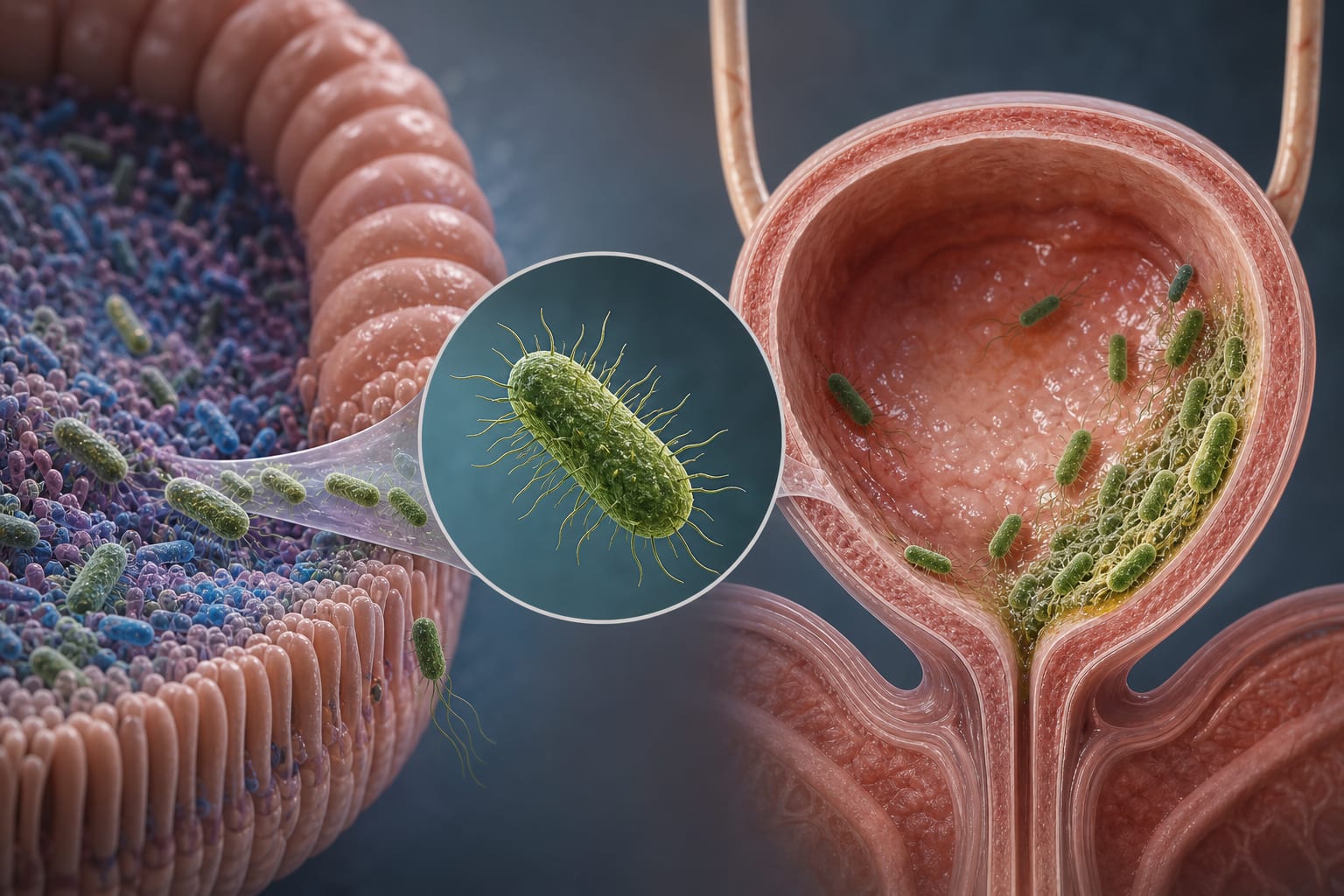
To explore the dual nature of Escherichia coli as both a beneficial commensal in the gut and a potential pathogen in urinary tract infections (UTIs).
Approach:
Introduction: Discusses the role of E. coli in the human gut microbiota and its transition to a pathogen in the urinary tract.
Biological Framework: Describes the taxonomic and genomic features of E. coli and categorizes its strains based on pathogenic potential.
Pathotype Concept: Differentiates between intestinal pathogenic E. coli (InPEC) and extraintestinal pathogenic E. coli (ExPEC), highlighting their clinical relevance.
Molecular Signals: Explains the environmental signals and regulatory mechanisms that facilitate the transition from commensal to pathogen.
Key Findings:
E. coli serves as a commensal in the gut but can become pathogenic in the urinary tract.
Pathogenic E. coli strains are classified into intestinal (InPEC) and extraintestinal (ExPEC) categories.
Uropathogenic E. coli (UPEC) utilizes specific adhesins and iron-acquisition systems to colonize the urinary tract.
Environmental cues such as urine osmolarity and iron limitation trigger the transition of E. coli from commensal to pathogen.
Interpretation:
Limitations:
The article does not address the full spectrum of E. coli pathotypes beyond those mentioned.
Further research is needed to fully understand the regulatory mechanisms involved in the transition.
A VHA study across 11 vendors finds AI-generated primary care notes score lower than clinician-written notes, with the largest deficits in thoroughness, organization, and usefulness