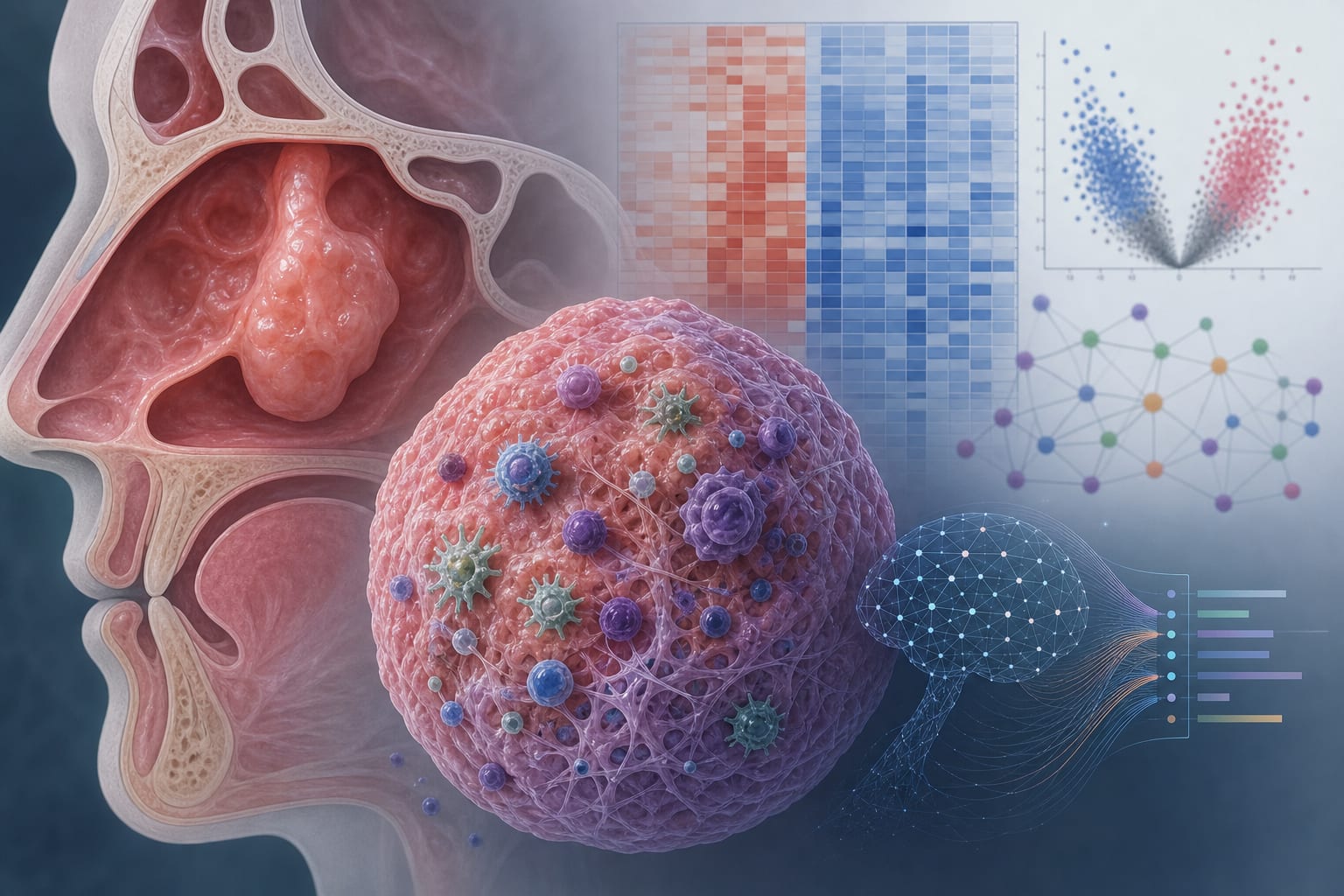
Diagnostic value and immune microenvironment regulatory network of metabolic reprogramming in chronic rhinosinusitis with nasal polyps identified by multidimensional transcriptome integration and machine learning - Summary - MDSpire
Advertisement
Evaluating the Diagnostic Potential and Immune Microenvironmental Interactions of Metabolic Reprogramming in Chronic Rhinosinusitis with Nasal Polyps through Multidimensional Transcriptomic Analysis and Machine Learning Techniques
To systematically analyze the molecular characteristics related to metabolic reprogramming in Chronic Rhinosinusitis with Nasal Polyps (CRSwNP) and their interactions with the immune microenvironment.
Key Findings:
Identified 21 DEGs associated with metabolic reprogramming relevant to CRSwNP.
A prediction model using these biomarkers achieved high diagnostic performance (AUC = 0.979).
Single-cell analysis revealed distinct expression patterns of these genes across immune cell subsets.
MR analysis indicated that lower expression of FBP1, LYZ, and NDRG2 could be risk factors for CRSwNP.
qRT-PCR validated the downregulation of these genes in CRSwNP tissues.
Interpretation:
The study systematically identifies and validates metabolic reprogramming-related genes with diagnostic value in CRSwNP, enhancing understanding of the disease's pathogenesis.
Limitations:
The study relies on publicly available datasets, which may have inherent biases.
Further validation in larger, diverse cohorts is necessary to confirm findings.
Conclusion:
The findings provide a novel platform for diagnostic and therapeutic strategies focusing on metabolism in CRSwNP.
The 2025 US Department of Veterans Affairs and US Department of Defense asthma guideline introduces 21 evidence-based recommendations for primary care, redefining stepwise treatment, comorbidity management, and reliever strategy.