Precision Oncology Is Changing Lung Cancer Treatment
-
By
-
November 17, 2026
-
5 min
Objective:
The article describes how earlier detection, molecular profiling and multidisciplinary planning inform lung cancer treatment pathways.
Approach:
- Nodule evaluation: Evaluate pulmonary nodules by size, morphology, patient-specific risk and change on serial imaging. PET/CT can help characterize lesions and assess disease extent, while CT-guided biopsy and robotic-assisted navigational bronchoscopy are tissue-sampling options. Lesion accessibility, procedural risk and treatment-planning needs guide selection.
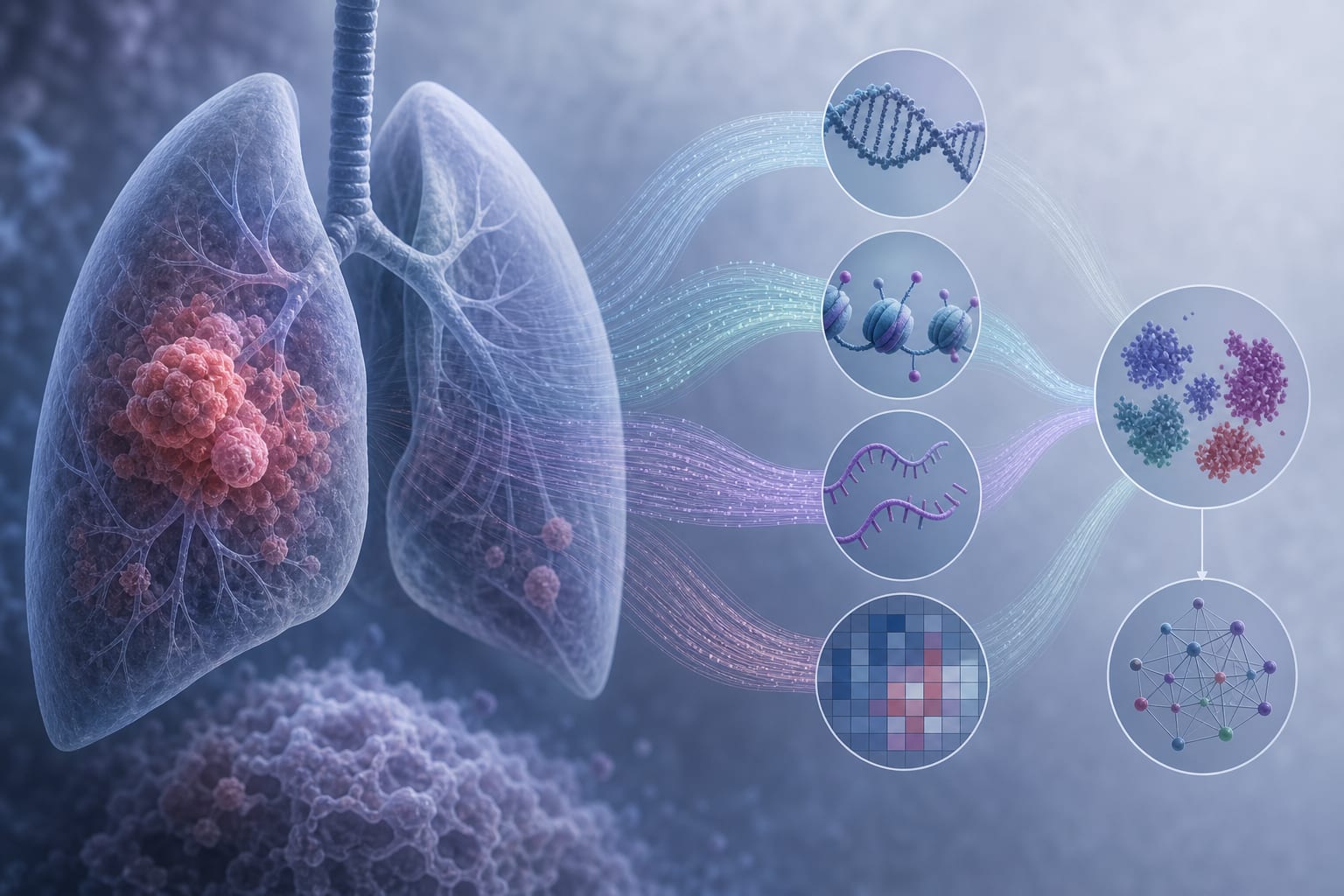
- Molecular profiling: In NSCLC, EGFR mutations and ALK rearrangements can identify candidates for targeted treatment in defined settings, while PD-L1 expression can help inform immunotherapy selection. Adequate tissue for histology and molecular profiling is important before committing to a treatment sequence.
- Treatment planning: For selected patients with resectable, locally advanced NSCLC, treatment may include neoadjuvant chemotherapy and immunotherapy followed by surgery and sometimes postoperative treatment. Molecular status, potential response, functional status and disease extent inform sequencing. For unresectable disease, definitive chemoradiation and appropriate consolidation or maintenance therapy remain important.
- Surgery and local therapy: For carefully selected patients with limited metastases, surgery or radiation to the primary tumor and metastatic sites may be considered alongside systemic therapy. Segmentectomy may be appropriate for selected small, peripheral, node-negative tumors; lobectomy remains appropriate for other tumors depending on anatomy, histology, lung function and nodal status. Adequate margins and systematic lymph node assessment remain important.
- Multidisciplinary care and trials: The physicians emphasized early coordination among thoracic medical oncology, surgery, radiation oncology, pathology and imaging, ideally before definitive therapy begins. They also described clinical trials addressing biomarker-directed therapies, resectability, local control and treatment sequencing.
Key Findings:
- USPSTF annual low-dose CT screening criteria described in the article cover adults ages 50–80 with a 20-pack-year smoking history who currently smoke or quit within 15 years; the article notes that these criteria do not include many people who develop lung cancer, including never-smokers.
- PET/CT may help characterize lesions and assess disease extent, but inflammation can cause false positives and small or low-metabolic-activity tumors can cause false negatives.
- Molecular status, disease extent, functional status and potential response—not technical resectability alone—inform treatment sequencing in stage 2 and 3 disease.
- Oligometastatic status alone is not an indication for surgery; disease distribution, systemic treatment response and feasibility of comprehensive local therapy guide consideration.
- Negative preoperative PET/CT and endobronchial ultrasound do not exclude occult nodal disease; surgical lymph node assessment can affect staging and postoperative treatment decisions.
Interpretation:
The physicians describe lung cancer treatment as increasingly guided by tumor biology, stage, resectability and coordinated multidisciplinary planning. They note that treatment choices and sequencing vary by patient and disease characteristics.
Limitations:
- The context is a summary of a physician podcast and does not provide study methods or comparative outcome data.
- The article states that evidence on selection and timing of local therapy for oligometastatic disease continues to evolve.
- The reported surgical discharge and recovery figures are specific to Dr. Bostock's program; the article notes that recovery varies.
Conclusion:
The physicians emphasize early multidisciplinary referral to support accurate staging, molecular testing, treatment selection and clinical trial consideration.
Sources:
Based on findings from:
Precision Oncology Is Changing Lung Cancer Treatment
Baptist Health South Florida, 2026.
https://physicianresources.baptisthealth.net/news/precision-oncology-is-changing-lung-cancer-treatment
This content is an AI-generated, fully rewritten summary based on a published scholarly article. It does not reproduce the original text and is not a substitute for the original publication. Readers are encouraged to consult the source for full context, data, and methodology.