To investigate the role of LARP1 in breast cancer (BRCA) and its implications for prognosis and immune microenvironment alterations, highlighting its potential as a novel biomarker.
Approach:
Key Findings:
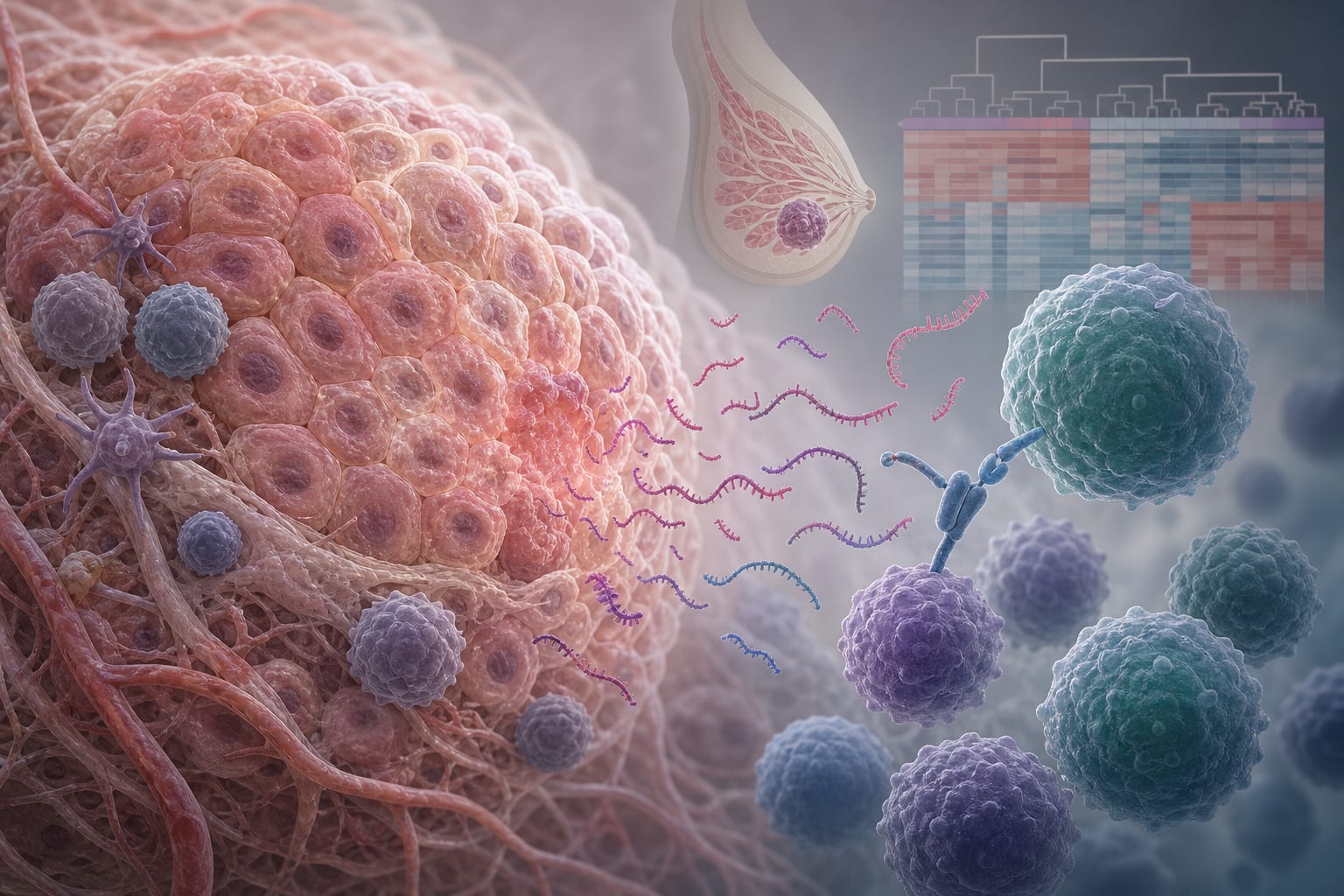
LARP1 is overexpressed in BRCA tissues compared to normal tissues, with statistical significance.
Higher LARP1 expression correlates with unfavorable overall survival (OS) and progression-free survival (PFS), indicating its prognostic value.
LARP1 silencing inhibits BRCA cell proliferation, migration, and invasion, and induces mitochondrial dysfunction.
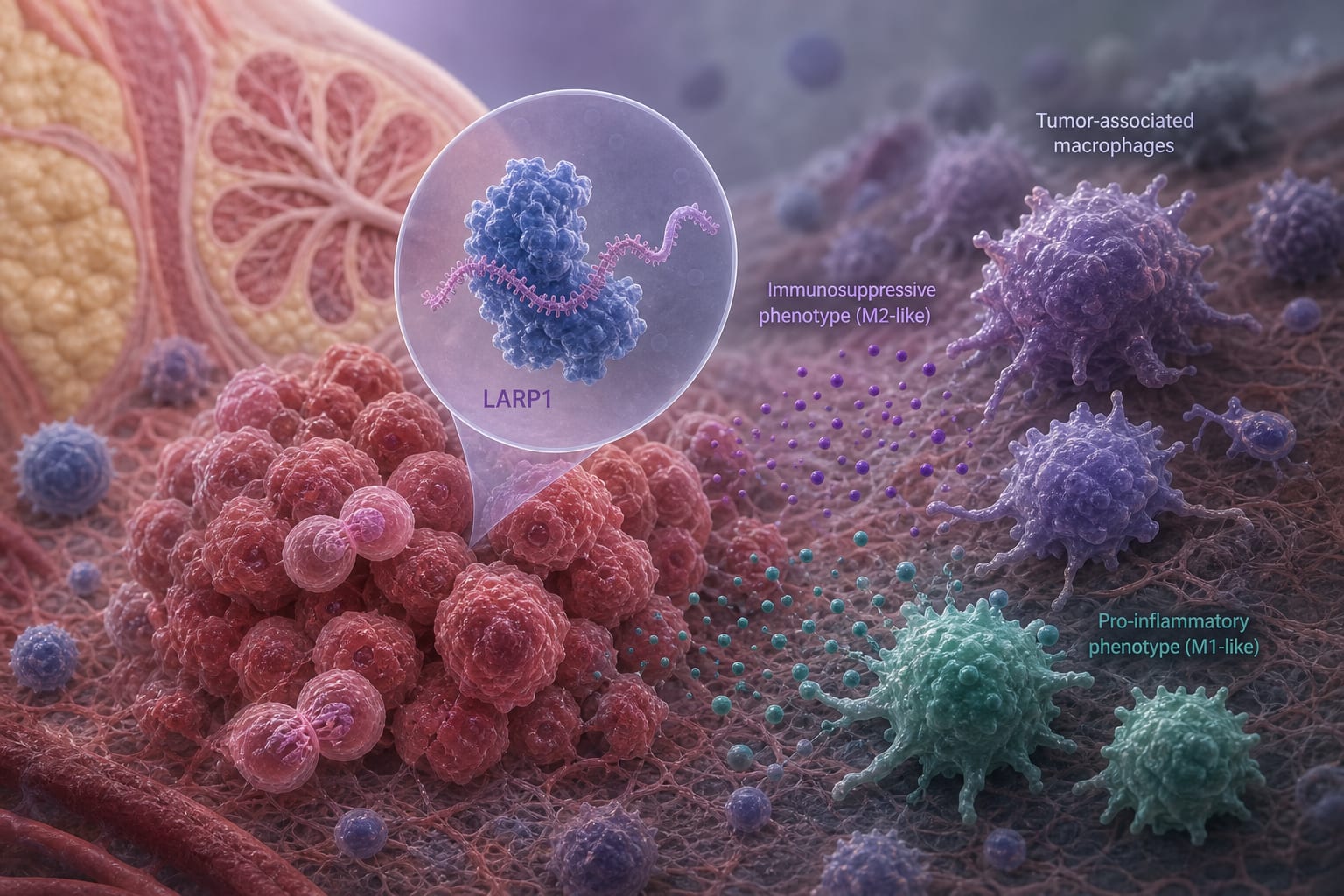
LARP1 downregulation shifts tumor-associated macrophages from M2 to M1 phenotype, enhancing anti-tumor immunity.
LARP1 expression positively correlates with M2 macrophages and negatively with M1 macrophages, suggesting its role in immune modulation.
Interpretation:
LARP1 plays a significant oncogenic role in BRCA progression by enhancing cell proliferation and immune evasion through mitochondrial regulation and macrophage polarization, which may inform future treatment strategies.
Limitations:
The study primarily relies on data from public databases and may not account for all variables in BRCA progression, potentially introducing bias.
Experimental validation was conducted in specific cell lines and may not fully represent all BRCA subtypes, limiting generalizability.
Conclusion:
LARP1 is a potential therapeutic target and biomarker for BRCA, indicating its relevance in clinical risk stratification and targeted therapy, warranting further investigation.