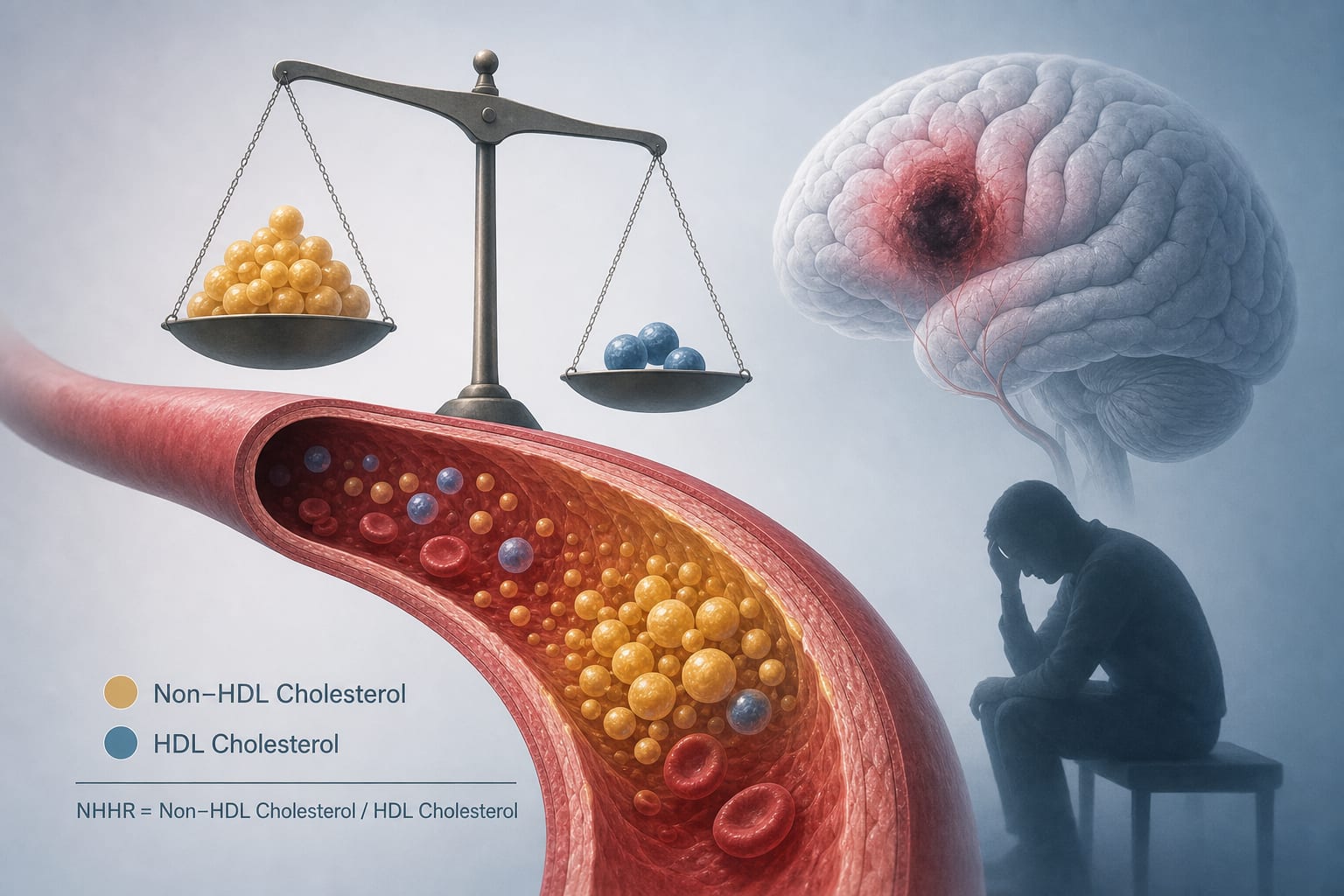
To explore the relationship between admission NHHR and 90-day depressive symptom burden in Chinese AIS patients and evaluate NHHR as a risk stratification marker.
Approach:
Study Design: Retrospective analysis of 518 Chinese AIS patients, assessing NHHR from lipid panels and depressive symptoms using HAMD at 90 days.
Statistical Analysis: Multivariable logistic regression, restricted cubic spline analysis, and subgroup analyses to examine associations.
Key Findings:
179 out of 518 patients exhibited elevated post-stroke depressive symptoms at 90 days.
Higher NHHR levels were independently associated with increased odds of elevated depressive symptoms after adjustment for demographics, stroke severity, cognitive function, inflammatory markers, and coagulation parameters (OR = 1.35, P = 0.029).
A linear relationship between NHHR and depressive symptoms was observed without significant nonlinearity.
Interpretation:
Elevated NHHR at admission is associated with increased post-stroke depressive symptoms at 90 days in AIS patients.
Limitations:
Study conducted in a single center with a specific population, limiting generalizability.
Retrospective design may introduce biases.
Conclusion:
The study suggests that NHHR may be a simple and cost-effective biomarker for early risk stratification of post-stroke depression.
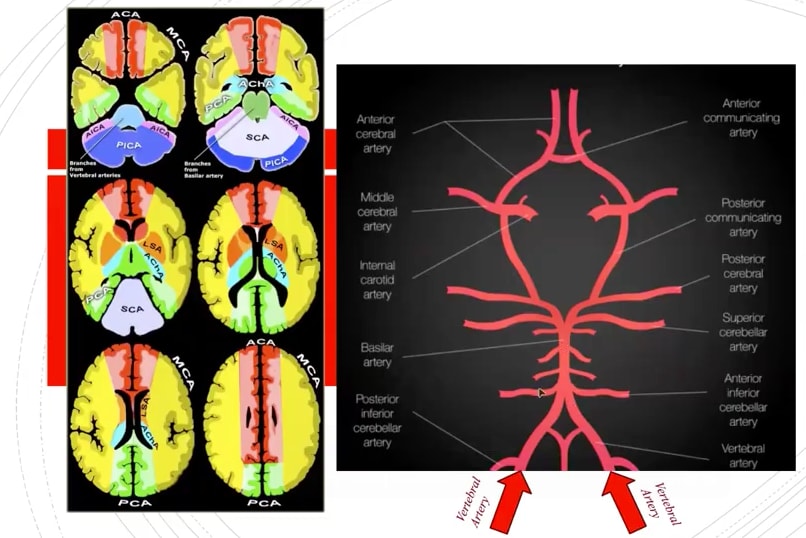
Bowhunter syndrome (BHS) is a rare but important cause of posterior circulation stroke in children, resulting from vertebral artery compression during head rotation.