The association between estimated glucose disposal rate and self-reported diabetic retinopathy: evidence from two independent cohorts and machine learning - Summary - MDSpire
Conexiant’s news site is now MDSpire News. Learn more
Advertisement
Examining the Link Between Estimated Glucose Disposal Rate and Self-Reported Diabetic Retinopathy: Insights from Two Distinct Cohorts and Machine Learning Approaches
To examine the relationship between estimated glucose disposal rate (eGDR) and the prevalence of diabetic retinopathy (DR).
Approach:
Study Design: Cross-sectional study analyzing data from the 2007–2018 NHANES with multivariate logistic regression and restricted cubic spline models.
Machine Learning: Utilized the Boruta algorithm for feature selection, followed by XGBoost and random forest models for DR prevalence estimation.
Clinical Cohort Validation: Conducted a clinical cohort study with 297 participants to validate NHANES findings using multivariable logistic regression.
Key Findings:
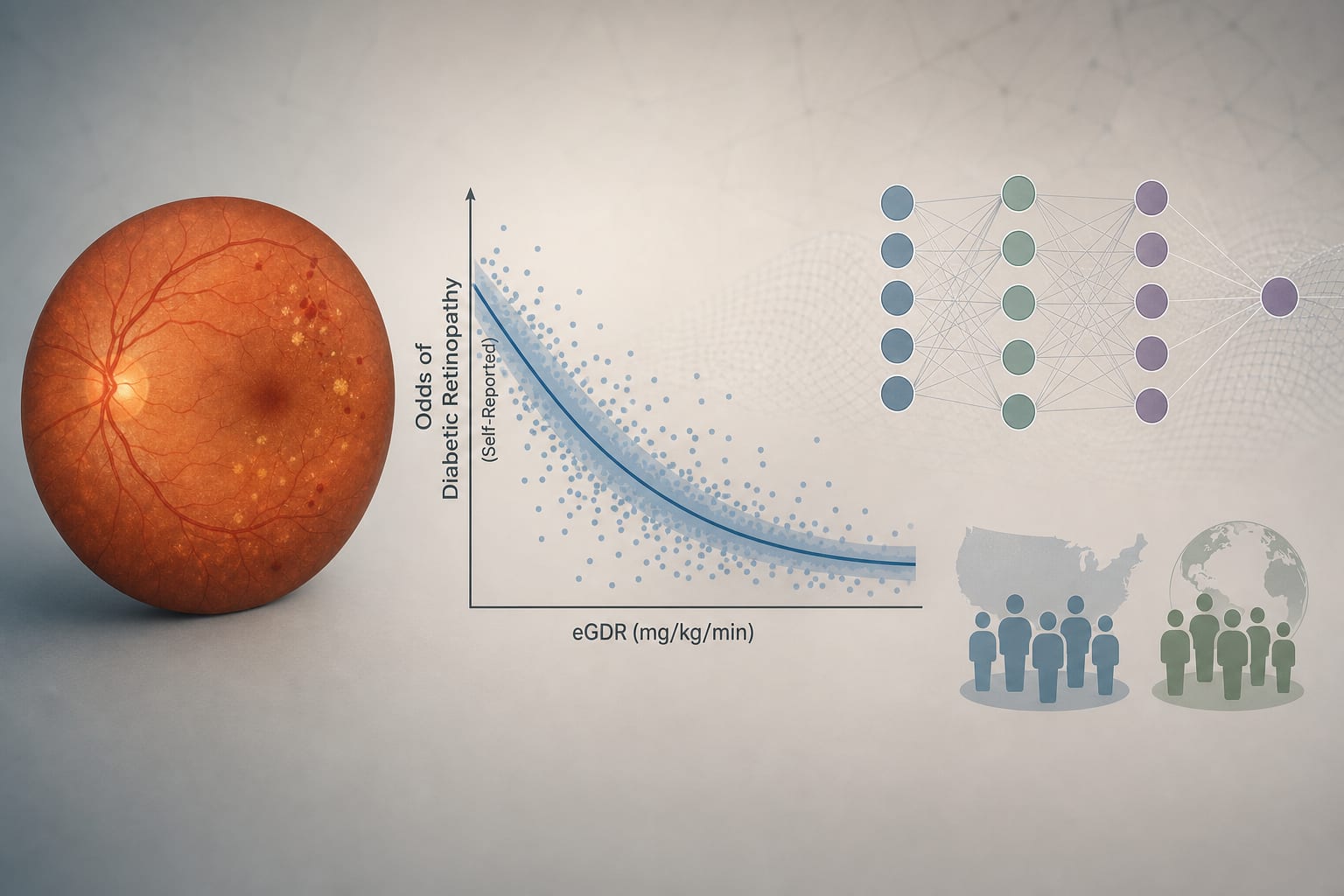
In the fully adjusted model, eGDR and self-reported DR prevalence show a significant negative linear correlation (OR = 0.79, 95% CI: 0.67–0.93, P = 0.0049).
Subgroup and sensitivity analyses confirm the stability of this negative association.
The Boruta algorithm identifies eGDR as a robust and important feature.
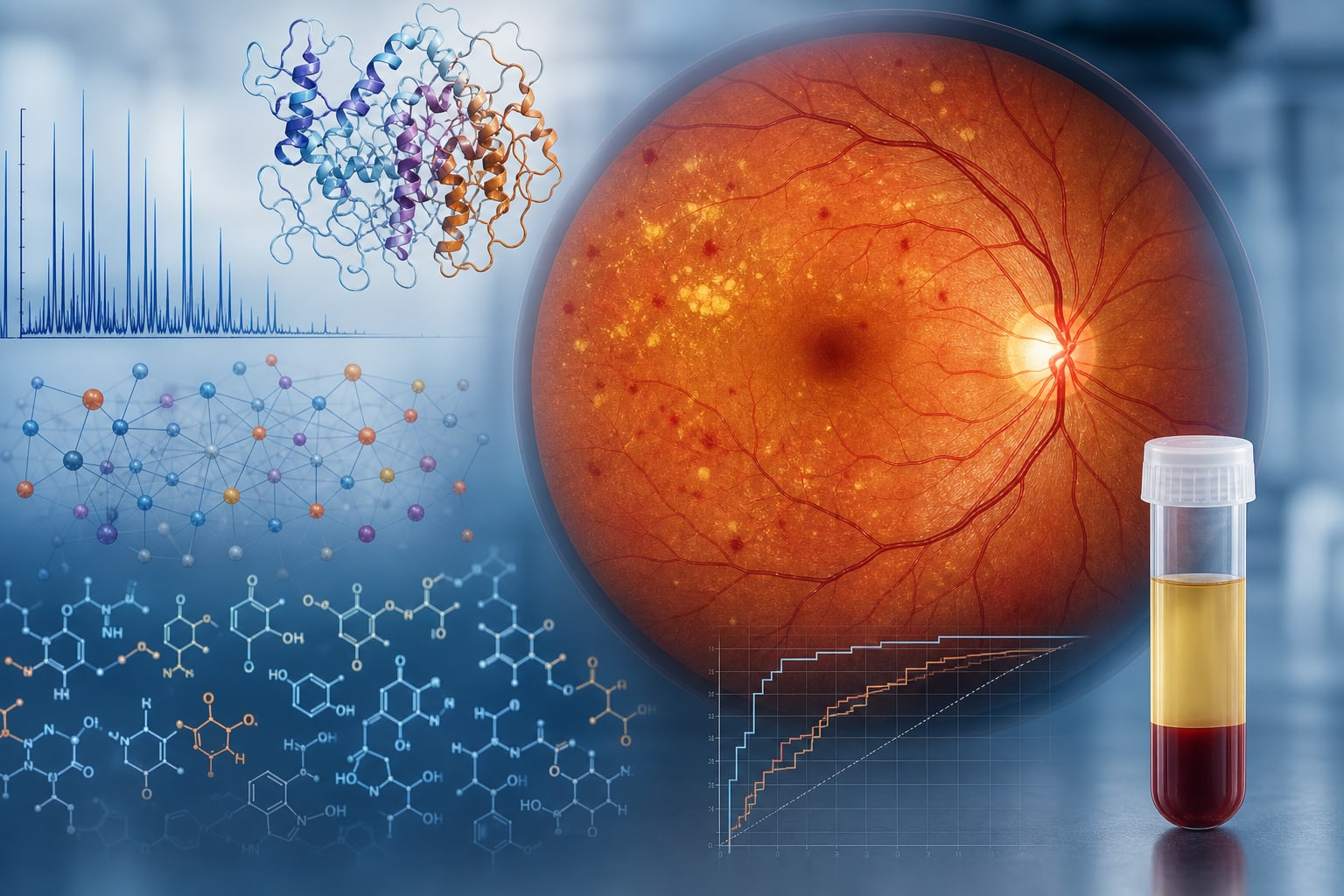
Both the XGBoost (AUC = 0.773) and random forest (AUC = 0.764) models show moderate predictive performance, and eGDR has high variable importance.
SHAP analysis indicates that eGDR, together with body mass index and income poverty, is a key determinant of self-reported DR prevalence.
Interpretation:
The study found a significant negative correlation between lower eGDR and higher prevalence of self-reported DR.
Limitations:
The study is cross-sectional, limiting causal inference.
Findings need confirmation through prospective longitudinal research.
Conclusion:
This study suggests a relationship between lower eGDR and higher prevalence of self-reported DR, indicating the need for further investigation.