To synthesize established and emerging biomarkers for immune checkpoint inhibitor selection in advanced gastric cancer, highlighting the need for a comprehensive biomarker framework to optimize patient selection.
Approach:
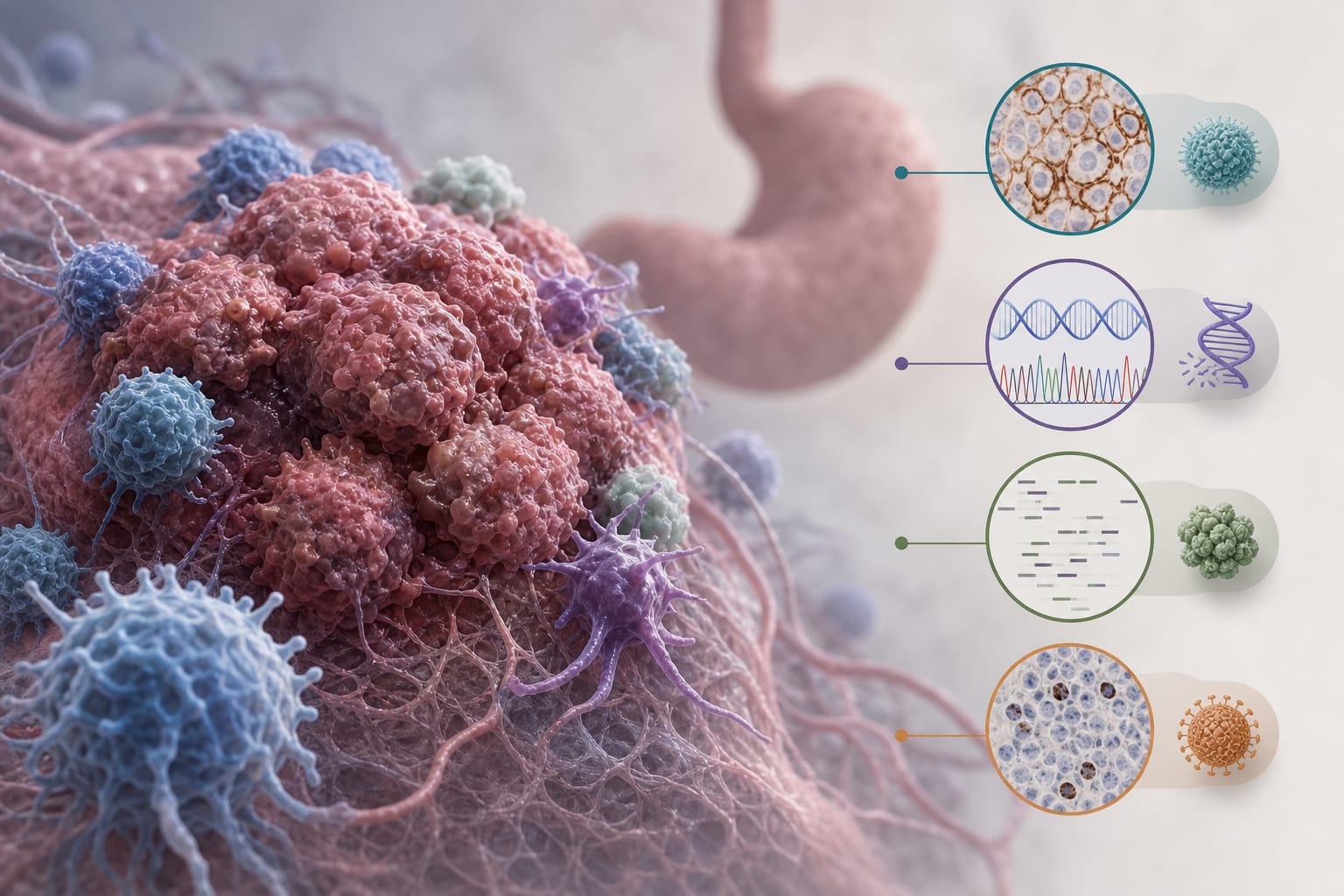
Biomarker Framework: The review discusses various biomarkers including PD-L1 combined positive score, deficient mismatch repair/microsatellite instability-high status, tumor mutational burden, Epstein–Barr virus-associated tumors, HER2-defined combination strategies, tumor microenvironment features, circulating tumor DNA dynamics, and artificial intelligence-assisted models.
Critical Evaluation: It evaluates trial-based limitations affecting biomarker interpretation, such as assay variability, spatial and temporal heterogeneity, dynamic PD-L1 expression, inconsistent CPS thresholds, and overlap between TMB-high and MSI-H biology.
Emerging Evidence: Recent studies on perioperative and neoadjuvant ICI are examined to highlight the role of early biomarker testing in guiding treatment intensification, de-escalation, or trial selection.
Proposed Framework: A tiered, resource-aware interpretation of biomarkers is proposed to differentiate clinically actionable markers from investigational tools, addressing challenges related to standardization, cost, access, and equity.
Key Findings:
Durable benefit from immunotherapy is limited to biologically selected patient subgroups.
Established biomarkers include PD-L1 expression and MSI-H status, while emerging markers such as TMEscore and longitudinal ctDNA response require further validation.
Recent studies suggest the importance of early biomarker testing in guiding treatment strategies, particularly in resectable disease.
Interpretation:
A comprehensive biomarker framework is essential for optimizing immunotherapy in gastric cancer, focusing on reliable patient selection.
Limitations:
Assay variability and spatial/temporal heterogeneity of biomarkers.
Inconsistent thresholds for PD-L1 expression and overlap between TMB-high and MSI-H biology.
Limited prospective validation of exploratory biomarkers.
Conclusion:
Integrating molecular, immune, dynamic, and translational markers is crucial for advancing precision immunotherapy in gastric cancer.