Endoscopic treatment outcomes for foreign body extraction from alimentary tract: a 15-year experience of 1,162 cases in Southern China - Summary - MDSpire
Advertisement
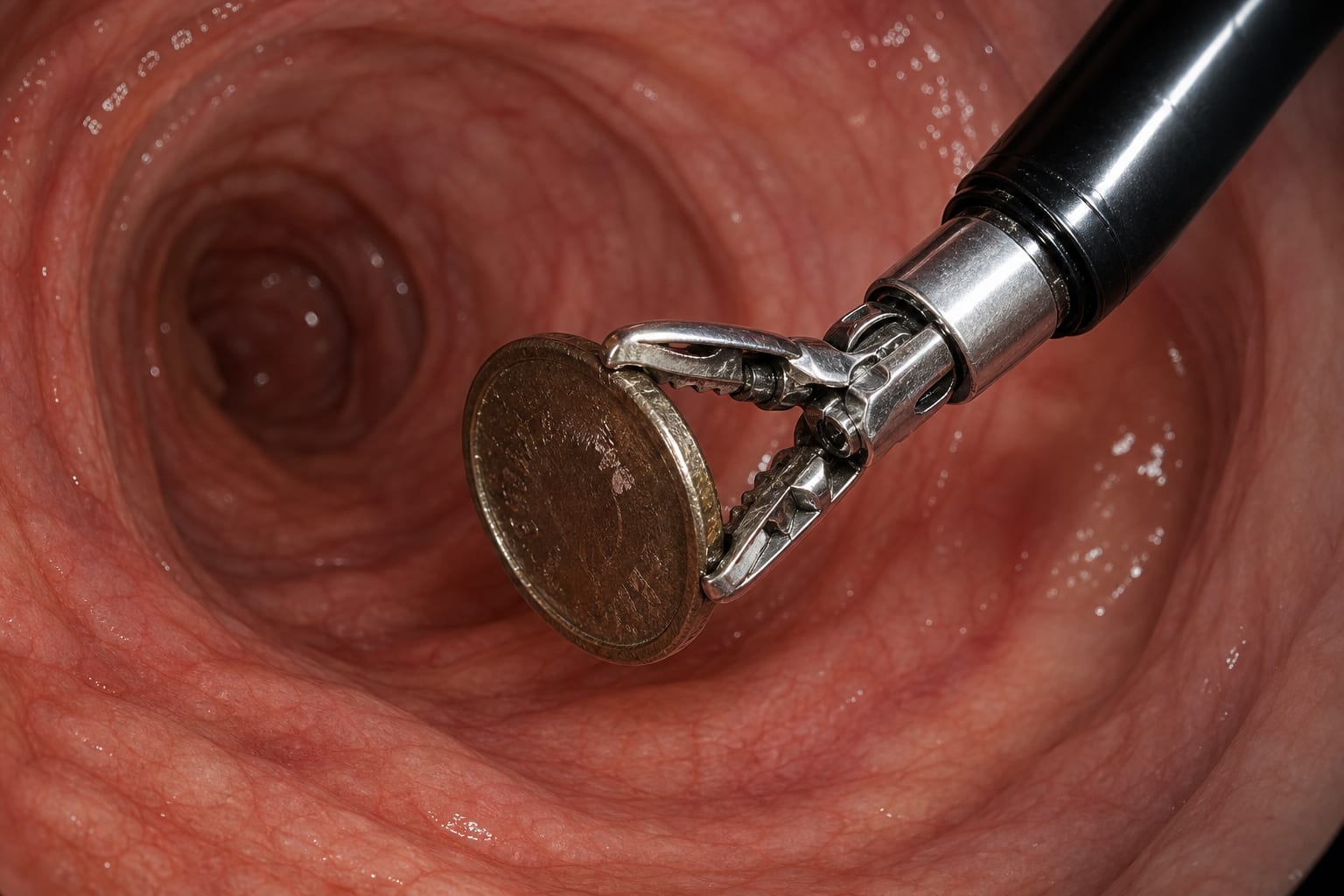
Endoscopic treatment outcomes for foreign body extraction from alimentary tract: a 15-year experience of 1,162 cases in Southern China
To evaluate the clinical outcomes of endoscopic intervention for foreign body (FB) removal and identify independent risk factors associated with procedural failure.
Approach:
Study Design: A single-center retrospective analysis of 1,162 cases of FB impaction in the upper or lower gastrointestinal tract from January 2010 to December 2024.
Data Collection: Baseline demographics, clinical presentations, and endoscopic characteristics were reviewed, with success rates and complication rates investigated.
Statistical Analysis: Independent predictors of endoscopic failure were identified using multivariable logistic regression analysis.
Key Findings:
Endoscopic removal was successful in 1,140 cases (98.1%).
84.7% of procedures were completed within 24 hours of symptom onset.
Moderate-to-severe complications occurred in 0.6% of cases, with no deaths related to FB impaction or endoscopic intervention.
Independent risk factors for endoscopic failure included sharp pointed FB, delayed intervention exceeding 24 hours, and multiple endoscopic attempts.
Interpretation:
Endoscopic management of GI tract FB impaction is highly effective and carries a favorable safety profile. Early recognition of factors predictive of endoscopic failure may enhance success rates.
Limitations:
Retrospective design may introduce selection bias.
Data was collected from a single center, limiting generalizability.
Conclusion:
Endoscopic intervention for FB removal in the alimentary tract is effective, with a low complication rate.