Where Are Adults Getting Sunburned? - Summary - MDSpire
Advertisement
Where Are Adults Getting Sunburned?
Water-related activities were the most commonly reported setting for recent sunburn, while more than one-half of respondents reported sunscreen use at the time of their most recent sunburn.
To analyze the contexts in which adults experience sunburns based on data from the 2024 National Health Interview Survey.
Approach:
Survey Analysis: Data from 32,629 adult participants were analyzed, focusing on contexts of recent sunburns, including activities like working, tanning, exercising, and using sunscreen.
Key Findings:
61% of respondents reported their most recent sunburn occurred while spending time in, on, or near water.
88.1 million US adults (35% of the population) reported at least one sunburn in the previous year.
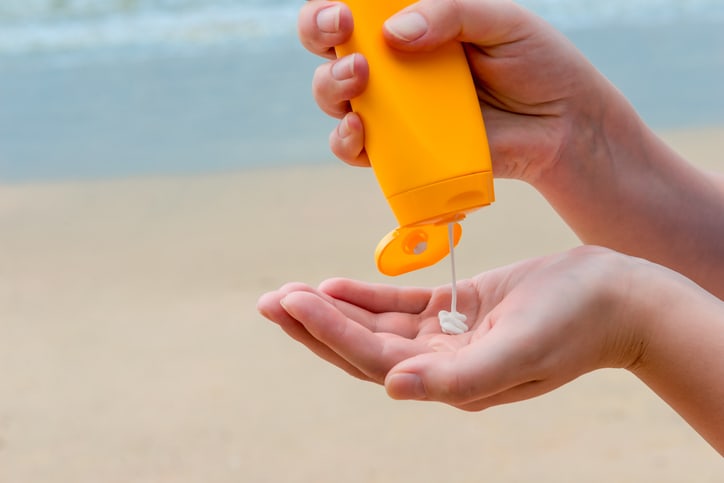
55% of respondents reported sunburn despite using sunscreen.
46% of adults aged 18 to 29 reported at least one sunburn, compared to 17% of those aged 65 and older.
Non-Hispanic White adults had a 46% prevalence of at least one sunburn.
18.8 million adults reported four or more sunburns in the previous year.
Among adults classified as sun sensitive, 55% reported at least one sunburn and 13% reported four or more sunburns.
8% of the overall population reported four or more sunburns.
Among racial and ethnic groups, 22% of Hispanic adults, 16% of non-Hispanic Asian adults, and 9% of non-Hispanic Black adults reported at least one sunburn.
Interpretation:
The study highlights the prevalence of sunburn among US adults and the contexts in which they occur, emphasizing the need for effective sun protection.
Limitations:
Data were cross-sectional, limiting causal conclusions.
Self-reported information may be subject to recall and social desirability bias.
Sunburn-context data were limited to the most recent sunburn and may not reflect usual circumstances.
The sunscreen question did not account for factors affecting effectiveness, such as application frequency and type.
Conclusion:
Approximately one-third of US adults experience at least one sunburn each year, increasing their skin cancer risk.