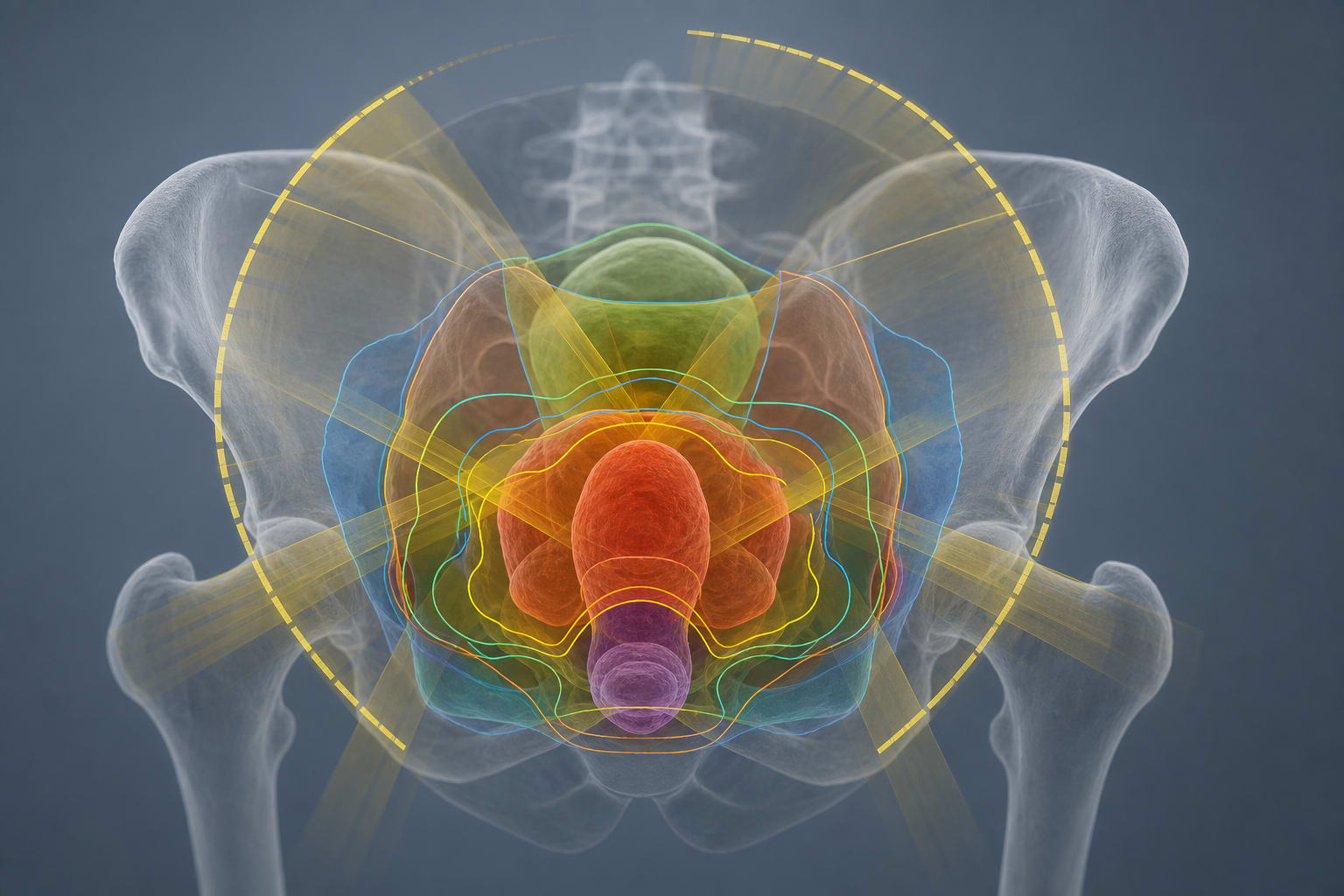
To investigate the feasibility of a 3D transformer-based deep learning model for dose prediction in HDR interstitial brachytherapy, highlighting its potential to improve treatment planning efficiency.
Key Findings:
The transformer model effectively captured global context for dose prediction, with specific improvements in accuracy metrics.
Quantitative dose differences between clinical and predicted maps were analyzed, revealing significant insights.
The model demonstrated improved prediction accuracy compared to traditional methods, with statistical validation.
Interpretation:
The 3D transformer model shows promise in enhancing dose prediction accuracy in HDR brachytherapy, addressing limitations of existing convolutional models and suggesting a shift in clinical practice.
Limitations:
Retrospective nature of the study may introduce bias; future studies should consider prospective designs.
Limited sample size may affect generalizability of results; larger cohorts are needed for validation.
Dependence on high-quality imaging and contouring accuracy; strategies to standardize these processes should be explored.
Conclusion:
The study presents a novel approach using transformer mechanisms for dose prediction in HDR interstitial brachytherapy, potentially improving treatment planning efficiency and patient outcomes.
Colorectal cancer (CRC) impacts about 1 in 13,000 pregnancies in the United States. This article follows the case of a 36-year-old woman diagnosed with CRC while pregnant and highlights considerations around CRC diagnosis and cancer treatment during pregnancy.