Spinal cord stimulation for upper limb motor function in people with chronic post-stroke hemiparesis: a feasibility trial - Summary - MDSpire

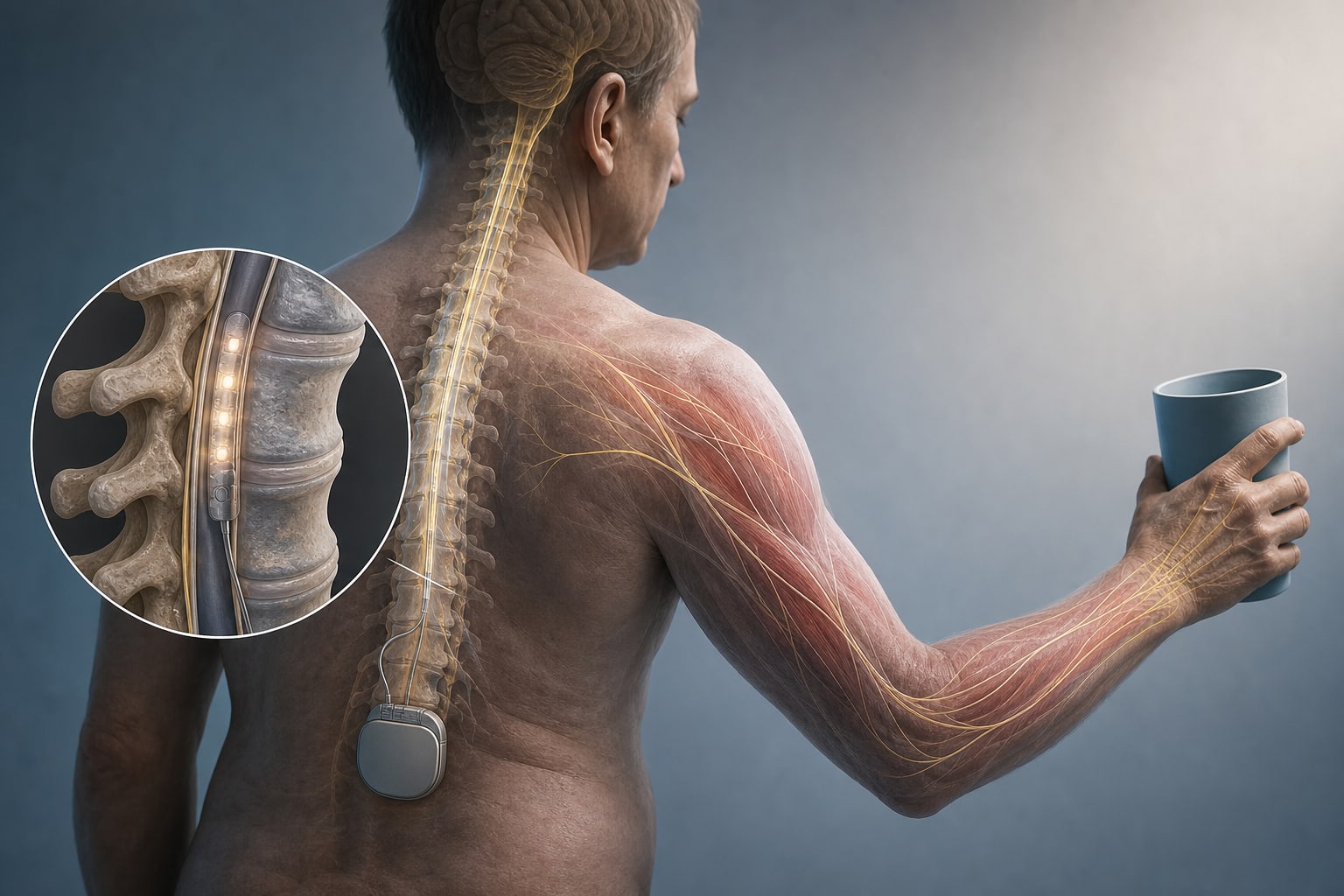
Spinal cord stimulation for upper limb motor function in people with chronic post-stroke hemiparesis: a feasibility trial

  • By

  • Roberto M. de Freitas

  • Shovan Bhatia

  • Erynn Sorensen

  • Nikhil Verma

  • Erick Carranza

  • Scott Ensel

  • Luigi Borda

  • Amy Boos

  • Jeff Goldsmith

  • Lee E. Fisher

  • Daryl P. Fields

  • Marc P. Powell

  • Shane Gordon

  • Jeffrey Balzer

  • Robert M. Friedlander

  • George F. Wittenberg

  • Peter C. Gerszten

  • John W. Krakauer

  • Elvira Pirondini

  • Douglas J. Weber

  • Marco Capogrosso

  • June 4, 2026

  • 0 min

Share

Objective:

To investigate the safety, feasibility, and preliminary efficacy of epidural cervical spinal cord stimulation (SCS) in individuals with chronic post-stroke hemiparesis, including an assessment of its effects on motor function.

Key Findings:
  • Stimulation of the C3−C4 spinal segment should be avoided due to the risk of interfering with normal breathing.
  • SCS can be delivered at effective intensities without causing discomfort.
  • SCS improved strength, arm dexterity, movement synergies, and spasticity, with maximal efficacy when SCS is ON, demonstrating both immediate assistive and long-term therapeutic effects.
  • Retention of motor improvements depends on continued use of SCS.
  • Individuals with milder sensory impairments showed greater improvements in motor function.
Interpretation:

The study provides preliminary evidence supporting the safety and feasibility of SCS in enhancing motor function in chronic hemiparesis, highlighting its potential for both immediate and sustained improvements.

Limitations:
  • The study involved a small sample size of seven participants.
  • No formal motor rehabilitation protocol was implemented during the trial.
  • The absence of a control group limits the ability to draw definitive conclusions.
Conclusion:

Epidural cervical SCS may serve as a promising intervention for immediate and assistive improvements in upper limb motor function in chronic hemiparesis.

Original Source(s)

Related Content