Lysophosphatidylcholine and lysophosphatidic acid as key messengers in atherosclerosis: from a lipid-inflammation vicious cycle to therapeutic translation - Summary - MDSpire
Advertisement
Lysophosphatidylcholine and lysophosphatidic acid: pivotal signaling molecules in atherosclerosis and their potential for therapeutic application
To systematically examine the biosynthesis, receptor-mediated signaling, and pathological effects of lysophosphatidylcholine (LPC) and lysophosphatidic acid (LPA) in atherosclerosis (AS), emphasizing their roles in plaque progression and destabilization.
Approach:
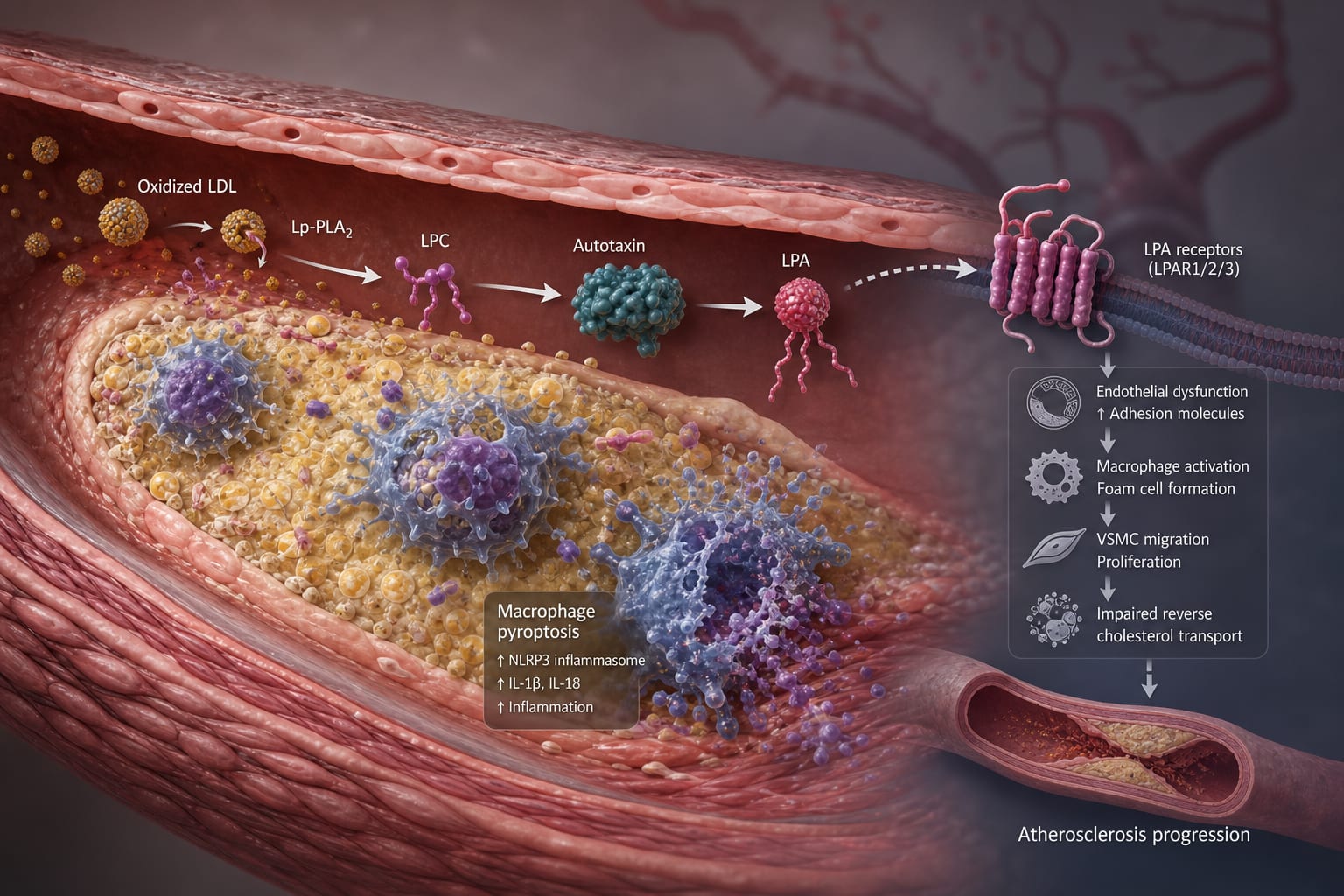
Review of Mechanisms: The review discusses the lipid-inflammation pathogenic cycle, detailing how LPC and LPA are generated and their roles in inflammatory signaling and macrophage pyroptosis.
Spatial Metabolomics: Utilizes spatial metabolomics to identify LPC and LPA subspecies enriched in macrophage-rich regions of atherosclerotic plaques.
Therapeutic Evaluation: Critically evaluates translational advances, including failed clinical trials and emerging strategies for targeting LPLs.
Key Findings:
LPC and LPA are central to the lipid-inflammation pathogenic cycle in atherosclerosis.
Hyperlipidemia leads to the generation of LPC and LPA, which activate inflammatory signaling pathways.
Spatial metabolomics has confirmed the enrichment of LPC (18:0) and LPA (18:1) in macrophage-rich areas of plaques.
Current therapeutic strategies targeting Lp-PLA2 and autotaxin have shown limited success.
Interpretation:
LPC and LPA play active roles in atherosclerosis progression through their involvement in inflammatory signaling and macrophage activation.
Limitations:
The review primarily focuses on LPC and LPA without addressing other potential lysophospholipids.
Clinical implications of findings may vary and require further validation in diverse populations.
Conclusion:
The LPC-LPA axis represents a self-reinforcing driver of plaque progression, suggesting that multi-node combination therapies may be necessary to effectively disrupt this cycle.