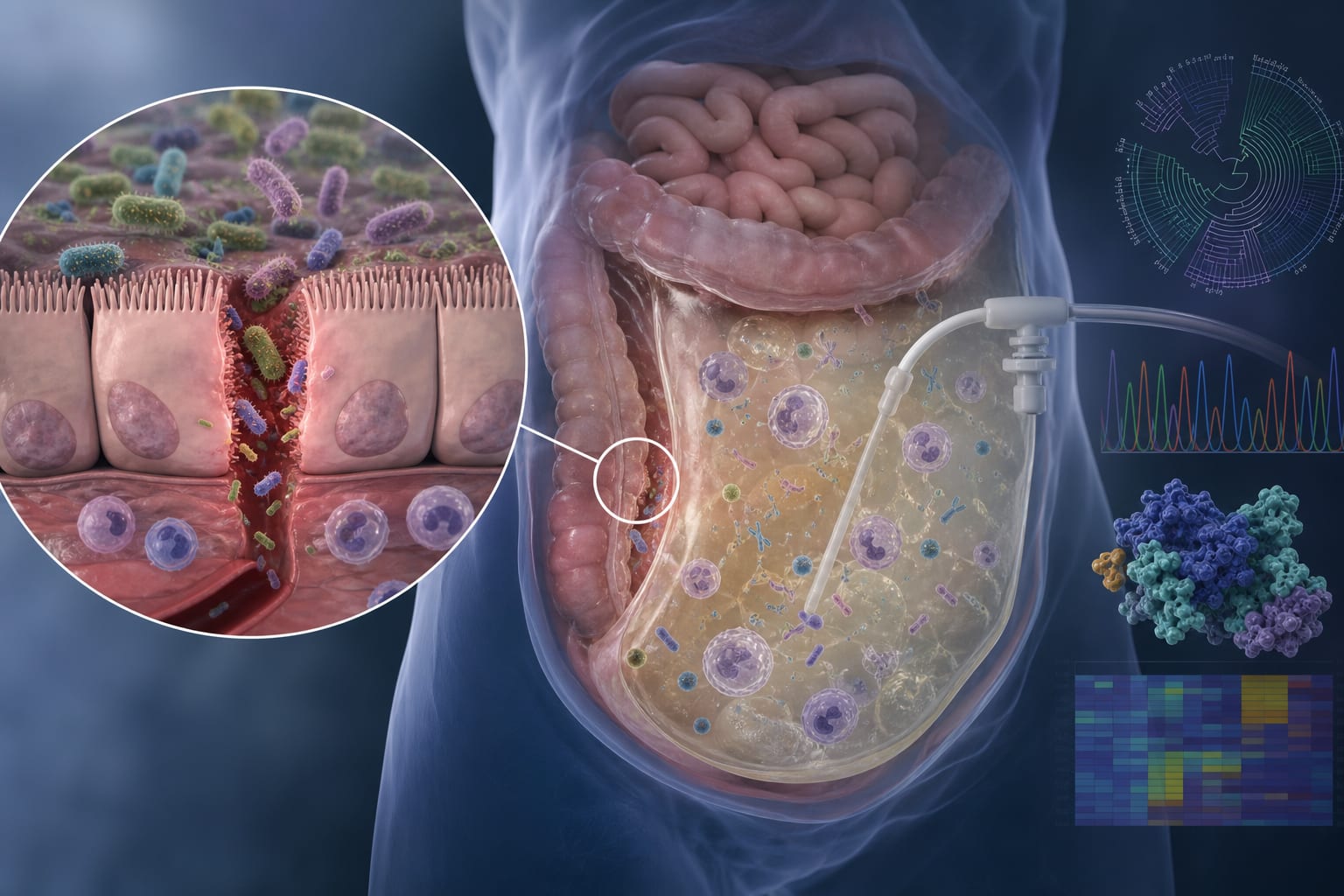
To identify biomarkers associated with relapsing peritoneal dialysis-associated peritonitis (PDAP) and discuss potential mechanisms.
Approach:
Patient Enrollment: 31 PDAP patients treated in 2023 were prospectively enrolled, including 23 cured patients and 8 with relapsing PDAP.
Sample Collection: Peritoneal dialysate samples were collected for conventional bacterial culture, 16S rDNA sequencing, and proteomic analysis.
Diagnostic Methods: Conventional culture positivity rate was 64.5%, and 16S rDNA sequencing was 67.8%; combining both methods increased detection to 83.9%.
Microbiome Analysis: Analysis indicated PDAP relapse may arise from exogenous pathogens and gut-derived bacterial translocation due to impaired local immunity.
Proteomic Profiling: Compared to the cured group, the relapse group showed downregulated CCL28, CD40, uPA, and upregulated NRTN.
Bioinformatic Analysis: Dysregulation in pathways related to inflammation, fibrinolysis, and immune clearance was observed, linking relapsing PDAP to disturbed immune microenvironment.
Key Findings:
Relapsing PDAP is linked to peritoneal immune dysregulation and gut bacterial translocation.
A biomarker panel (CCL28, CD40, uPA, NRTN) distinguishes relapse from cure.
16S rDNA sequencing complements culture, raising detection rates to 83.9%.
Interpretation:
Relapsing PDAP is associated with immune dysregulation in the peritoneal environment.
Limitations:
Study conducted at a single center, limiting generalizability.
Small sample size may affect the robustness of findings.
Conclusion:
The study highlights the importance of immune dysregulation in relapsing PDAP and suggests 16S rDNA sequencing as a valuable diagnostic tool.