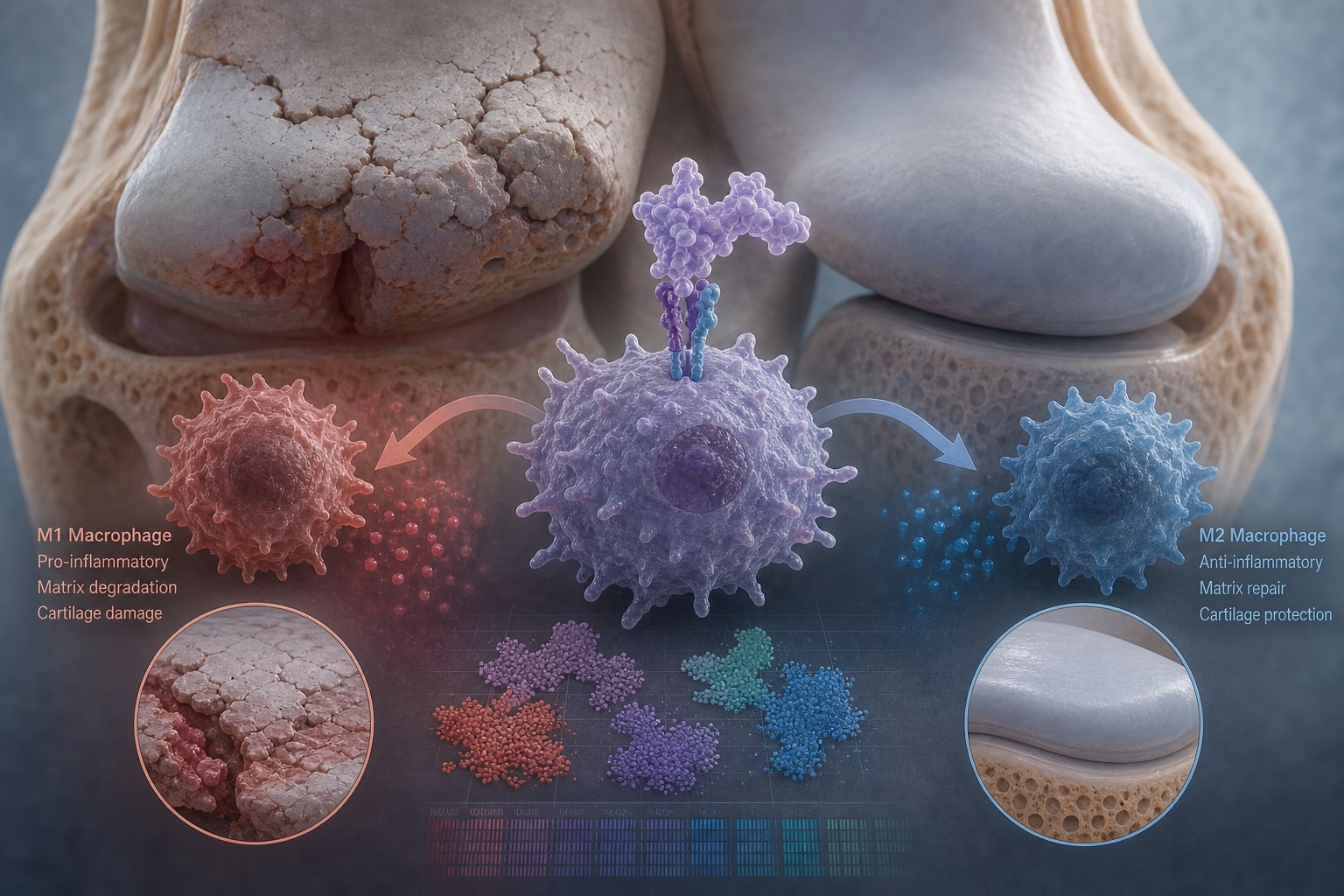
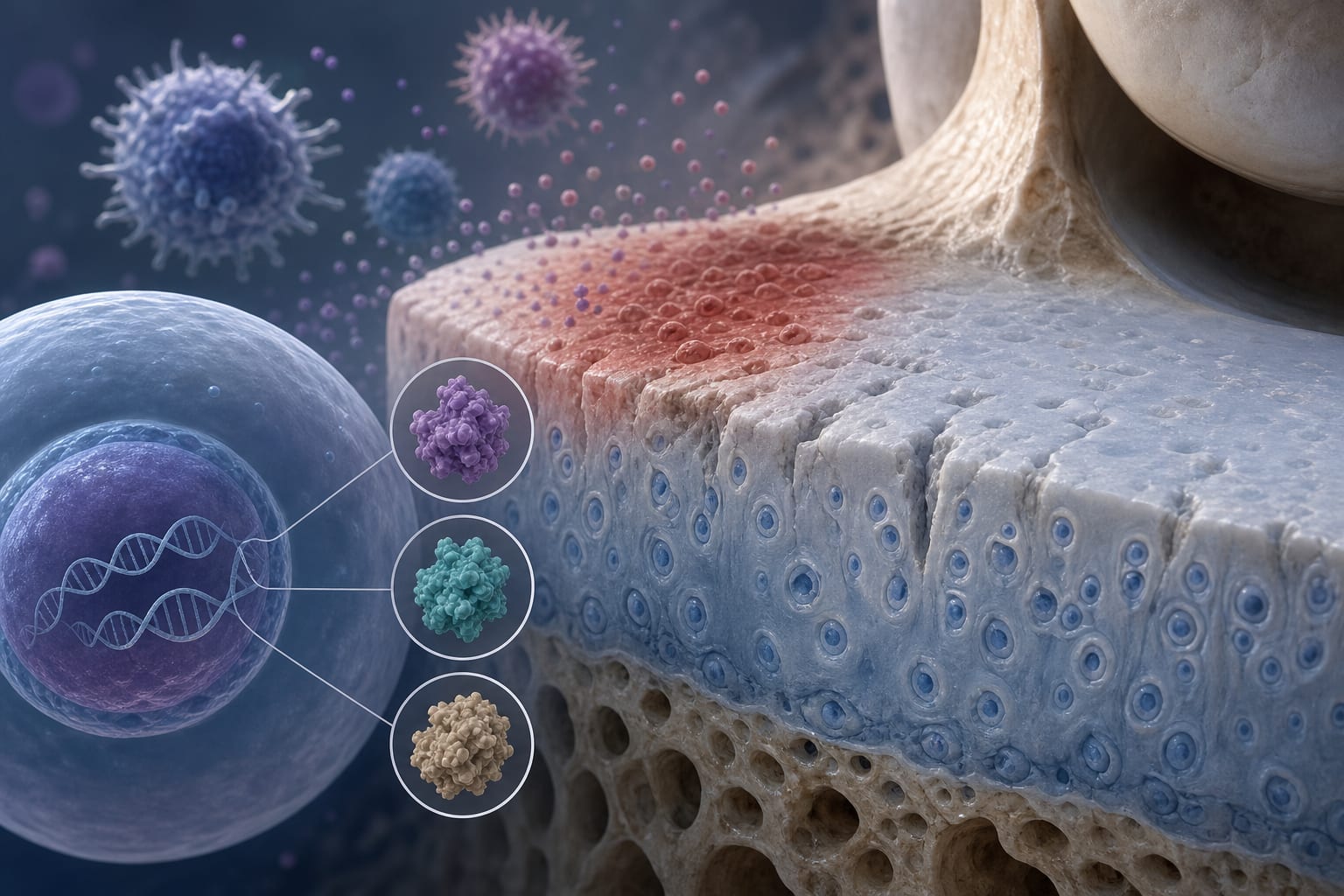
To analyze the interaction patterns and key ligand-receptor pairs of M1/M2 macrophages during osteoarthritis progression, highlighting their significance in disease mechanisms.
Key Findings:
Identified strong bidirectional interactions between M1 and M2 macrophages, indicating a complex communication network.
SEMA4A was the only overlapping key gene among macrophage subpopulations, suggesting its central role.
The SEMA4 signaling pathway showed active communication, with M1 macrophages as dominant signal senders, emphasizing their role in inflammation.
SEMA4A–PLXNB2 was the predominant interaction pair with the highest communication probability, highlighting its potential as a therapeutic target.
Interpretation:
The study suggests that SEMA4A–PLXNB2 signaling sustains and amplifies the inflammatory microenvironment in osteoarthritis through macrophage–stromal crosstalk, indicating a potential target for therapeutic intervention.
Limitations:
The study is based on a limited sample size of 18 synovial samples, which may limit the generalizability of the findings.
Further validation is needed to confirm the therapeutic potential of targeting the SEMA4A–PLXNB2 pathway in larger cohorts.
Conclusion:
The SEMA4A–PLXNB2 signaling pathway plays a significant role in the macrophage-associated inflammatory network in osteoarthritis, representing a promising therapeutic candidate that warrants further validation.
In a UK cohort, patients with osteoarthritis who initiated centrally acting analgesics had a higher hazard of knee or hip replacement than those who initiated SSRIs, though residual confounding by pain severity remains a key limitation.
So get this: sodium may track with memory decline (in men), steroids might not be “immunosuppressive” in the ICU, and second pregnancies reshape the brain differently than first. Same theme: biology is less binary than we teach it.