Conexiant’s news site is now MDSpire News. Learn more
Advertisement
Early-onset CRC may show stromal enrichment
Researchers identified age-associated differences in tumor cell composition, gene expression, and signaling, with findings supported by independent cohorts.
To compare tumor cell composition and molecular features in early-onset and average-onset colorectal cancer (CRC).
Approach:
Study design: Researchers performed single-nucleus RNA sequencing on 189 primary tumors: 54 from patients younger than 50 and 135 from patients aged 50 or older. Analyses included 850,222 nuclei and accounted for microsatellite status and selected clinical factors.
Validation and analyses: Selected findings were assessed in independent immunofluorescence and bulk RNA sequencing cohorts. The study examined cell composition, gene expression, copy number alterations, and computationally inferred cell-to-cell signaling.
Key Findings:
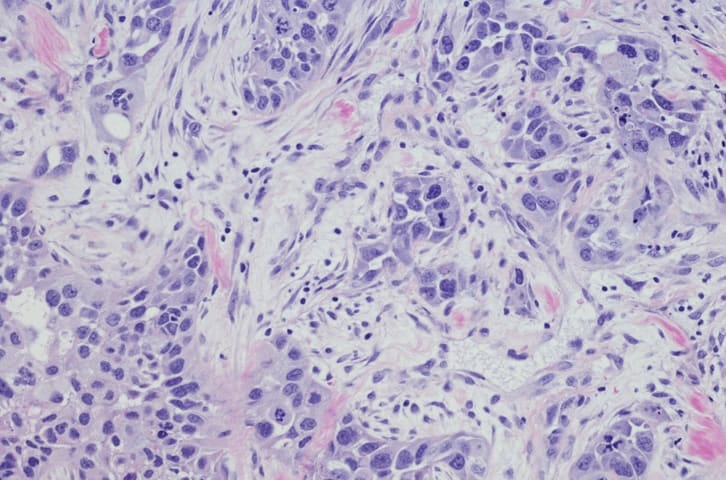
Among microsatellite-stable tumors, younger age was associated with a higher stromal-to-epithelial cell ratio; this association was supported in independent cohorts.
In adjusted analyses, patients younger than 50 had 2.70 times the likelihood of a higher stromal-to-epithelial ratio compared with patients aged 70 or older.
Across epithelial cell subsets, 215 genes had higher expression at younger ages and 44 at older ages. Long noncoding RNAs made up about 30% to 45% of the younger-age-associated genes in several epithelial populations.
Left-sided early-onset tumors showed greater inferred interaction strength across 29 signaling pathways, compared with 7 pathways in average-onset tumors. Enriched pathways included fibronectin, growth differentiation factor, activin, and osteopontin signaling…
Broad epithelial cell states and core gene expression programs were similar across age groups. Researchers found no distinct early-onset copy number alteration profile or significant age association with overall copy number alteration burden.
Interpretation:
The authors stated that increased stromal composition, long noncoding RNA activity, and epithelial-to-mesenchymal transition in early-onset CRC provide hypotheses for possible mechanisms related to advanced stage and poorer survival in these patients.
Limitations:
The observational design cannot establish whether the identified differences contribute to tumor progression or clinical outcomes.
Younger patients were more likely to have left-sided tumors, complicating separation of age-related differences from tumor-location effects.
Some subgroup analyses included relatively few tumors and could not fully account for clinical confounders.
The study lacked matched normal tissue, and some comparisons relied on external datasets.
Cell-to-cell interactions were computationally inferred, and the findings require functional validation.
Conclusion:
The study identified age-associated differences in stromal composition, gene expression, and inferred signaling in CRC, alongside broadly similar epithelial cell states and no distinct copy number alteration profile.