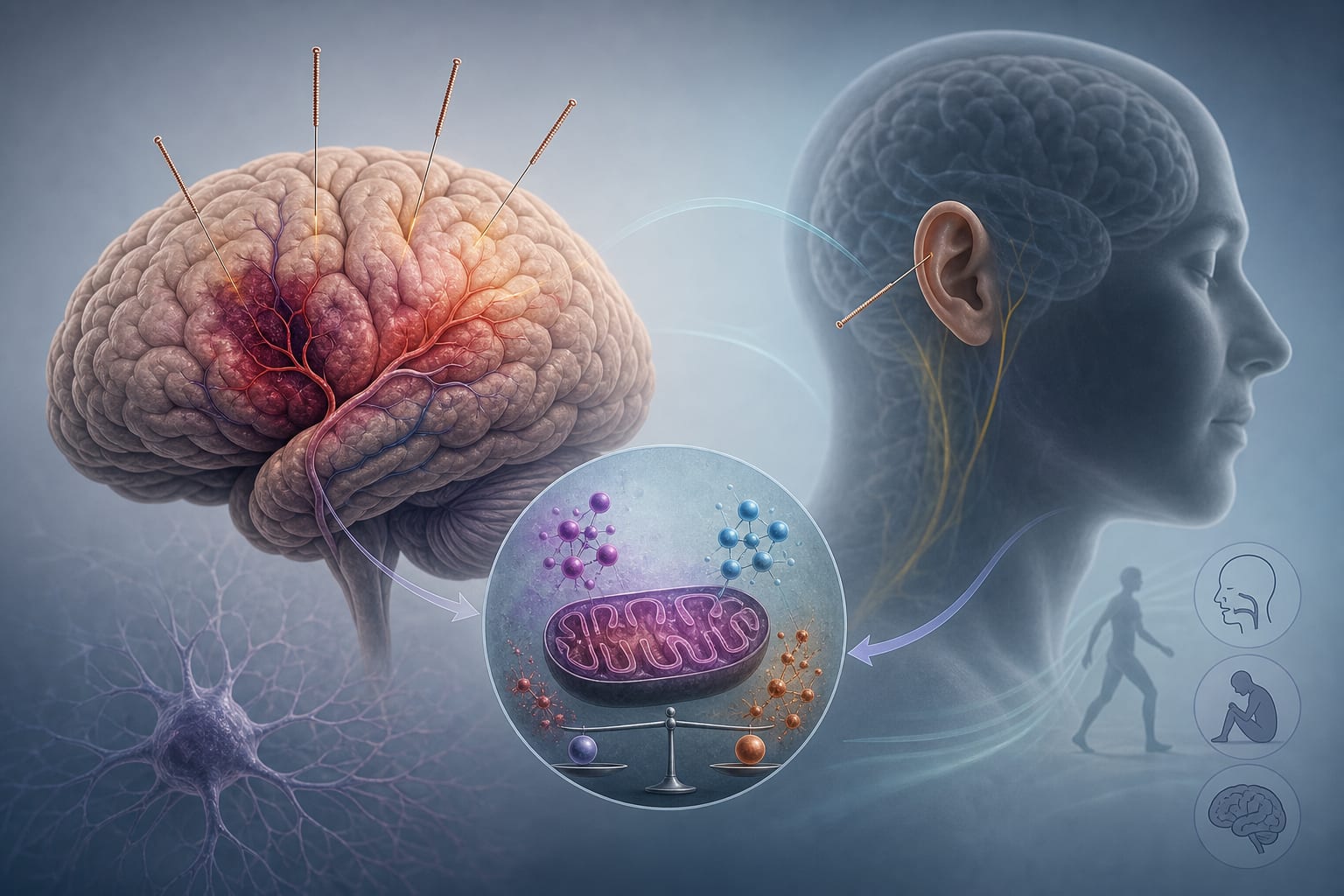
To examine the role of acupuncture in ischemic stroke through the lens of metabolic reprogramming, focusing on mitochondrial function and metabolic pathways.
Key Findings:
Acupuncture may show consistent benefits in dysphagia, depressive symptoms, and possibly cognitive impairment post-stroke, but outcomes vary significantly.
Mechanistic studies suggest acupuncture influences mitochondrial bioenergetics and metabolic pathways, although most evidence is preclinical.
The inconsistency in clinical outcomes may be due to varying metabolic sensitivities among post-stroke phenotypes, highlighting the need for further research.
Interpretation:
The review argues for a metabolism-centered framework to clarify acupuncture's potential role in ischemic stroke recovery, which could enhance clinical applications.
Limitations:
Most evidence supporting acupuncture's effects is preclinical.
Clinical evidence remains low to moderate in certainty.
Inconsistencies in study designs and control conditions complicate the assessment of acupuncture's efficacy.
There is a pressing need for more robust clinical trials to validate findings.
Conclusion:
Future research should focus on biomarker-anchored, phenotype-specific trials to better understand acupuncture's role in stroke recovery, prioritizing specific metabolic pathways.