Beyond the airway: the impact of septoplasty and turbinate reduction on somnolence and sleep disordered breathing risk—a prospective study - Summary - MDSpire
Conexiant’s news site is now MDSpire News. Learn more
Advertisement
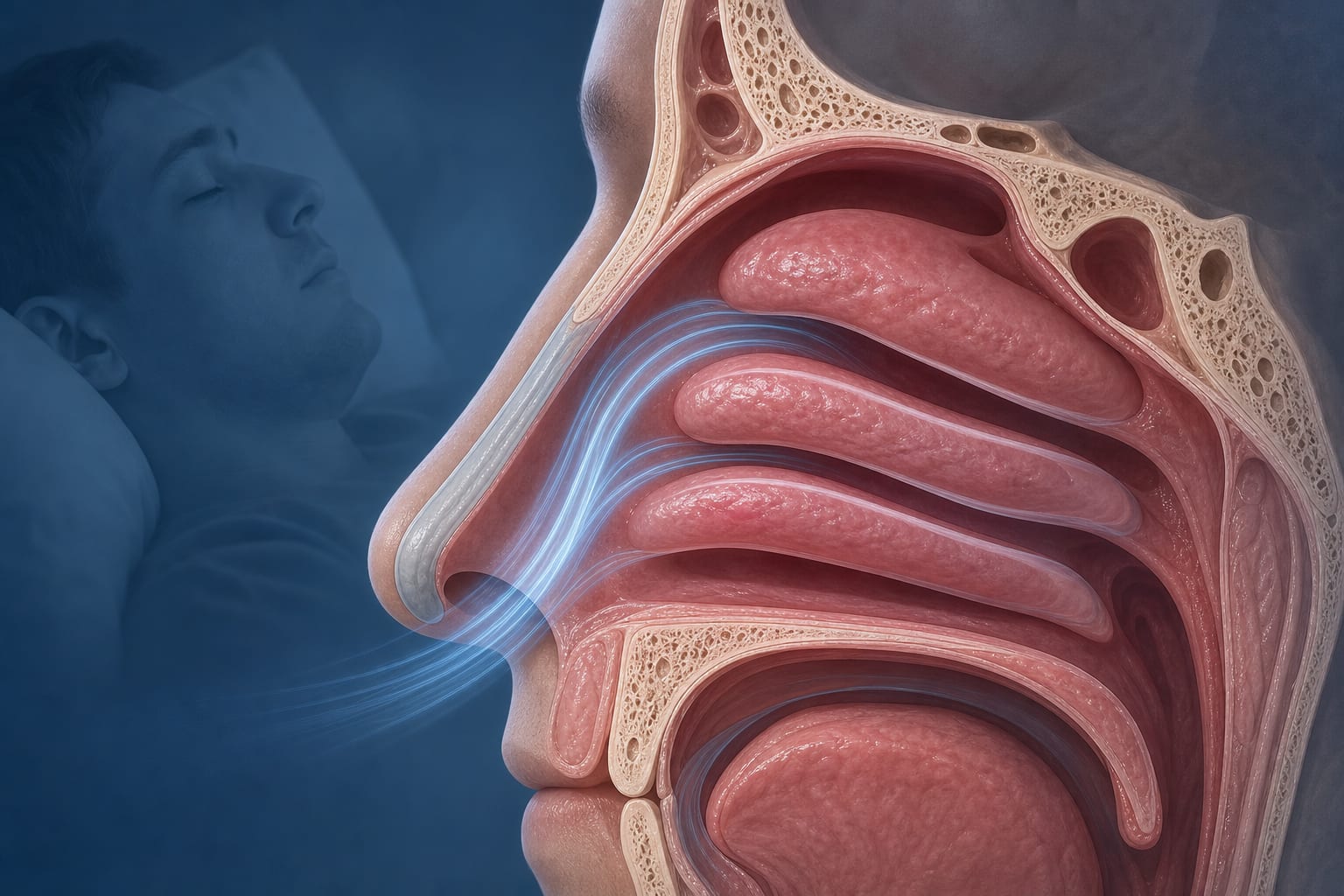
Examining the Effects of Septoplasty and Turbinate Reduction on Daytime Sleepiness and Obstructive Sleep-Disordered Breathing Risk: A Prospective Analysis
To investigate the impact of S + ITR on daytime somnolence and to determine if these improvements correlate with nasal airflow (PNIF) and changes in body composition.
Approach:
Study Design: A prospective study involving 32 patients undergoing S + ITR for symptomatic nasal obstruction.
Outcome Measures: Assessment of daytime sleepiness using the Epworth Sleepiness Scale (ESS), risk for OSDB via the Berlin Questionnaire, PNIF measurements, and body composition analysis at baseline and 3 months post-surgery.
Key Findings:
S + ITR resulted in a significant reduction in daytime somnolence, with ESS scores improving by a mean of 2.7 ± 4.4 (p = 0.002).
Significant improvements in Berlin Questionnaire categories: Snoring/Apnea (p = 0.024) and Somnolence/Fatigue (p < 0.001).
No correlation between ESS improvement and PNIF airflow gains (p = 0.516).
An inverse correlation was found between ESS gains and BMI variation (r = -0.381, p = 0.035).
Interpretation:
Nasal surgery is associated with reduced daytime sleepiness and a lower risk for OSDB, but improvements in sleepiness may not be solely due to increased nasal airflow.
Limitations:
Small sample size (N = 32) may limit generalizability.
Short follow-up period of 3 months may not capture long-term effects or account for potential confounding factors.
Conclusion:
Further research is needed to elucidate the mechanisms behind the observed improvements in daytime sleepiness following nasal surgery.
The nurse practitioner profession claims the No. 1 spot across three categories in the U.S. News & World Report 2026 Best Jobs rankings for the third consecutive year.