Perceived benefits and barriers to health behaviors after transarterial chemoembolization in patients with hepatocellular carcinoma: a qualitative study based on the health belief model - Summary - MDSpire
Advertisement
Perceived benefits and barriers to health behaviors after transarterial chemoembolization in patients with hepatocellular carcinoma: a qualitative study based on the health belief model
To characterize the typologies and distinctive features of benefit-barrier perceptions regarding health behavior adherence among liver cancer patients following transarterial chemoembolization (TACE), focusing on perceived benefits and barriers.
Approach:
Key Findings:
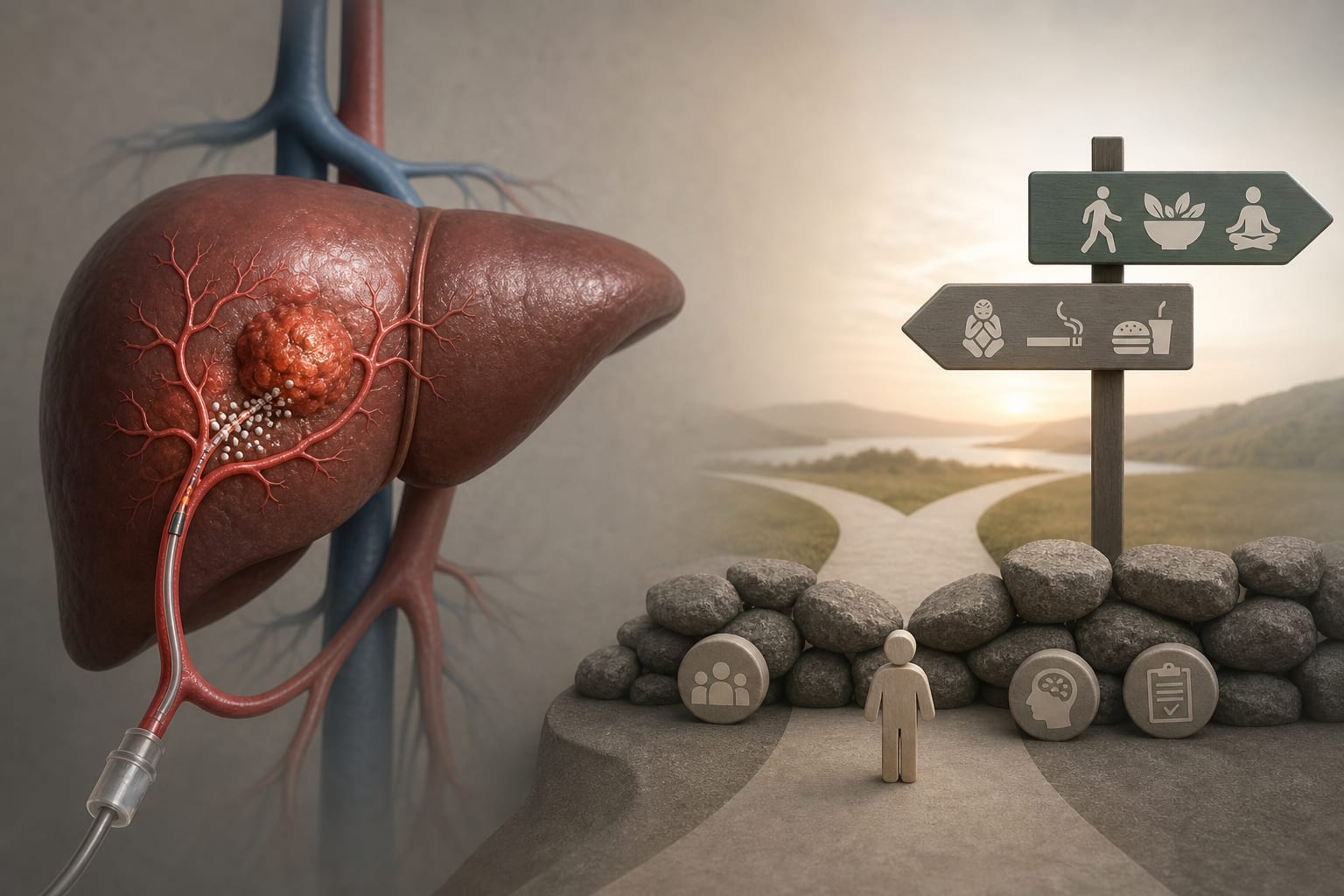
Five main topics and 13 subtopics identified regarding health behavior perceptions.
Physical barriers include postoperative acute symptom burden, gastrointestinal dysfunction, and decreased exercise tolerance.
Psychological barriers include feelings of helplessness, self-perceived burden, and emotional overflow.
Social support barriers include insufficient caregiver accessibility and financial burden.
Informational-cognitive gaps include treatment efficacy misconceptions and low health education accessibility.
Rehabilitation benefits include physical function improvement, social support benefits, and prior experience benefits.
Interpretation:
Liver cancer patients exhibit multidimensional trade-offs in their perceptions of benefits and barriers related to health behavior implementation.
Limitations:
Small sample size may limit generalizability.
Study conducted at a single hospital may not represent broader patient experiences.
Conclusion:
Healthcare professionals should develop targeted health-behavior intervention strategies based on patients’ perceived characteristics in the early postoperative phase.